
Team Chat
The Beating Heart of Modern Workplace Communication

Remember when “office communication” meant a never-ending stream of emails, CCs, and accidental “reply alls”? For years, that was the norm. But as work has become faster, more flexible, and more distributed, email just can’t keep up.
Enter team chat—the modern workplace’s communication lifeline.
Team chat tools have completely transformed how we collaborate. They’ve replaced long threads with instant conversations, cut through inbox clutter, and made it easier to stay connected—whether you’re across the office or across the world.
But beyond the pings and emojis, team chat has quietly become something bigger: a reflection of company culture, a driver of collaboration, and a cornerstone of the digital workplace experience.
What Is Team Chat, Really?
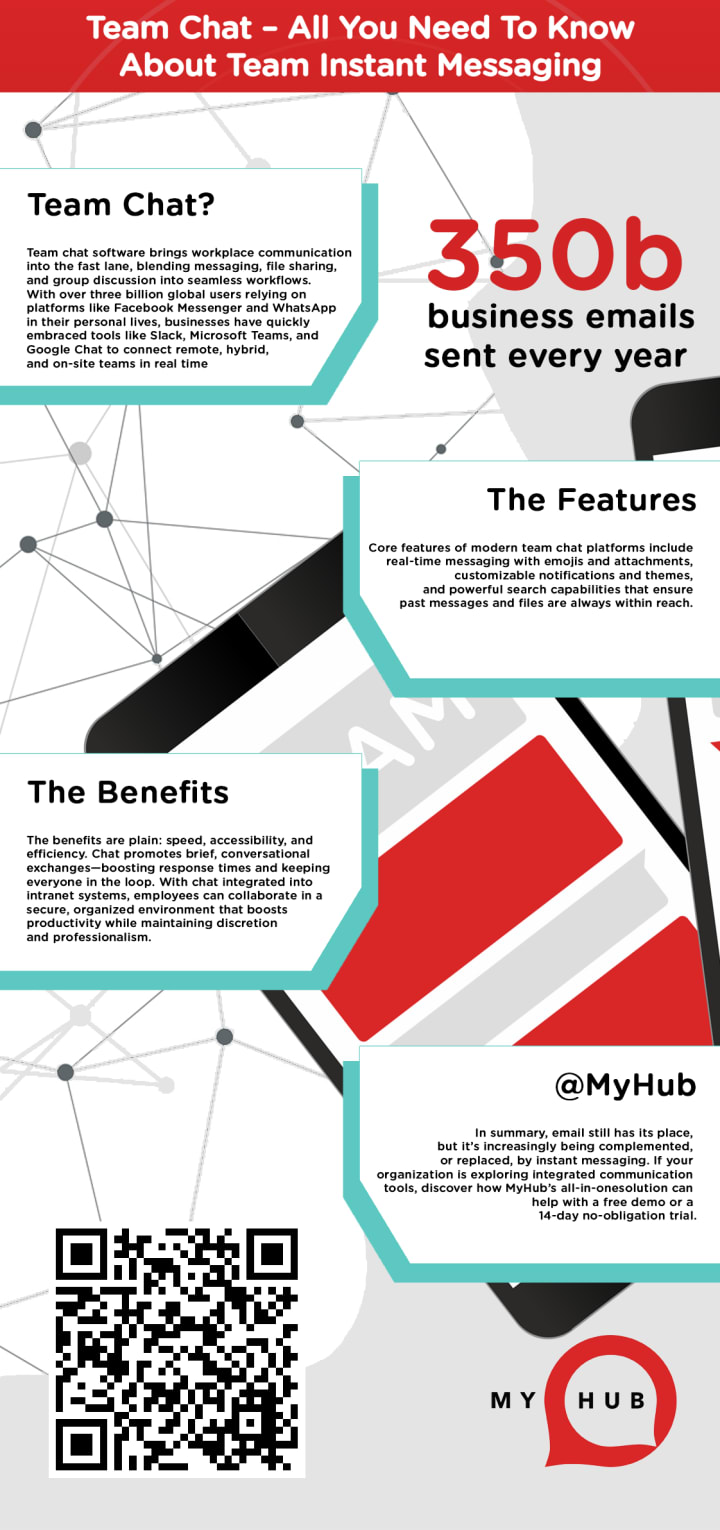
Team chat is more than just a messaging app. It’s an always-on, real-time communication space where coworkers share updates, brainstorm ideas, ask questions, and sometimes just drop the perfect GIF to lighten the mood.
Unlike email—which is slow, formal, and easy to ignore—team chat is dynamic, conversational, and transparent. It mirrors how people actually talk and work.
Modern team chat platforms typically include:
Group channels for projects, departments, or topics
Direct messages for private, one-on-one conversations
File sharing and integration with cloud storage
Threaded replies to keep discussions organized
Searchable archives for easy reference later
Notifications to stay informed without being overwhelmed
In other words, team chat keeps communication flowing smoothly across the organization—without the bottlenecks of traditional tools.
Why Team Chat Matters
The shift toward hybrid and remote work has made real-time connection critical. When employees aren’t sitting next to each other, quick communication can’t rely on hallway conversations or desk drop-ins.
Team chat fills that gap beautifully. It gives distributed teams the same instant access to each other that office workers once had. But the benefits go well beyond convenience.
1. Faster Decision-Making
Questions get answered in seconds, not hours. Teams can hash out ideas quickly, clarify details, and move projects forward without waiting for email responses.
2. Improved Collaboration
Channels make it easy to bring the right people together. Instead of siloed departments, cross-functional conversations happen organically.
3. A Living Record of Knowledge
Team chat doubles as an institutional memory. Need that link your manager shared last week? Just search for it. Everything’s stored and searchable.
4. More Human Connection
Work doesn’t have to be all business. Casual chat threads, shared jokes, and shoutouts create camaraderie—even for teams that rarely meet in person.
5. A Healthier Flow of Communication
Team chat encourages brief, focused exchanges. It’s less formal than email but more structured than a phone call, striking the perfect balance between efficiency and approachability.
Beyond Messages: The Role of Team Chat in Culture
Team chat isn’t just about communication—it’s about culture. How people talk in chat often reflects the company’s personality and values.
In organizations with healthy communication cultures, chat feels inclusive, respectful, and fun. People feel safe to speak up, share ideas, and even make mistakes. Leaders participate openly, reinforcing transparency and accessibility.
Conversely, poorly managed chat environments can overwhelm employees or create pressure to be “always on.” The key is to set clear norms: encourage responsiveness, but also respect focus time. A great team chat culture values clarity and wellbeing.
Common Pitfalls (and How to Avoid Them)
Even the best tools can backfire if not used thoughtfully. Here are some challenges to watch for—and how to fix them.
Notification Overload
→ Solution: Encourage employees to customize alerts and mute non-essential channels. Quality over quantity.
Fragmented Conversations
→ Solution: Use channels strategically—create them for meaningful purposes, and archive old ones.
Lost Context
→ Solution: Use pinned messages or summaries to capture key takeaways from long threads.
Chat Fatigue
→ Solution: Balance real-time messaging with asynchronous communication. Not everything needs an instant reply.
With a bit of structure, team chat can enhance productivity instead of adding noise.
How Team Chat and Intranets Work Together
While team chat is fantastic for real-time communication, it’s not meant to store long-term knowledge. That’s where a business intranet complements it perfectly.
Think of it like this:
Team chat is where conversations happen.
Your intranet is where knowledge lives.
When integrated well, the two tools form a seamless communication ecosystem. Team chat fuels collaboration, while the intranet keeps important documents, announcements, and project resources organized and accessible.
For example, employees might discuss a new policy in chat, then head to the intranet to read the full document and comment on it. Together, they create a living, breathing digital workplace.
Building a Chat Culture That Works
Here are a few simple strategies to make your team chat environment shine:
Create dedicated channels for recurring topics—projects, teams, or social spaces—to reduce clutter.
Celebrate wins publicly. Use chat for shoutouts and kudos to reinforce positivity and engagement.
Encourage inclusivity. Make sure quieter voices have space to contribute.
Set etiquette guidelines. Short messages are great—but kindness and clarity are non-negotiable.
Use integrations wisely. Connect chat with calendars, intranets, and project tools to streamline workflows.
The goal isn’t to chat more—it’s to chat smarter.
The Future of Team Chat
The next wave of team chat will likely include AI assistance, smart summaries, and integrated analytics. Imagine chatbots that handle routine requests, summarize meeting threads, or suggest relevant documents.
But even with advanced features, one truth will remain: team chat is about people first, technology second. The real power of these tools lies in how they bring humans together—to share ideas, solve problems, and build relationships.
As work continues to evolve, that human connection will be more important than ever.
Final Thoughts
Team chat has become the beating heart of modern workplace communication. It’s fast, flexible, and—when done right—deeply human. It helps organizations bridge distance, spark collaboration, and strengthen culture.
If you’re ready to see how a modern intranet can take your team chat experience to the next level, you can book a free demo to check out MyHub’s business intranet in action.
This article was inspired by MyHub’s in-depth guide to Team Chat.
About the Creator
MyHub Intranet
https://www.myhubintranet.com/about/
Keep reading
More stories from MyHub Intranet and writers in Journal and other communities.
Digital Employee Experience
In today’s always-on world, the way employees experience work has changed dramatically. It’s no longer just about the office space or the perks in the breakroom. Increasingly, an employee’s day-to-day satisfaction—and their ability to perform at their best—depends on the digital employee experience (DEX).
By MyHub Intranet4 months ago in Journal
Florida Business Insurance Requirements
Running a business in Florida means operating in one of the most dynamic—and complex—risk environments in the country. Between climate exposure, legal requirements, contractual obligations, and industry-specific risks, insurance is not just a formality. It is a structural component of how a business survives disruptions, disputes, and unexpected losses.
By American US Insurance2 days ago in Journal




Comments
There are no comments for this story
Be the first to respond and start the conversation.