economy
Economy and the area of production, distribution, trade, and consumption of goods and services.
Rohingya Girls Trafficked Inside Cox’s Bazar Refugee Camps
By Tuhin Sarwar : Cox’s Bazar & Dhaka Investigative report exposes transnational exploitation of Rohingya girls and women through false job offers, hotel-based sexual labor, forged documents, and maritime smuggling.
By Tuhin sarwar2 months ago in Journal
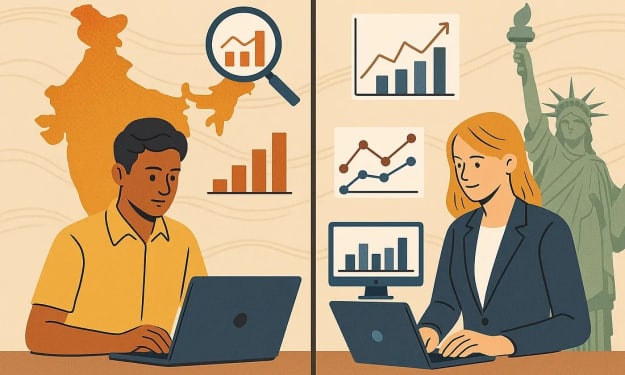
How Data Analytics Is Transforming Economic Research in the U.S. and Beyond
INTRODUCTION Numbers have always shaped policy — but today, the scale and speed of data generation have rewritten the rules. According to the World Bank, nearly 90 percent of the world’s data was created in just the last two years. This explosion has fundamentally transformed economic research, pushing economists to move beyond traditional surveys and spreadsheets into the world of machine learning, high-frequency indicators, and complex digital footprints. From Delhi to New York, data analytics now underpins decisions that influence inflation, employment, financial stability, consumption, and risk.
By Vamakshi Chaturvedi2 months ago in Journal
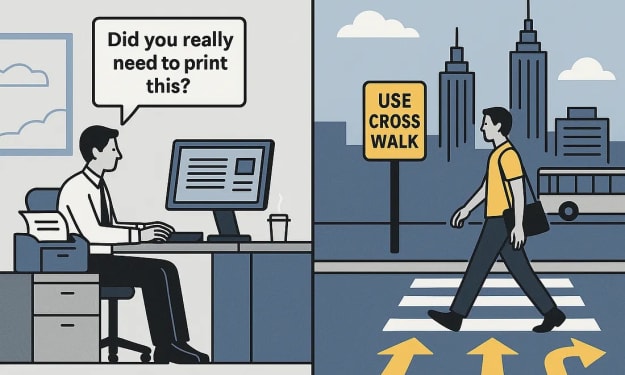
How Behavioral Nudges Could Improve Workplace Productivity and Urban Policy. AI-Generated.
INTRODUCTION In the rush of modern workplaces and crowded cities, tiny decisions often shape massive outcomes. According to the OECD, workplace distractions cost companies more than $600 billion each year in lost productivity—a striking reminder that small, moment-to-moment choices carry significant price tags. Whether we hit “reply all” impulsively, stand in the middle of a subway door instead of stepping aside, or forget to use a crosswalk, the smallest behaviors can cumulatively shape how effectively systems function.
By Vamakshi Chaturvedi2 months ago in Journal
AI, Automation, and the Future of Jobs: Lessons for India and the U.S.. AI-Generated.
INTRODUCTION Automation is no longer a distant concept; it is an active force reshaping industries across the world. According to a 2023 McKinsey report, up to 800 million jobs could be displaced globally by 2030, with emerging economies like India and advanced economies like the United States facing different but equally urgent challenges. The key question today is not whether automation will reshape work, but whether societies can adapt quickly enough to manage the transition. Although India and the U.S. are worlds apart in scale and economic structure, both countries offer valuable lessons on preparing for a future where human–machine collaboration defines prosperity.
By Vamakshi Chaturvedi2 months ago in Journal
The Digital Infrastructure Dividend: Cloud, Chips, and Connectivity as the New Growth Engines. AI-Generated.
INTRODUCTION Infrastructure once meant roads, ports, and railways. Today, it means cloud servers, semiconductor fabs, and fiber-optic cables — the arteries of a digital economy. As highlighted in global datasets on page 2 of your original story, the IMF Digital Economy Outlook (2025) reports that economies with strong digital infrastructure grew 2.5× faster in the post-pandemic recovery than those without. Productivity in the 21st century no longer depends solely on physical capital; it depends on computational capacity.
By Vamakshi Chaturvedi2 months ago in Journal
Climate Shocks and Young Workers: How a Changing Environment Is Reshaping Productivity in Emerging Economies. AI-Generated.
When people talk about climate change, they often jump straight to melting ice caps, rising temperatures, and environmental warnings. What doesn’t get discussed enough is something much more personal: how climate shocks are now shaping everyday work, income, and productivity — especially for young people in emerging economies.
By Vamakshi Chaturvedi2 months ago in Journal
The Economics of Housing Affordability in New York City: Beyond Supply and Demand. AI-Generated.
INTRODUCTION Housing in New York City has become one of the most powerful illustrations of modern inequality. According to the New York City Comptroller’s Office, more than half of all renters are considered rent-burdened, spending over 30 percent of their income simply to keep a roof over their heads. Median rents in Manhattan surpassed $4,500 per month in 2024, placing homeownership far beyond reach for most middle-income households. These realities highlight a deeper problem: the affordability crisis cannot be understood through the simple lens of supply and demand. Instead, it is shaped by a complex network of zoning laws, wage stagnation, global financial flows, and policy choices that collectively determine who can live in the city and under what conditions.
By Vamakshi Chaturvedi2 months ago in Journal
Exploring Active and Passive Investing Choices
Many new investors quickly discover that the world of finance offers two primary paths—active and passive investing—and the differences between them spark a natural sense of curiosity. Why do some investors dedicate hours to researching markets while others simply follow an index and still see meaningful results? What creates this divide, and how does each method shape the journey toward financial growth?
By Winston Feng2 months ago in Journal
Understanding Modern Dairy Processing Equipment: Technology, Safety, and Efficiency
Dairy processing has evolved dramatically over the past century, driven by a growing global demand for safe, high-quality dairy products and advancements in industrial engineering. Today, dairy processing equipment plays a central role in transforming raw milk into a wide range of consumer products—such as yogurt, cheese, butter, and milk powders—while ensuring efficiency, hygiene, and consistent product standards.
By charliesamuel2 months ago in Journal