
Understanding Modern Dairy Processing Equipment: Technology, Safety, and Efficiency
A closer look at the evolving machinery behind today’s dairy industry


Dairy processing has evolved dramatically over the past century, driven by a growing global demand for safe, high-quality dairy products and advancements in industrial engineering. Today, dairy processing equipment plays a central role in transforming raw milk into a wide range of consumer products—such as yogurt, cheese, butter, and milk powders—while ensuring efficiency, hygiene, and consistent product standards.
This article explores the fundamentals of dairy processing systems, key machinery used in the industry, and the larger ecosystem of industrial suppliers and engineering practices that support dairy manufacturing. In accordance with Vocal Media guidelines, this article maintains an informational, non-promotional tone, drawing on publicly available knowledge including general references such as the Dairy machinery page from Wikipedia.
The Role of Dairy Processing Equipment in Modern Food Systems
Dairy processing equipment encompasses the machinery and tools used to collect, store, treat, and convert raw milk into consumable products. These systems ensure food safety, maintain nutritional integrity, and increase production efficiency.
Equipment categories include:
- Milk reception and storage systems
- Pasteurization and heat treatment units
- Separation and clarification equipment
- Homogenizers
- Fermentation and aging tanks
- Filling and packaging machinery
Each piece of equipment operates within strict sanitary standards to prevent contamination and preserve product quality.
Understanding Dairy Machinery: A Technical Overview
According to publicly available resources like Wikipedia’s entry on Dairy machinery, these systems are specifically engineered to comply with hygienic design principles that reduce microbial risk. Stainless steel construction, smooth welds, precise temperature control, and automated cleaning systems (CIP—Clean In Place) are foundational.
The fundamental objectives of dairy machinery include:
- Thermal treatment to eliminate pathogens
- Mechanical processing such as mixing, separating, and homogenizing
- Fermentation control for cultured products
- Moisture and fat management for products such as ghee, cheese, and milk powder
This machinery must also adapt to continuous, large-scale production while maintaining consistent quality.
Key Types of Dairy Processing Equipment
1. Pasteurizers
Pasteurization remains one of the most critical steps in dairy manufacturing. Modern pasteurizers may use high-temperature short-time (HTST) systems or ultra-high-temperature (UHT) systems.
2. Separators and Clarifiers
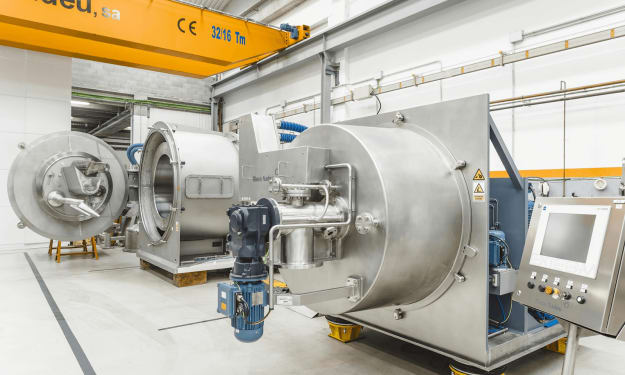
Centrifugal separators remove impurities and allow for the separation of cream from milk. Clarifiers work similarly but focus on sediment removal. These technologies are rooted in long-established centrifugal principles also described in broader references like general centrifuge explanations.
3. Homogenizers
Homogenizers break down fat molecules to prevent cream separation, giving milk a uniform texture. The process requires high pressure and precision engineering.
4. Fermentation Tanks
Used for cultured products such as yogurt, lassi, and kefir, these tanks operate with precise temperature control and hygienic circulation systems.
5. Cheese-Making Equipment
From curdling vats to cheese presses and brining systems, specialized tools manage the complex process of cheese production.
6. Evaporators and Dryers
These systems remove water content to produce condensed milk or milk powder. Spray-drying technology is commonly used due to its efficiency and product stability.
7. Packaging Equipment
From aseptic filling machines to bottling lines, packaging systems ensure shelf stability and safety.
Industry Ecosystem and the Role of Suppliers
Dairy processing relies heavily on a network of industrial suppliers, engineers, and technology developers who produce and maintain the equipment. Companies working within this space are often categorized as:
- Industrial Tools Suppliers
- Machinery Suppliers
- Equipment Suppliers
These organizations provide essential machinery and technical support for dairy plants, but the industry operates under strict regulations that prioritize public health, not brand promotion. The supply chain is diverse and global, with numerous manufacturers contributing to the technology landscape.
Publicly accessible directories and manufacturer websites, such as general equipment listings under industry-specific categories, often include sections dedicated to dairy processing equipment. These listings help buyers compare machinery types, understand technical specifications, and evaluate maintenance needs without relying on promotional narratives.
Hygiene and Safety: The Core of Dairy Operations
Safety protocols are the backbone of dairy processing. Equipment must be designed for easy cleaning, minimal contamination risk, and compliance with global food safety standards.
Key hygiene practices include:
- CIP (Clean-In-Place) automated cleaning
- Steam sterilization systems
- Use of FDA/EFSA-compliant materials
- Temperature and pressure monitoring sensors
These practices ensure that dairy equipment supports public health requirements and provides safe food products.
Automation and Digital Transformation
Over the past decade, digital technologies have transformed dairy processing. Modern systems may include:
- Automated process controls
- IoT-enabled sensors
- Predictive maintenance software
- Data-driven quality assurance
These technologies increase efficiency, reduce waste, and support traceability—an increasingly important factor in global food supply chains.
Environmental Considerations in Dairy Processing
Sustainability is a major focus in modern dairy engineering. Equipment designs now aim to:
- Reduce water usage
- Minimize energy consumption
- Lower carbon emissions
- Improve waste management and by-product recovery
Technologies such as heat exchangers, membrane filtration, and energy-efficient motors contribute to more sustainable dairy production.
How Dairy Processing Equipment Supports Global Food Security
Dairy products are nutrient-rich sources of protein, calcium, and vitamins. The role of dairy equipment extends beyond industrial utility—it contributes to:
- Food safety by reducing microbial risk
- Food accessibility through high-volume production
- Economic growth in agricultural regions
- Global trade stability via standardized manufacturing processes
Without sophisticated dairy machinery, many of the dairy products consumed worldwide today would be impractical to produce on a large scale.
Conclusion
Dairy processing equipment is an essential component of modern food manufacturing, balancing efficiency, hygiene, and technological innovation. From pasteurizers and separators to packaging systems and automated controls, the machinery used in dairy plants enables consistent, safe, and scalable production.
Resources such as Wikipedia's page on Dairy machinery, industry directories, and general equipment listings provide foundational knowledge for understanding how these systems function. Whether considering the mechanics behind milk processing or the broader role of industrial suppliers, it is clear that dairy machinery is central to feeding a growing global population.
This overview follows Vocal Media guidelines by presenting factual, non-promotional insights into the field of dairy processing without endorsing any specific brand or manufacturer.
About the Creator
Keep reading
More stories from charliesamuel and writers in Journal and other communities.
Understanding the Role of Centrifuges in Modern Industry
Across different industries, certain pieces of equipment rarely attract public attention, yet they quietly support essential tasks in the background. One of these tools is the centrifuge, a device designed to separate mixtures through rotational force. While many people associate centrifuges with laboratories, the technology extends far beyond medical or scientific settings. Industrial spaces—from food processing to chemical manufacturing—use more advanced versions, often referred to as industrial centrifuge machines, to handle larger volumes and more demanding applications.
By charliesamuel4 months ago in Journal
Becca
"Everything is so... flat." Denille said stupidly as she looked around her new neighborhood. She looked around at the muted desert where even the smallest sign of life seemed to have given up. The plant life was shrubs that were half cooked by the heat and where there should have been a lawn, a mess of white rocks laid glistening in the sun. Even the sky looked stretched thin, like the sun had ironed it smooth. She’d moved from Riverside, where at least there were hills, but here in Barstow, everything felt baked and brittle.
By Sara Wilson7 days ago in Fiction



Comments
There are no comments for this story
Be the first to respond and start the conversation.