
Synthetic vs. Mineral-Based Machinery Oils: Which is Right for You?
Comparing Synthetic and Mineral Oils: Find the Best Fit for Your Machinery

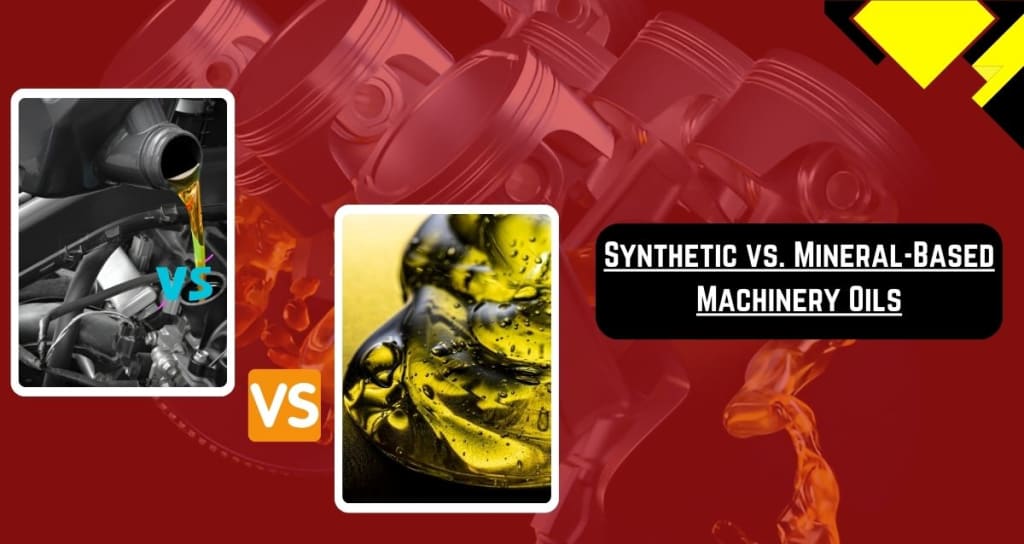
If you want to take care of your machines and extend their lifespan further, using the right machinery oil is necessary. In particular, machinery oil determines the performance, longevity, and efficiency of the machines in general. But the question arises, which type of oil is the right one for your equipment? On one hand, we have synthetic and on the other mineral-based machinery oils. Each has its strengths and weaknesses, some work better for certain types of machines, some not. Therefore, in this blog, we will guide you in identifying the right type of oil for your machinery.
Why Do Machines Need Machinery Oil?
To make things more clear, let’s start looking at the purpose of machinery oils in the industry. The first thing that these oils are used for is lubrication, from manufacturing to automotive and aerospace, lubrication is required to ensure smooth and efficient operation. This is achieved by minimising friction between the machine parts and reducing wear and tear. They also act as a sealant by filling the gaps and preventing any ingress of dust and water into the vulnerable parts.
Such oils also play an important role in reducing the heat by dissipating it from the machine parts. They absorb and transfer the heat from the critical components, preventing overheating. One of the greater benefits of machine oil is its ability to protect against corrosion. They form a layer on the metal surface that acts as a barrier against oxidation and corrosion. Machinery oil is especially favored in environments where the machinery is exposed to moisture, chemicals, or other corrosive elements. Now let us see what types of oils are available in the market!
What are Synthetic and Mineral-Based Machinery Oils?
If you want a short answer, then synthetic oils are made entirely in laboratories from various chemicals as their composition. On the other hand, mineral-based oils are obtained from crude oil through the process of refining. Now if you want to know more details, let’s head below:
• Synthetic Oil: As mentioned before, these oils are engineered in laboratories using chemical processing. The advantages of creating synthetic oil are improved performance by optimising the molecular structure and eliminating any impurities. Furthermore, they perform better consistently at extreme temperatures and strength. Moreover, these oils can maintain their viscosity across a wide range of temperatures. Such property ensures reliable lubrication. Additionally, they have a longer lifespan, reducing the need for frequent changes. Lastly, they do have higher initial costs but that is balanced by their extended intervals between oil changes.
• Mineral-Based Oils: These oils are the polar opposite of synthetic oils, deriving from crude oils through the process of refining. Before synthetic oil came along, mineral oils were the default choice for machinery lubrication in the industry for decades. These oils are composed of natural hydrocarbons but the problem with them is that they may contain impurities that can affect performance. Another problem you may encounter is that though they offer adequate performance for most of the standard applications. But they do degrade faster under extreme heat and load. Furthermore, their viscosity can also vary depending on temperature changes, affecting their performance as well as longevity. But, mineral-based oils are a lot more accessible in the market due to their affordable price tag.
Benefits Each Machinery Oil Provides
- Well, comparing them might at first seem a little one-sided, but remember, you also have to consider the price tag on it. To start off with, mineral-based oil beats synthetic oil when it comes to upfront price. These oils are more widely available in the market and are easy to source. Therefore, if you require oil for standard application, going with mineral-based oil is sufficient for providing good lubrication and protection. On the other hand, synthetic oils just provide better protection and lubrication under extreme conditions like high temperatures and stress.
- They can also maintain their viscosity and lubrication over time even under extreme conditions while reducing the wear and tear of machine parts. As mentioned earlier, they do cost higher than their mineral-based oil counterpart but synthetic oils also reduce the number of oil changes, leading to higher cost savings over time. We know mineral-based oils can contain impurities but that is not the case with synthetic oils. They are made in labs, free of any impurities, which reduces the chances of sludge and deposit formation, keeping machinery cleaner.
How to Choose the Right Machinery Oil for You?
At this point, we are pretty much sure that you know which type of oil is right for you. But in case you are still confused, let us break down the deciding factors you must ponder upon before choosing.
- The Condition of Operating: In what condition do your various machines operate? If your requirements are more standard manufacturing work that does not involve heat and stress, then by all means go for mineral-based oils. It is ideal for pumps, compressors, gearboxes, etc. It is also ideal for the textile industry. On the other hand, choose synthetic oil if your use includes heavy industrial manufacturing. These oils will provide superior performance and stability, especially for machines that are used for manufacturing automotive, aerospace, and aviation industries, etc.
- Frequency of Usage: The frequency of oil changes will depend on the type of usage and operational condition. In this category synthetic oil simply wins by being more long-lasting than mineral-based oil. Synthetic oils provide better protection and lubrication for a longer time while withstanding extreme conditions. Furthermore, if you are concerned about your carbon footprint, synthetic oils are more environmentally friendly due to their longer lifespan and reduced waste. However, for lighter work, you can easily stick with mineral-based oil.
- Budget: As you already know, synthetic oil costs slightly higher upfront. But if you are working under operational conditions that do not involve extreme temperatures and pressure, opting for mineral-based oils is totally fine. But for everything else, synthetic oil will serve you better in the long run. With this oil, you can save more cost thanks to its ability to work under harsher conditions without rapidly breaking down. As well as, keeping different machine parts well lubricated, protecting them from wear and tear.
You may also like: Fully Synthetic vs. Conventional Engine Oil: Which is Right for You?
Conclusion
You will not go wrong choosing either of the oils if you want to keep your machines clean. Both of the oils do this by suspending and carrying away contaminations like dirt, debris, and metal particles. As well as leading to better energy efficiency by having your well-lubricated machines work efficiently. But to give you a clear answer, if you want machinery oil that will have the best load-carrying capacity, go for synthetic oils.
Synthetic oils can perform a lot better under heavy loads and high pressures, providing reliable lubrication even under extreme conditions. They also have better compatibility with a variety of materials like metals, seals or gaskets. Therefore, keep in mind, that if your requirement does not include working with heavy loads, and involves lighter day-to-day maintenance, mineral-based oil is sufficient. Contrary to that, if you want machinery oil that can withstand heavy loads and high temperatures while providing lubrication, cooling, protection against corrosion, cleaning, sealing, and energy efficiency, go for synthetic oil.
About the Creator
Rahul Bhatt
Hi, I am Rahul, a professional content writer with over 3 years of experience as a ghostwriter, blog writer, and copywriter. I work closely with B2B and B2C industries, providing content that gains search engine visibility.
Keep reading
More stories from Rahul Bhatt and writers in Journal and other communities.
Everything you need to know about refrigeration compressor oils
Refrigeration systems are used in broad sectors, including food preservation, pharmaceutical and even in the air conditioning sector. Mainly, these systems include the refrigeration compressor which is a constituent responsible for pumping the refrigerant at a pressure for the purpose of creating heat transfer. The refrigeration compressor oil is a very indispensable yet commonly overlooked constituent regarding the smooth and effective performance of such compressors. The particular lubricant has a significant role in maintaining the performance, longevity, and efficiency of refrigeration systems.
By Rahul Bhattabout a year ago in Journal
‘It’s a Hospitality-Wide Problem’: Night-Time Traders React to Business Rates Relief Plan
The UK hospitality sector has reacted with a mix of relief and frustration following the announcement of a business rates relief plan aimed at supporting struggling night-time traders. While some welcome the government’s intervention, others warn that the measures are insufficient to tackle a hospitality-wide problem that has been decades in the making.
By Aarif Lasharia day ago in Journal


Comments
There are no comments for this story
Be the first to respond and start the conversation.