
Fully Synthetic vs. Conventional Engine Oil: Which is Right for You?
Synthetic or Conventional: Pick the Best Oil for Your Engine

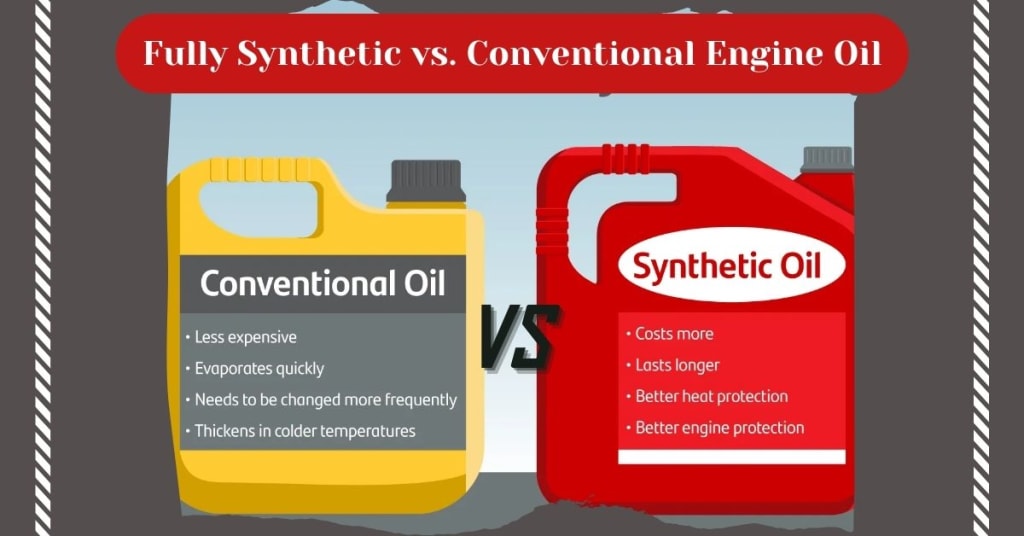
What comes to your mind when we talk about motor car care and management? Without any doubt, engine oil is among the most crucial products you will likely find when it comes to motor car care and management. Actually, the type of oil that you use does differentiate and define the performance, durability as well as health of the engine that you employ. However, in the current market, there are two broad classes of engine oil, and they include; fully synthetic engine oil, and conventional engine oil. The two can be compared to help one decide which one to apply depending on the need of the car.
What is Engine Oil?
Before we proceed to the comparison section let me inform you about the primary function of engine oil. It serves several crucial functions in your vehicle’s engine, including:
- Lubrication: Reduces the point contact or rubbing of the surface of the moving parts of a machine and thus reduces wear.
- Cooling: Helps in cooling of the engine since some parts of the car produce heat if not well regulated which causes overheating of the vehicle’s engine.
- Cleaning: Washes out engine sludge and other elements that make the engine perform inefficiently.
- Sealing: Assists in sealing the contact areas between the piston ring and cylinder wall thus assisting to increase compression.
- Protection: Deposes an anti-corrosive layer of film on its surface in order to shield the body of metal.
These are some of the functions that all engine oils do, but the difference is in the oil's content and the oil's ability to do the function.
Fully Synthetic Engine Oil: Created to Win
- Composition
Synthetic engine oil is chemically altered base stock and mixed with additives to enhance its properties. The process that is employed in making synthetic oil entails a purification process that cannot be employed on conventional oil while the molecules of the synthetic oil have better structures and size hence, better performance.
- Performance Characteristics
Synthetic oils are developed to function at a high level of performance. When it is extremely cold, it will not thicken up like conventional oil and when it is extremely hot it does not thin out as well and provides your engine with far better levels of protection.
Let me illustrate it with an example; one day you possess a high-performance sports car, say, a Ferrari. The engine produces a lot of heat and the requirement to lubricate is always high. In this case, it would be wise to choose fully synthetic oil as they have a higher thermal stability, which does not permit degradation at high temperatures.
Some of the synthetic oils include Mobil 1 and Castrol EDGE and these brands are popularly identified with their synthetic oil that is commonly used in sports cars and luxury sedans.
So, why should you choose it?
Extended Oil Life: The fully synthetic engine oil can last up to 15,000 miles before it is due for a change, especially for normal driving conditions and this is in stark contrast with the 3,000 to 5,000 miles for the conventional engine oil.
- Fuel Efficiency: Other research has also found out that synthetic oils can improve fuel economy by 1-2 percent due to the low internal friction.
- Lower Volatility: Minnesota synthetic oils have less evaporation propensity than other oils in a high temperature and hence utilize and emit less.
What is Conventional Engine Oil?
Mineral oil is another term used to refer to conventional engine oil, which is extracted from natural crude oil through refining. It consists of natural hydrocarbons and is usually mixed with some kind of performance-enhancing agents such as anti-wear, anti-rust, viscosity index improver and antioxidants.
Conventional oil is the most common type of oil that has been used in engines for several years due to its cheaper prices than synthetic oil and hence can be used in old model vehicles and regular road uses.
How Can I Determine Whether My Car Requires Conventional Or Synthetic?
One can easily identify if the car needs conventional or synthetic oil by reading the car’s owner's manual. There will be a page (either in the printed or online version) that gives the exact type of oil recommended by the manufacturer.
These are circumstances that might warrant the use of synthetic oil even when it is not mandatory; If your car’s usage involves dusty roads, off-road tracks, race car, towing heavy loads, summer scorching heat, or freezing winter then it would be advisable to use synthetic oil. Thus, while the cost of synthetic oil is higher than that of regular oil, you can bet your car will be shielded for a longer time when using the former and hence recommend it under such circumstances. Let’s understand in details:
The Debate: Fully Synthetic and Conventional Oil
Having discussed the nature of both types of oil, it will be useful to consider the following factors that should enhance your choice.
1. Driving Conditions and Habits
- Extreme Conditions
If you regularly commute in extremely hot or extremely cold weather, or if you use your vehicle for towing large trailers or other heavy equipment, fully synthetic oil is recommended because of its stability and the special protection it offers.
- High-Performance Vehicles
Synthetic oil has better lubricity and thermal stability than regular oil and this makes engines in high-performance cars used in racing or spirited driving benefit more from synthetic oil.
- Daily Commuting
For city and highway short drives, it is possible to get away with conventional oil, especially if the car owner maintains the recommended times for oil change.
2. Vehicle Age and Type
- Newer Vehicles
Today’s cars, especially those with turbocharged engines or those that need higher performance standards, are built for synthetic oil use. This is usually provided as a guide in the owner’s manual.
- Older Vehicles
As for cars with a mileage of over 75,000 miles, it is not recommended to use synthetic oil because of possible leakage as a result of its reduced thickness. High-mileage conventional oils with special additives are the better choice.
3. Cost Considerations
- Upfront Cost vs. Long-Term Savings
Fully synthetic oil is comparatively more costly than the conventional one but the longer durability of the fully synthetic oil and the increased intervals for oil change can result in cost saving in the long run. For instance, the cost of the synthetic oil change may be $70 for each 10,000 miles while the conventional oil may be $40 for each 4,000 miles, then synthetic oil might be cheaper.
You may also like: Here’s How Fully Synthetic Oil Boosts Engine Performance
Conclusion
Fully synthetic engine oil and conventional engine oil are two types of engine oils that differ in many aspects but have a crucial difference in the price, so the choice of the engine oil type depends on your vehicle, your style of driving, and your wallet. It is always wise to check the owner's manual of your vehicle, the environmental conditions where you live, and what you intend to do with your vehicle in the long run before making your decision.
Author’s Bio
I like anything that has to do with cars and I am more interested in engine-related products. That’s why with years of experience on the subject, and knowledge of the inner workings of motor vehicles, I am always striving to give you the information you need to keep your car running strong for many more miles.
About the Creator
Rahul Bhatt
Hi, I am Rahul, a professional content writer with over 3 years of experience as a ghostwriter, blog writer, and copywriter. I work closely with B2B and B2C industries, providing content that gains search engine visibility.
Keep reading
More stories from Rahul Bhatt and writers in Journal and other communities.
Is High Mileage Synthetic Engine Oil Worth the Investment?
If you own a vehicle, you must have come across the term “High Mileage Engine Oil”. Going by the term, it could mean that this is an engine oil that will give your high mileage. On the contrary, it is an engine oil that is designed for vehicles that are old or have more than 1.2 lakh kms on the odometer. If you are wondering whether or not you need high mileage Fully Synthetic Engine oil, you are not alone. A general search on the internet will provide you with very less information on high mileage engine oil and its importance. The objective here is to provide you with all the relevant information that you need to make an informed decision.
By Rahul Bhattabout a year ago in Journal
THE BOY WHO WROTE FOR TOMORROW
I never believed stories could save lives. I used to think stories were just entertainment — something people read to escape reality. I never imagined that one day, my own survival would depend on words typed with shaking hands at 3 a.m.
By Pure child6 days ago in Journal




Comments
There are no comments for this story
Be the first to respond and start the conversation.