
Supreme Court Faces High-Stakes Decision on Same-Sex Marriage Precedent
Justices consider whether to hear a longshot appeal that could challenge the landmark 2015 Obergefell v. Hodges ruling.

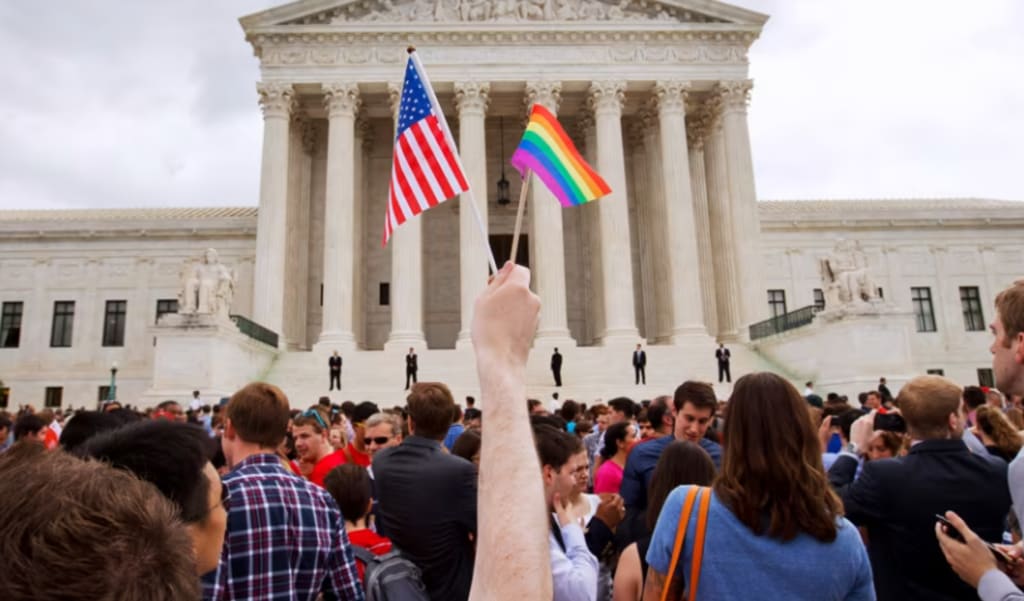
The United States Supreme Court is about to make a decision that could have big repercussions for civil rights and marriage law in the country. The appeal filed by former Kentucky county clerk Kim Davis, who was famously imprisoned in 2015 for refusing to issue marriage licenses to same-sex couples, is currently being considered by the Court. Davis's petition asks the Supreme Court to reconsider and possibly overturn the landmark Obergefell v. Hodges decision, which made same-sex marriage legal across the country. When Davis, citing religious objections, refused to comply with a federal court order to issue marriage licenses to same-sex couples in 2015, she gained national attention. In the end, she was found guilty of contempt and ordered to pay a lot of money in damages. Her appeal now makes two crucial claims: that the Free Exercise Clause of the First Amendment safeguarded her actions and that the Obergefell decision should be rethought. The petition is widely regarded as a long shot by legal experts. However, even the possibility that the Supreme Court might take it into consideration is indicative of a time when established precedents are being examined. Advocates on both sides of the argument are keeping a close eye on the situation as a result of the Court's conservative majority's willingness to reconsider significant rulings, most notably its decision to overturn the constitutional right to abortion. The legal doctrine of stare decisis, which states that courts should respect prior decisions to maintain legal consistency and stability, is at the heart of the issue. Although reversing Obergefell would have vast repercussions, some justices have suggested that certain precedents could be revisited in exceptional circumstances. Marriage equality has shaped the lives of millions of Americans, including families that rely on the benefits and legal protections provided by the decision. The argument made by those in favor of reconsidering the decision is that Obergefell was incorrectly decided and does not have a solid constitutional foundation. Supporters of this position argue that the Supreme Court could overturn the decision without affecting other legal areas. However, opponents warn that removing marriage equality would have devastating effects. They emphasize that since 2015, hundreds of thousands of same-sex couples have married, and that overturning the ruling could result in legal chaos, damage to social trust, and the loss of established rights for families. There are a number of possible outcomes for the Supreme Court. It could decide not to hear the case at all, keeping Obergefell and the decisions thereto in effect. If the Court decides to take up the appeal, it might limit its decision to religious exemptions for public officials and ask if a clerk can deny a marriage license on religious grounds. The fundamental principle of universal marriage equality would not be affected by such a decision. Marriage rights would likely revert to individual states if the Court were to go further and overturn Obergefell. The legal recognition of existing marriages could be thrown into doubt as a result of some states reimposing their ban on same-sex marriage. Even though it is unlikely, LGBTQ+ rights advocates, civil liberties groups, and married couples all over the country are deeply concerned about this possibility. The larger context also increases the significance of the choice. The Supreme Court is going through a time of increased scrutiny of established precedents, particularly those pertaining to civil rights. The reversal of Roe v. The fact that Wade demonstrated that well-established legal safeguards can be reexamined stoked fears that marriage equality may encounter similar difficulties. The decision made by the Supreme Court will be significant far beyond Kim Davis's case. For same-sex married couples and families who have relied on Obergefell's protections for nearly a decade, granting review could signal uncertainty. In contrast, declining to hear the case would maintain marriage equality's stability while raising concerns regarding the Court's potential future reexamination of significant civil rights precedents. One thing is certain as the nation watches: the Court's decision will have significant social, legal, and political repercussions. It demonstrates the ongoing conflict between individual religious beliefs, constitutional rights, and the broader principles of equal treatment under the law, regardless of the outcome.
#SupremeCourt #MarriageEquality #SameSexMarriage #Obergefell #LGBTQRights #CivilRights #ReligiousLiberty #SCOTUS #LegalNews #VocalMedia
About the Creator
Shakil Sorkar
Welcome to my Vocal Media journal💖
If my content inspires, educates, or helps you in any way —
💖 Please consider leaving a tip to support my writing.
Every tip motivates me to keep researching, writing, sharing, valuable insights with you.
Keep reading
More stories from Shakil Sorkar and writers in Journal and other communities.
2026 GRAMMYs: KATSEYE, Kehlani, YUNGBLUD, and Addison Rae Lead a Wave of Joy Online
On November 7, 2025, the GRAMMY nominations were announced, and rather than the usual quiet congratulations, the internet burst into celebration. Artists of all kinds took to social media to express surprise, gratitude, and pure joy, using everything from sincere thank-you messages to shocked emojis. This year, the sincerity, not just the star power, was what stood out. In the moments following the announcement of their nominations, artists displayed their most genuine selves, reminding fans that behind every trophy is a human story of perseverance, creativity, and emotion. The Breakthrough Moment of KATSEYE The international girl group KATSEYE, which has been taking the pop world by storm, produced one of the most exciting stories. A first for an international act, the six-piece group was nominated for both Best New Artist and Best Pop Duo/Group Performance. Their reaction on social media included messages with caps lock, confetti emoji, and joyful disbelief. In a brief post, one member best summed it up: "TWO NOMS??????" Fans all over the world, particularly those who have been following KATSEYE since the beginning, appreciated the mix of humor, surprise, and gratitude. The group views the nominations as proof that cross-cultural pop can thrive in a global market still dominated by Western acts, rather than just recognition. Pop Redemption by Addison Rae One of the most talked-about events of the year might be Addison Rae's first GRAMMY nomination for Best New Artist. Addison has worked hard over the past two years to refine her sound, collaborate with top producers, and discover her artistic voice after being dismissed as a TikTok celebrity who dabbles in music. She said it all in her Instagram post: "I opened my notifications and there it was... I froze." I shrieked. I sobbed. This was a moment that mattered not only to her but also to anyone who had ever been underestimated because of the raw honesty. Her selection exemplifies a broader shift in the acceptance of musicians born on social media in traditional music venues. The Thankful Heart of Kehlani Kehlani, a superstar in R&B, celebrated on social media after receiving nominations in a number of R&B categories. Her message in all capital letters: "BY GOD'S GRACE. RNB!!!!!!!!! Her pride and admiration for the genre were perfectly reflected in " ." Kehlani's reaction exemplified the unfiltered passion that has made her such a beloved figure in music. Her journey has always been about authenticity and growth, and her post reminded fans that she is not only a musician but also a spokesperson for a whole sound and community. The Power of Community and YUNGBLUD In a moving video, the British rocker YUNGBLUD called his three nominations a "community win." His words echoed what his fans already knew: his music is about the outsiders, rebels, and dreamers who have turned his message into a movement. He said, clearly emotional, "Thank you for believing in me, even when I didn't." In a time when pop and hip-hop dominate the charts, many see YUNGBLUD's success as a victory for alternative rock. A Gratitude Symphony on Social Media The tone was the same on all platforms: love, doubt, and gratitude. Artists expressed gratitude to their teams, fans, and even families. We were reminded this year by the reactions that the GRAMMYs aren't just about prestige—they're also about perseverance. 2026's social media celebration, in contrast to previous polished press releases, was honest and raw. The posts weren't edited or staged; rather, they were real, real-time, and filled with emotion. Encouragement, memes, and virtual applause flooded timelines as fans commented in real time. Even smaller acts that had never been nominated before joined in, posting tearful videos or candid screenshots of how they felt. The GRAMMYs began to focus more on the collective happiness of being recognized at all and less on who wins on stage. The Wider Perspective The extent to which the music industry has evolved is revealed by this euphoric wave that has swept online. Today, connection rather than sales or streams are used to measure success. Each story adds a distinct voice to the chorus of 2026's nominees, whether it's KATSEYE breaking down cultural barriers, Addison Rae proving her artistry, Kehlani carrying R&B with pride, or YUNGBLUD championing community. Los Angeles is the focus of all attention as the 68th GRAMMY Awards approach. However, the celebration has already begun in many ways, not only on stage but also online, where fans and artists are celebrating together. Although the GRAMMYs honor the best in music, the nominees this year demonstrate that the greatest victory is being seen, heard, and celebrated.
By Shakil Sorkar4 months ago in Journal
Author’s Advice
If you would’ve asked me 20 years ago did I know I’d become a writer and an author, I would’ve said “nope, ain’t happening”. As fate would have it I did become an author and I can honestly say I’m loving it so far. It really does feel good to be a writer. I’ve learned a lot on this journey and I feel like with even me being as new to this world as I am, there’s some wisdom I need to share with every other aspiring author.
By Joe Patterson4 days ago in Journal



Comments
There are no comments for this story
Be the first to respond and start the conversation.