
SpaceX: Innovations, Setbacks, and the Future of Space Exploration
Revolutionizing Space Exploration through Innovation and Ambition

Introduction
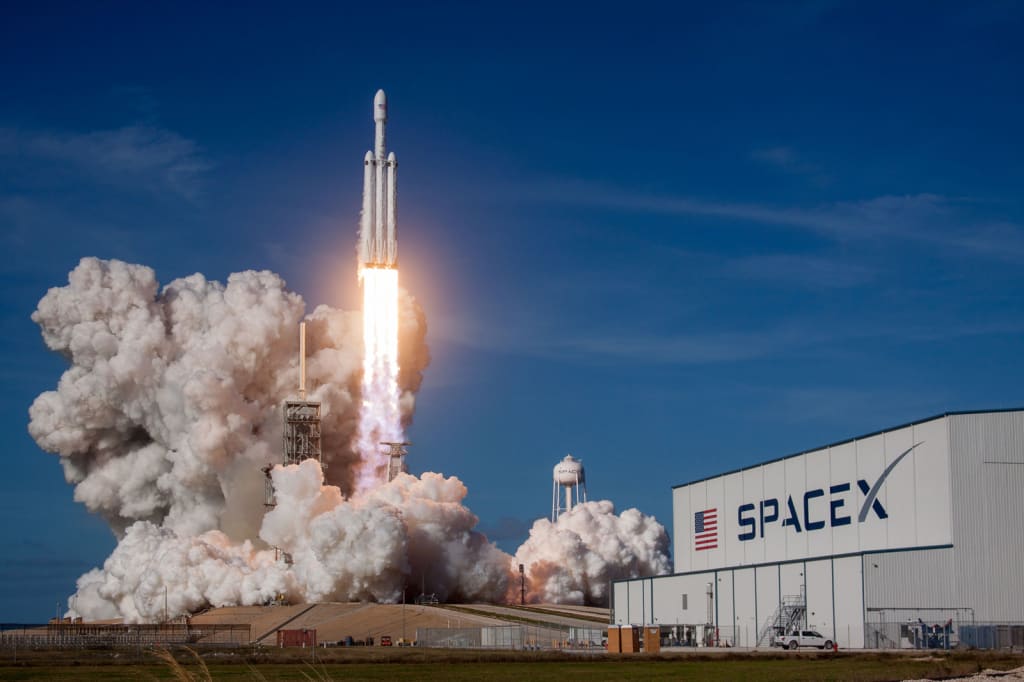
SpaceX, or Space Exploration Technologies Corp., is a private aerospace company founded by entrepreneur and visionary Elon Musk in 2002 with the goal of reducing space transportation costs and enabling the colonization of Mars. Since its founding, SpaceX has made significant progress in the space industry, with notable achievements such as the development of reusable rockets and the launch of the Falcon Heavy, the world's most powerful operational rocket. However, SpaceX has also faced several setbacks and failures, including the 2015 explosion of a Falcon 9 rocket during a cargo mission to the International Space Station (ISS). Despite these challenges, SpaceX continues to push forward with ambitious plans for the future of space exploration.
History
SpaceX was founded by Elon Musk in 2002 with the goal of making space exploration more affordable and accessible. At the time, Musk was already known for his success as a co-founder of PayPal, an online payment system. With his vision for SpaceX, Musk aimed to bring the cost of space transportation down and make space exploration possible for commercial customers, not just governments. In an interview with Forbes in 2006, Musk stated, "If you can reduce the cost of accessing space, you can do all sorts of things that weren't possible before."
One of SpaceX's early breakthroughs was the development of the Falcon 1 rocket, the first privately funded liquid-fueled rocket to reach orbit. After three failed attempts, the fourth launch of the Falcon 1 was successful in September 2008, marking a significant milestone for the company. In 2010, SpaceX launched the Falcon 9, a larger rocket designed to carry cargo and eventually crew to the ISS. The Falcon 9 quickly gained attention for its innovative design, featuring reusable components that could be landed and refurbished for future launches.
Successes
One of SpaceX's biggest successes was the launch of the Falcon Heavy rocket in February 2018. The Falcon Heavy is the most powerful operational rocket in the world, capable of carrying a payload of up to 64 metric tons. The launch was a major milestone for SpaceX, demonstrating the company's ability to design and build complex rockets capable of carrying heavy payloads into space.
Another major success for SpaceX was the launch of the Crew Dragon spacecraft in May 2020, which marked the first time a private company had sent astronauts to the ISS. The Crew Dragon carried two NASA astronauts, Robert Behnken and Douglas Hurley, to the ISS, where they spent two months conducting experiments and performing maintenance tasks.
Engineering and Technology
One of the key factors that has contributed to SpaceX's success is its focus on innovative engineering and technology. From the reusable rockets to the advanced control systems, SpaceX has demonstrated a commitment to pushing the boundaries of what is possible in space exploration.
One of the most significant engineering innovations developed by SpaceX is the use of reusable rockets. Traditional rockets are designed to be used once and then discarded, requiring significant resources to build a new rocket for each launch. In contrast, SpaceX's rockets are designed to be reusable, with the first stage of the rocket returning to Earth and landing vertically on a designated landing pad or drone ship. Reusable rockets have the potential to dramatically reduce the cost of space exploration, making it more accessible to a wider range of customers.
Another key technology developed by SpaceX is the autonomous control system used for rocket landings. As the rocket descends towards Earth, it uses a combination of GPS and computer vision technology to locate and land on the designated landing pad or drone ship. This technology is critical for the success of reusable rockets, as it allows the rocket to land safely and precisely, reducing the risk of damage to the rocket or the landing platform.
Failures
Despite its successes, SpaceX has also faced several setbacks and failures over the years. One of the most notable failures was the explosion of a Falcon 9 rocket during a cargo mission to the International Space Station in June 2015. The rocket was carrying supplies and experiments to the ISS, but just over two minutes into the flight, it exploded in mid-air. An investigation into the cause of the explosion revealed that a faulty strut in one of the rocket's engines was to blame.
The explosion was a significant setback for SpaceX, as it resulted in the loss of the cargo and the rocket, and damaged the company's reputation. However, SpaceX was able to quickly recover from the setback and return to flight just six months later with a successful launch of a Falcon 9 rocket.
Future Plans
Looking to the future, SpaceX has ambitious plans for space exploration and colonization. One of the company's main goals is to send humans to Mars, with the ultimate goal of establishing a self-sustaining city on the planet. To achieve this goal, SpaceX is developing a spacecraft called the Starship, which is designed to carry up to 100 people and land on Mars. The Starship is being developed with the goal of making space travel more affordable and accessible, with the ultimate goal of creating a "multi-planetary civilization".
In addition to its Mars plans, SpaceX is also working on a number of other projects, including satellite-based internet service and high-speed transportation on Earth. The company is currently developing a constellation of thousands of satellites called Starlink, which will provide high-speed internet access to users around the world. The company is also working on a high-speed transportation system called the Hyperloop, which would use vacuum-sealed tubes to transport passengers and cargo at speeds of up to 700 mph.
Conclusion
SpaceX has had a significant impact on the space industry since its founding in 2002. The company has made significant progress in reducing the cost of space transportation and increasing access to space, with innovations such as reusable rockets and autonomous landing technology. While the company has faced setbacks and failures along the way, it has demonstrated a resilience and determination to continue pushing forward with ambitious plans for the future of space exploration. With plans to colonize Mars and create a multi-planetary civilization, SpaceX is poised to continue driving innovation in the space industry for years to come.
About the Creator
Rio Vijey
As a lifelong lover of storytelling, I am thrilled to begin my journey as a writer. I have a vivid imagination and a passion for exploring the depths of the human experience through fiction.
The Hidden Role of Equipment in Preventing Workplace Injuries
You probably walk into work and barely notice the machines around you. Most people don’t. But here’s the thing—they’re quietly keeping you safe. Every day, they take on work you might not even realize. From simple hand tools to big machines, equipment can stop injuries before they happen. Even something like electrical airport ground support equipment isn’t just moving planes. It’s protecting the people handling it. You might not see it, but it’s doing its job all the time.
By Jessica Socheski2 days ago in Journal



Comments
There are no comments for this story
Be the first to respond and start the conversation.