
Southern Syria’s Darkest Hour: A War of Extermination Against the Druze
Southern Syria’s Darkest Hour
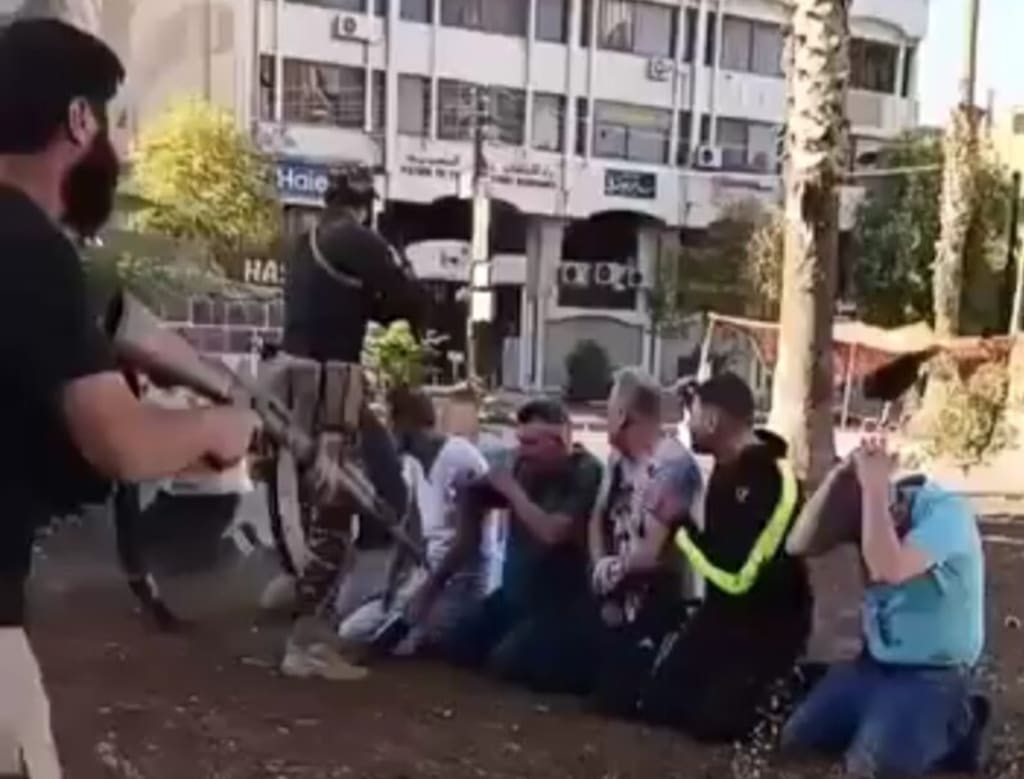
Sectarian violence erupted in southern Syria after a security incident involving robbery and kidnapping on the Damascus–Suwayda highway. The transitional authority in Damascus seized upon it as a political opportunity to forcibly bring the province under government control. This rapidly escalated into fierce combat and massacres against unarmed civilians of different faiths in Suwayda.
Southern Syria’s Darkest Hour: A War of Extermination Against the Druze
Over a week of clashes between government forces (backed by tribal militias) and local resistance, the Syrian Observatory for Human Rights recorded 657 deaths: 196 were executed on the spot (including 8 children and 30 women), plus 464 members of the interior and defense ministries, 40 tribal fighters, and one Lebanese fighter. Three Bedouin tribespeople (including a woman and a child) were also killed. The true death toll is likely far higher, according to videos, photos, and eyewitness accounts.
The trigger on July 12 was a recurring attack—the abduction and robbery of a vegetable truck driver. Such attacks, often facilitated or tolerated by security forces, are viewed as punitive measures against Suwayda’s refusal to align with Damascus’s transitional government.
Despite claims the Ministry of Defense had integrated rogue factions—including some with ISIS affiliations—into its ranks, tribal and independent fighters bearing ISIS insignia have been documented in involvement with massacres earlier in the year and since July 14 in Suwayda.
Following the truck attack, an escalation of retaliatory kidnappings unfolded—Druze kidnapped 8 Bedouins, who in turn kidnapped 5 Druze civilians. Tribal and Druze leaders mediated successfully and by July 13 night had brokered the release of captives.
However, on the morning of July 14, government forces launched a full‐scale invasion, citing security restoration. Bombardment, drone strikes, and heavy weapons targeted villages in western Suwayda and bombed into Suwayda city. This led to mass civilian casualties and displacement, with thousands fleeing eastward or sheltering in schools, halls, and improvised camps under blackout and water outages.
Field executions, looting, arson, and infrastructure destruction have been documented through footage taken by Defense Ministry forces, local residents, and CCTV. Residents estimate tens of thousands of internally displaced persons in dire living conditions.
Under international pressure from the US, Israel, Turkey, and Jordan, a ceasefire agreement was arranged, mandating withdrawal of government troops and militias and establishing humanitarian corridors. But the government maintained positions near the city, breached the truce, and resumed incursions. In protest, Druze spiritual leader Sheikh Hikmat al‑Hijri withdrew support from the agreement.
Government sources then circulated false accusations that Bedouin women had been kidnapped by “Hijri militias,” inciting tribal retaliation. The state reportedly permitted tribe-affiliated fighters to enter Suwayda, portraying the conflict as internal Druze–Bedouin strife.
Contrary to its public position, the Defense Ministry never fully disarmed or absorbed tribal militias. Al‑Hijri reiterated that Druze factions would only relinquish arms once a trusted national army existed. He emphasized allegiance to Damascus but rejected blind submission.
On July 18, tribal fighters renewed attacks in Suwayda’s north and west, killing remaining civilians, abducting women and children (even captured during a live TV interview), and completing destruction where government forces hadn’t.
On July 19, transitional president Ahmed al‑Sharaa delivered a combative speech, accusing Suwayda residents of betrayal and praising the tribal assault.
Media coverage was highly biased—celebratory, propagandistic, and supportive of the assault. Sky News footage documented looting across 31 villages in Druze areas.
Despite a renewed ceasefire on July 20, hostilities continued. Villages like Ariqa, Najran, and Umm al‑Zaytoun sustained heavy losses.
Key ceasefire terms:
- Security checkpoints outside Suwayda’s administrative boundary.
- No entry to border villages for 48 hours post‑agreement.
- Safe exit for Bedouins remaining in Suwayda, accompanied by local factions.
- Humanitarian corridors via Busra al‑Harir and Busra al‑Sham.
- Armed groups prohibited from moving beyond Suwayda.
- Parties breaching terms bear full responsibility for collapse.
Tribal fighters again violated the ceasefire, attacked Defense Ministry checkpoints, and advanced toward Umm al‑Zaytoun. Footage from one tribal fighter boasts of breaching “HTS barriers,” a sign of deep factional mistrust.
Suwayda’s national hospital issued a crisis appeal—describing catastrophic conditions: decomposing bodies, no power or water, no medical supplies.
By July 20, Red Crescent convoys were permitted entry via Beka village, without government escort. Aid deliveries and evacuations began, amid tremendous suffering.
The humanitarian crisis remains dire: bodies uncollected and unburied, no sanitation, water shortages, fuel scarcity, and no protective gear for volunteers.
Ola Aljari
Syrian Journalist
About the Creator
Keep reading
More stories from Bona miller and writers in Journal and other communities.
AI-Powered Diagnostic Tools Revolutionize Early Disease Detection in 2025
The healthcare landscape is witnessing an unprecedented transformation as artificial intelligence continues to revolutionize diagnostic capabilities across medical institutions worldwide. According to healthcare AI researcher Maham Saeed, "The integration of AI-powered diagnostic tools represents the most significant advancement in medical technology since the invention of medical imaging."
By Bona miller6 months ago in Journal
How Retrieval-Augmented Generation Services Are Transforming Enterprises at Scale
Not long ago, many AI initiatives inside large organizations struggled to move beyond pilot projects. The models looked impressive in demos, but once deployed, they often failed to deliver accurate, reliable, or up-to-date results. Hallucinations, outdated knowledge, and lack of transparency made decision-makers cautious about scaling AI across critical business functions.
By Kanak Appinventiv4 days ago in Journal




Comments
There are no comments for this story
Be the first to respond and start the conversation.