
Securing Your Website: The Importance of SSL Certificates and Their Professional Implementation
Obtaining an SSL certificate for your website is crucial for ensuring the security of user information and safeguarding it against hackers. It is highly recommended to have SSL implemented on the websites of companies that handle sensitive data such as financial information or medical records.

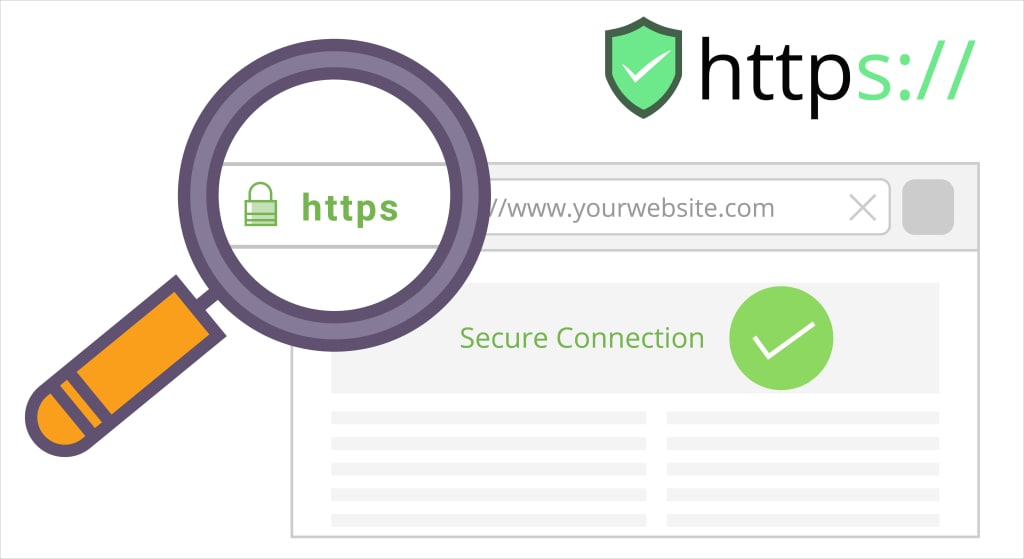
Obtaining an SSL certificate for your website is crucial for ensuring the security of user information and safeguarding it against hackers. It is highly recommended to have SSL implemented on the websites of companies that handle sensitive data such as financial information or medical records. If you have a website in your workplace that handles sensitive information, learning about SSL certificates may be helpful to you.
In this article, we will discuss what SSL is, highlight its importance, and provide a range of applications where professionals can use SSL.
What is SSL?
Secure Sockets Layer (SSL) is a website protocol that establishes a secure connection between a web browser and a web server. This connection encrypts the information within a website, meaning that if someone tried to access, hack, or intercept the data on a browser, they would instead see a mix of numbers, letters, and characters, making the information becomes difficult to understand.

>> Click Here to Get the SSL on Your Own Website for 3–5 bucks only
What is an SSL Certificate?
An SSL certificate is a data file that users can install on a web server for security purposes. When users install an SSL certificate on their server, it activates a security protocol, which enables a secure connection between the server and the website. Typically, websites have SSL certificates when they ask users for personal information such as payment information or email addresses. Companies dealing with user information, such as doctor’s offices, retail stores, or membership services, usually have SSL certificates for their websites.
Here are the different types of SSL certificates:
1. Single Domain SSL Certificate: This certificate works for a separate domain, but not for any subdomain.
2. Wildcard SSL Certificate: This certificate covers a domain and all its subdomains.
3. Unified Communications (UCC) SSL Certificate: This certificate protects the user’s multiple domains under one certificate. It can cover up to 100 domains at a time.
4. Domain Validation (DV) Certificate: This certificate covers multiple domains and provides low-level encryption, although it leaves subdomains vulnerable.
5. Organization Validated (OV) SSL Certificates: These certificates provide a medium level of encryption and they are generally the least expensive certificates.
6. Extended Validation (EV) SSL Certificate: This certificate provides the highest level of security, and sites handling a high level of sensitive information typically choose this certificate.
Why is SSL Important for a Website?
Here are several reasons highlighting the importance of SSL for a website:
1. Protects User Data: SSL certificates provide security for you and your website visitors. When users enter personal information on a website, SSL prevents unauthorized access to that information. During SSL setup, you can control who has access to sensitive data, allowing specific individuals to view secure information.
2. Enhanced Protection from Hackers: With an SSL certificate, your information is less likely to be hacked. This is especially crucial if your website involves usernames, passwords, credit card information, or personal details, as these are commonly targeted by hackers. In the event of a website breach, the SSL certificate transforms the data into a disorganized and incomprehensible format.
3. Increases Search Engine Rank: Many browsers promote websites that have SSL so that users can visit websites that have excellent security measures in place. If you want to gain popularity for your website, then installing an SSL certificate can improve the Search Engine Optimization (SEO) of your website, which can increase the amount of traffic to your website. Some browsers label websites that do not have an SSL certificate as ‘not secure’, which may reduce the chances of users visiting your website.
4. Meets PCI Standards: Any website that accepts online payments from users must first meet Payment Card Industry (PC) data security standard requirements, which are various steps you must take to be eligible to accept online credit card payments. One of these steps is to obtain an SSL certificate to secure your website, so getting SSL puts you one step closer to meeting PCI standards.
5. Establishes User Trust: Having an SSL certificate can help you build trust with the individuals using your website, as the certificate protects their information. You can provide your users with messages explaining how their information on your website is protected due to SSL certificates.
6. Security Identification Requirement: SSL requires that users verify their identity before entering information into your website, reducing the risk of identity theft or fraudulent purchases. It also requires authentication before sending personal information to a third party. For example, if a user makes a payment through your website, and then you put that money into a bank account, SSL requires the bank to identify itself, to ensure that you are sending money to the right facility.
7. Identified Risks: If you have SSL for your website, you can be notified if there is a potential hack or security threat. Typically, when hackers try to infiltrate your website, you can be notified immediately so that you can take appropriate security measures, such as checking that website information is still secure and that no passwords or login data are available. change. You can also log any cases of potential hacking so that you can quickly identify whether the hackers were able to obtain the website’s data.
>> Click Here to Get the SSL on Your Own Website for 3–5 bucks only.
Who Uses SSL?
SSL certificates can be used by professionals in various industries. Here are several examples:
1. IT Professionals: IT professionals can improve and install SSL in software to protect their client’s information.
2. Web Developers: Web developers can enhance SSL certificates and make them more user-friendly and compatible with applications.
3. Retail Employees: Any store that has a website can use SSL to protect sales information such as a customer’s credit card information.
4. Marketing Specialists: Professionals in the marketing field can protect data related to marketing budgets and advertising information.
5. Banking Professionals: Banks may download SSL to their software to protect a user’s online bank accounts, which may include sensitive information such as credit card numbers and Social Security data.
6. Education Professionals: Individuals working in the field of education may use SSL to protect information within their school’s website regarding student medical records and grading data.
7. Financial Managers: Professionals working in finance can use SSL to secure their client’s financial information and to secure any digital investment application they use in their practice.
8. Healthcare Professionals: Healthcare facilities may use SSL within their systems to ensure that patient medical records and insurance information are protected from hackers.
9. Insurance Experts: Insurance companies, handling personal policies, user accounts, and financial data, can use SSL to protect their sensitive information.
By understanding SSL certificates and their significance, professionals in these industries can enhance data security, build trust with users, and comply with industry standards and regulations.
About the Creator
VIVEK SINGH
Audience-oriented Content Creator | | Engineer, Trader & Investor | | Tech, Finance, Business, and Online Marketing | |
Keep reading
More stories from VIVEK SINGH and writers in Journal and other communities.
Writing To Succeed
If you want to find something that will help readers find your writing, possibly expand your audience, and maybe even get you noticed for other things, then you’re not alone. But how can you get it done in a world full of want-to-be writers? Look less at what you’re writing now, and more at what other writers have used to boost their views and reads.
By Jason Ray Morton a day ago in Writers




Comments
There are no comments for this story
Be the first to respond and start the conversation.