
Scott Silverman, Ed.D. on What Makes a Jewish Community—and How It Survives Conflict
Dr. Scott Silverman: In Jewish thought, what defines a community, and how can Jewish communities rebuild trust after major fractures?

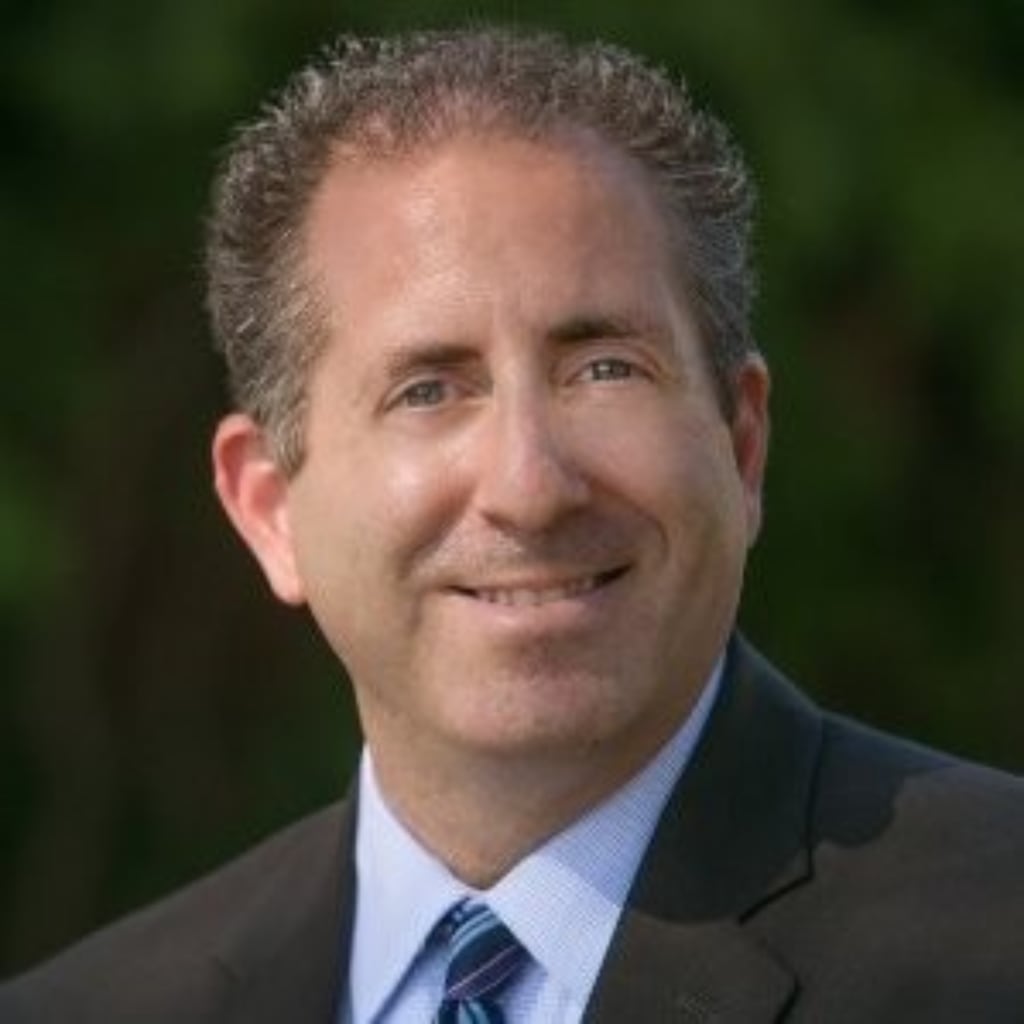
Scott Silverman, EdD, is Dean of Noncredit & External Programs at Santa Monica College, where he leads adult education, workforce training, and community partnerships that broaden access beyond traditional credit pathways. He designs programs for older adults, career re-entry learners, and working professionals, pairing analytical forecasting with student development and engagement. A teacher and public speaker, he also mentors higher-education staff on program design, training, and service. Known for clear communication, he emphasizes in-person connection while using hybrid tools strategically. His career path was sparked by an early mentor in student affairs, turning curiosity into a commitment to community learning. Scott has been a Hebrew School teacher, youth group advisor and Hillel Director, and has been a co-founder and board member for several nonprofit organizations.
In this interview, Scott Douglas Jacobsen speaks with Dr. Scott Silverman about what makes a Jewish community and what sustains it under stress. Silverman emphasizes that Jewish life is fundamentally communal: prayer requires a minyan, and shared history, fate, and evolving customs bind people across geography and denomination. Responsibilities follow through tikkun olam and tzedakah, learned individually and enacted collectively. He argues that political polarization and moral demonization can fracture communities, while trauma often unites them. Repair requires leadership, shared humanity, and rituals like Un’taneh Tokef. He also flags synagogue dues and post–B’nai Mitzvah disengagement as continuity threats.
Scott Douglas Jacobsen: In Jewish thought, what makes a “community”?
Dr. Scott Silverman: Most of Jewish tradition and celebration is all community based. We can’t pray without a minyan (traditional terms is 10 men, I like to think of it as 10 adults myself). We are a people bound together by shared history, shared fate, shared traditions and customs (the same observances and holidays even as they evolve with unique customs from different parts of the world). As the Debbie Friedman (I guess Larry Midler wrote it) song goes, “wherever you go, there’s always someone Jewish. You’re never alone when you say you’re a Jew”. We might be 0,2% of the world population with variations in practice from Ashkenazi to Sephardic to Mizrahi and more, but if you go to Shabbat in Morocco, Pairs, Tel Aviv or Brazil – the practices resonate around the world.
Jacobsen: What responsibilities follow from being in community as an individual and as a member of the group?
Silverman: There is a duty, a shared responsibility for each other, for the world. One of the core principles in Judaism is tikkun olam, repairing the world, and that starts individually (bring a dollar for Tzedakah at Sunday School, collecting coins in a JNF tin, etc), and then we learn what it means to help people together (volunteer at a food bank, or the Temple’s own clothing/toiletry drive, or even making decisions as a Sunday School for where this year’s accumulated tzedakah can go).
The B’rit Milah binds us to God, but that covenant extends really to all of the principles and values of Judaism. As we learned from Rabbi Hillel and Shammai, the stranger asked Shammai to teach him the Torah while standing on one foot, and Shammai smacked him in the hear with a ruler….but Rabbi Hillel lifted one leg and said “that which is hateful to you, do not do to your fellow. The rest is commentary, go and learn it”. Essentially, what we now know as the Golden Rule, comes from this lesson. Every life is sacred, help where you can, how you can.
Jacobsen: How do you build community across differences of political ideology, class, intermarriage, or observance level?
Silverman: Political and ideological issues may be the most challenging. We’ve seen fractures within families since the 2016 election, even from folks who previously had been apolitical. Not just within the Jewish community, oif course…but for our community, an added lens of in-fighting saying that you’re not doing the right thing for the Jewish community if you don’t like (insert name of any candidate).
That said…the richness of our traditions, even amongst those that are agnostic or not really practicing much, still brings people together. Whether it’s the once (or twice a year people who come to High Holy Day services only, or those who drag their kids to Hebrew School because it’s the right thing to do, we can check our differences at the door.
The most skillful clergy can even lead some deep discussion, even discussions that lead one way or the other, without alienating anyone to the point that the community fragments…and circle back to a sense of shared understanding.
I grew up Reform…Sunday School, eventually Hebrew on Wednesdays, a 45min drive back and forth, and only weekend services for B’nai Mitzvahs. It would have been very easy for my parents to not take us, and when I asked my dad about it, he said “our community has survived for thousands of years – who am I to cause a break in that chain”.
When I walk into an Orthodox environment – I may not be able to keep up with the davening and the speed at which prayers are muttered – and I’d prefer a little more community singing, but I know it’s the same faith, different lens. I hope all of our children, from all denominations, grow up with a similar understanding.
Intermarriage – super important for the couple to talk, and I think ensure their kids are exposed to both. Maybe even force some learning of both. So many college students who ended up getting only superficial of either, and they feel lost or short-changed.
Jacobsen: What realities of community can break communities?
Silverman: It’s natural for people to have different perspectives, opinions on issues. The old adage, two Jews, three opinions…
This is fine, expected, maybe welcome. However, if we can’t agree for mutual coexistence, we will have problems. There’s a key difference between “I disagree with that person” and “that person is so wrong and they’re evil or vile for having that opinion”.
Community trauma normally can fracture communities….we have seen so much of it in every generation, that it tends to bring us together.
Jacobsen: What is the process of regaining trust and rebuilding community when major fractures occur?
Silverman: We have to regain our mutually assured belief that there is value in each and every human being. Person A might be in the NRA and Person B in favor of gun control. They have to be able to coexist.
When fractures occur, we need leadership, from clergy and lay leaders, to remind us of our shared humanity, our shared values, trials, tribulations.
Jacobsen: What does accountability look like in Jewish communal life?
Silverman: I think the fact that the entire B’nai Mitzvah celebration is actually built around the transition into adulthood in the eyes of community is the best example. Nobody expects a 13 year old to be as perfectly mature as an adult…but we do, formally and informally, expect our new young adults to act more mature, to be more responsible.
The Bar or Bat Mitzvah gives us the chance to be the students, and our youth-now-adult the teacher. Many other religions or cultures have some form of transition ritual as well…but I don’t know if any of the others involve a teaching on morals and lessons from that week’s religious teaching, as translated into the modern experience of our youth.
Jacobsen: Which Jewish concepts best guide community unity, and navigating conflict and repair?
Silverman: I think Un’taneh Tokef is a good example. During Yom Kippur, we atone for our own sins, but we also, quite intentionally, atone for sins committed by others in our community. Literally all of the sins. There’s no judgment, no guessing about which person near us did what, we just, by rote and ritual, knock our fist over our heart and atone for each sin. It is a resetting for us individually and as a community. How beautiful is that!
Jacobsen: If you could redesign one communal norm, what would you change?
Silverman: I have always been concerned that the price of membership dues to synagogues might persist as a barrier to entry for many families. Perhaps that is why some folks who are otherwise quite reform, go to Chabad as it’s free to participate. I know Temples have options…but fundamentally, I think this is a challenge to continued Jewish communal participation.
The other one: After B’nai Mitzvah, there’s maybe Confirmation in 10th grade. Maybe someone joins Hillel in College, Maybe they ind Moshe House or some Jewish community to be active in before they get married….but there is a good solid 10-15 year gap of active Jewish participation for most individuals from youth to when they have their own kids. Sure, they go to Weddings and Brit Milahs, they will find a Rabbi for their own wedding, but I think many folks are disconnected from a specific Jewish community until they have kids to enroll in Sunday School – and that is a threat to Jewish continuity.
Jacobsen: Thank you very much for the opportunity and your time, Scott.
Scott Douglas Jacobsen is a blogger on Vocal with over 120 posts on the platform. He is the publisher of In-Sight Publishing (ISBN: 978–1–0692343) and the Editor-in-Chief of In-Sight: Interviews (ISSN: 2369–6885). He writes for The Good Men Project, International Policy Digest (ISSN: 2332–9416), The Humanist (Print: ISSN 0018–7399; Online: ISSN 2163–3576), Basic Income Earth Network (UK Registered Charity 1177066), A Further Inquiry, The Washington Outsider, The Rabble, and The Washington Outsider, and other media. He is a member in good standing of numerous media associations/organizations.
About the Creator
Scott Douglas Jacobsen
Scott Douglas Jacobsen is the publisher of In-Sight Publishing (ISBN: 978-1-0692343) and Editor-in-Chief of In-Sight: Interviews (ISSN: 2369-6885). He is a member in good standing of numerous media organizations.
Keep reading
More stories from Scott Douglas Jacobsen and writers in Journal and other communities.
Dr. Scott Silverman on Tzedakah as Justice: Dignity, Anonymity, and Accountability in Jewish Giving
Scott Silverman, EdD, is Dean of Noncredit & External Programs at Santa Monica College in Culver City, California. He leads adult and noncredit education, workforce training, community outreach, and student development initiatives that expand access beyond traditional degree pathways. Silverman is known for program building, data-informed forecasting, and practical student-engagement strategies, and he frequently speaks on higher education management and the evolving workplace. He also teaches, mentors staff, and partners with local organizations to support older adults and re-entry learners. His work blends service, accountability, and a campus-centred belief in human potential while keeping equity and dignity at the center.
By Scott Douglas Jacobsen3 days ago in Journal
Blessed 33
So I woke up on the morning of February 5, 2026 and guess what and you know what I realized? It’s my 33rd birthday. Do you know what that means? Yes, technically I’m getting old, but what I couldn’t have guessed was this would be one of the best days of my life.
By Joe Patterson6 days ago in Confessions




Comments
There are no comments for this story
Be the first to respond and start the conversation.