
Dr. Scott Silverman on Tzedakah as Justice: Dignity, Anonymity, and Accountability in Jewish Giving
Scott Silverman, Ed.D.: How does tzedakah function as justice rather than optional charity, and what do dignity, accountability, and digital giving require from modern Jewish communities?

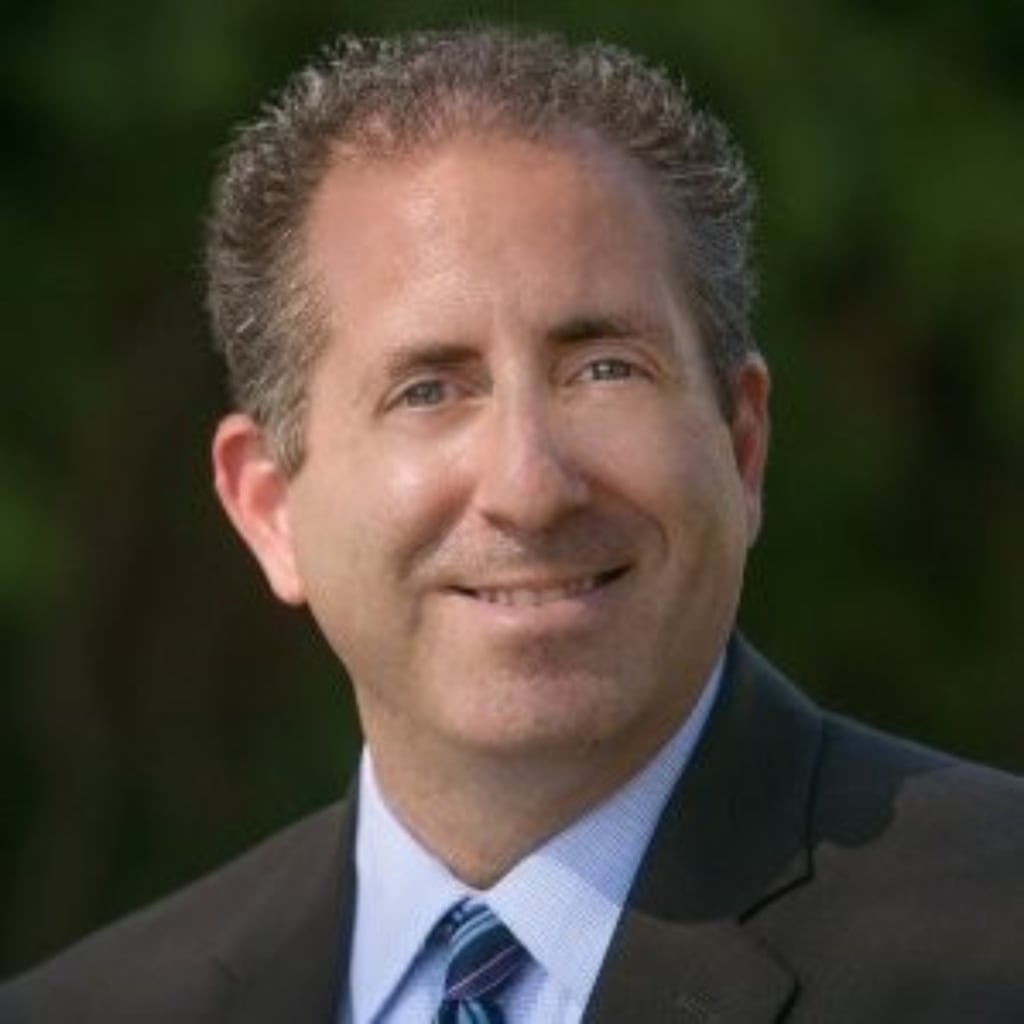
Scott Silverman, EdD, is Dean of Noncredit & External Programs at Santa Monica College in Culver City, California. He leads adult and noncredit education, workforce training, community outreach, and student development initiatives that expand access beyond traditional degree pathways. Silverman is known for program building, data-informed forecasting, and practical student-engagement strategies, and he frequently speaks on higher education management and the evolving workplace. He also teaches, mentors staff, and partners with local organizations to support older adults and re-entry learners. His work blends service, accountability, and a campus-centred belief in human potential while keeping equity and dignity at the center.
In this interview, Scott Douglas Jacobsen speaks with Dr. Scott Silverman about why tzedakah is framed as justice rather than discretionary charity. Silverman argues it is a moral obligation woven into Jewish formation and ethics, extending from the Golden Rule toward a “Platinum Rule” that centers on recipients’ needs. He emphasizes dignity through anonymity, reducing coercion, dependency, and awkward power dynamics. Drawing on Maimonides’ eight levels of charity, he explores how communities should balance individual discretion and communal responsibility, vet and audit funds, and prioritize both emergency relief and long-term sustainability. He also considers how digital giving reshapes trust and access.
Scott Douglas Jacobsen: Why is tzedakah defined as justice rather than optional charity?
Dr. Scott Silverman: Tzedakah is almost an expectation in Judaism. We are expected to give to charitable causes, and this is literally woven into the weekly expectation at Sunday School. It is a moral obligation rooted in the Torah….do unto others as you would have done unto you, Golden Rule. The Platinum Rule is better… but a more modern invention. I want to think it still applies: do unto others as they would want done unto them.”
So do not hurt people if you do not want to be hurt, and help people if you would want help… or help people, but treat them the way they would need/treat people, the way they would want to be treated.
Jacobsen: What does dignity require from givers and recipients in practice?
Silverman: Dignity requires anonymity. Dignity and anonymity are critical. It prevents a lot of awkward conversations… the recipient trying to latch on to the donor, the donor wanting to stop giving after a single failed effort with the recipient, etc. Teaching someone how to fish so they can take care of themselves and not be dependent on others. For your information, though, you must be familiar with Maimonides’ Eight Levels of Charity:
https://www.chabad.org/library/article_cdo/aid/45907/jewish/Eight-Levels-of-Charity.htm
Jacobsen: How do you balance individual discretion with communal obligation?
Silverman: Tzedakah is a “yes, and” for me…meaning I want people to give what they can, when they can, both to the collective efforts, and to things on their own or as a family. Giving is infectious. Volunteering to put together a bag of toiletries may even be more lasting than donating $5 to cover the cost of 1 bag. I would almost want to see how Maimonides would update the 8 levels of giving for today’s world. Where would ordering a bulk pack of toothbrushes on eBay or Amazon fit in? What about recurring, set-it-and-forget-it donations versus intentional estate gifts? What would the levels even teach fundraising professionals…
Jacobsen: Where are the lines between tzedakah, gemilut chasadim, and tikkun olam?
Silverman: Tzedakah – justice/fairness
Gemilut Chasadim – acts of loving kindness
Tikkun Olam – repairing the world=
Giving tzedakah IS an act of gemilut chasadim, and every act of loving kindness we perform brings us closer to repairing the world. Tikkun Olam is built on gemikllut chasadim.
Jacobsen: What accountability and transparency standards should communal funds meet?
Silverman: Spitballing here:
The person administering funds to those in need should conduct some vetting to ensure that those receiving the funds are not going to use them nefariously (drugs, booze), but that they will be used as intended.
Donors will want to know they have made an impact… and it can be done without saying “this is the specific person you helped” or “this is the person who helped you”.
Jacobsen: In the community, who audits this power?
Silverman: The Board of the Temple, or of the nonprofit, would hire an auditor… but the report would also help with future fundraising pitches.
Jacobsen: How do you decide between emergency relief and long-term economic sustainability?
Silverman: Jewish Free Loan Association is such a great example. They offer short-term interest-free loans.
The goal is always to teach a person how to fish… but some need help recognizing the mental capacity and bandwidth to get the next meal. Take care of the basic needs without becoming that person’s sole source – or you will not be able to have a broader impact.
Jacobsen: How do communities reduce stigma, handle confidentiality, and avoid “deservingness” tests?
Silverman: Having a fully transparent set of criteria, but leaving wiggle room, and/or a discretionary fund that can be given out without adherence to the criteria, can get you out of the deservingness game.
Jacobsen: How are digital tzedakah and public policy reshaping Jewish giving if at all?
Silverman: Tzedakah used to be so focused through the Temple. Even over the last 20 years, when digital giving has existed, most people still gave through the Temple, aside from big gifting, up until about 2015, when Charity Navigator and so many other vetting services became much more well-known. SO that you did not need to have a nonprofit vetted by the Temple before you supported it, this was accelerated by the pandemic, when there was no way to gather for so long. Digital giving has made it possible for anyone to give at any time. Some, like https://dollaraday.co/, have made it so painless that it is easy to give whatever you can. Maimonedes would say something about this for sure – giving but automating it, where does that fall into the ladder of tzedakah?
Jacobsen: Thank you very much for the opportunity and your time, Scott.
Scott Douglas Jacobsen is a blogger on Vocal with over 120 posts on the platform. He is the publisher of In-Sight Publishing (ISBN: 978–1–0692343) and the Editor-in-Chief of In-Sight: Interviews (ISSN: 2369–6885). He writes for The Good Men Project, International Policy Digest (ISSN: 2332–9416), The Humanist (Print: ISSN 0018–7399; Online: ISSN 2163–3576), Basic Income Earth Network (UK Registered Charity 1177066), A Further Inquiry, The Washington Outsider, The Rabble, and The Washington Outsider, and other media. He is a member in good standing of numerous media associations/organizations.
About the Creator
Scott Douglas Jacobsen
Scott Douglas Jacobsen is the publisher of In-Sight Publishing (ISBN: 978-1-0692343) and Editor-in-Chief of In-Sight: Interviews (ISSN: 2369-6885). He is a member in good standing of numerous media organizations.
Keep reading
More stories from Scott Douglas Jacobsen and writers in Journal and other communities.
The Soft Cruelties of Conversation: Travelogues and Emotional Safety Reflections
When you travel with someone steeped in select grievance, a gentle, loving persuasion eventually gives way to containment: kindness, limits, and exit routes — for a time. This is a short field guide from one fraught trip: how to stay humane, set boundaries, and leave without rancour when conversation turns into performance.
By Scott Douglas Jacobsen4 months ago in Journal
Ten Rules, Ten Years, One Life: Reflections at 44
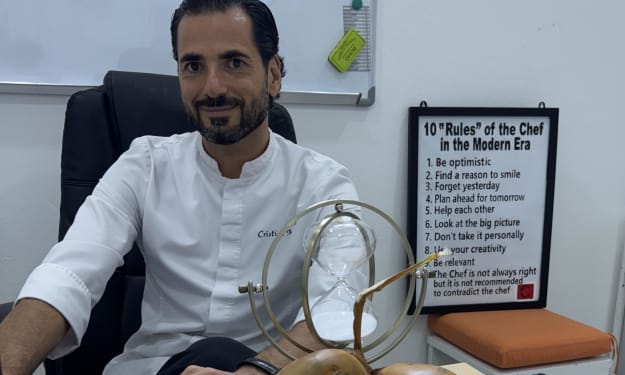
The setting is simple. A chef’s jacket. A keyboard resting quietly on the desk beside him. An hourglass placed in front of two coconuts marked with the number 44. Behind him, framed on the wall, hangs a list titled “10 Rules of the Chef in the Modern Era.”
By Cristian Marino3 days ago in Journal
from death into life
Young Aldin of Wiloh had never contemplated death. It was almost strange — so many around him had the tendency to obsess over it, to clamor and claw almost desperately at their own perceptions of the end to know death as much as they could: when it would come, why it would come, where it would take them when it did.
By angela hepworth5 days ago in Fiction



Comments
There are no comments for this story
Be the first to respond and start the conversation.