
ROLE OF MANAGEMENT
Management Organizational Behavior
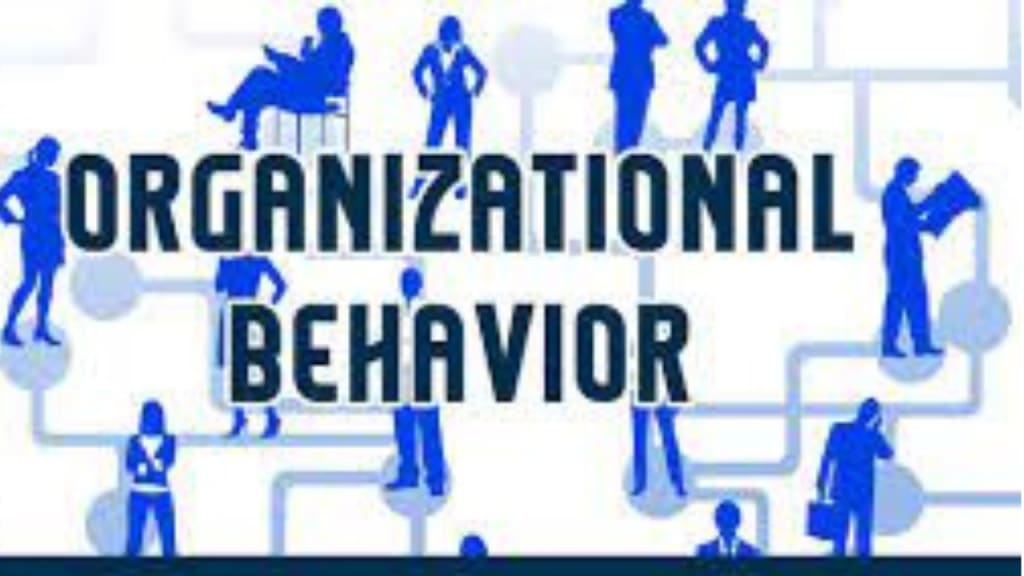
MANAGEMENT:
Management has been important to the daily lives of people in groups since long. Therefore,
a question is raised that if the management has been so important for human lives, why it has
assumed added importance in the present-day society. The possible answer of this question
can be traced in the context of emergence of large-sized organizations. The management of
these organizations has become much more complex than what it used to be earlier. Along
with the size, another dimension which has added to the complexity of managing is the
changing nature of society and its various constituents. Therefore, the issue before the
present-day managers is how to take care of these changes so that organizations achieve their
objectives. Thus, management has become crucial not only for the organizations but for the
society too. Even classical writers on management have recognized its importance long back.
Meaning of Management: Management is relative a new discipline. Being a new
discipline, it has drawn concepts and principles from economics, sociology, philosophy,
psychology, statistics and soon.
Management is an art (or) technique of getting things done.
Management is a distinct activity of an organization.
Management denotes a group of people.
Management is a discipline which represents a body of knowledge.
DEFINITION:
Koontz: Management is the art of getting things done through and with people in
formally organized groups.
George R. Terry: Management is a distinct process consisting of planning organization,
organizing, actuating and controlling performance to determine and accomplish the
objectives by the use of people and resources.
NATURE & SCOPE OF MANAGEMENT:
Management techniques in managing the affairs of the organization have changed its
nature over the period of the time. In spite of the growing importance of management as
an academic discipline and contributing to the quality of human life, the concept is still
clouded by certain misconceptions. The nature of management can be described as
follows
Management is getting things done: A manager does not do any operating work
himself. Manager gets the work done by, with and through the people. Manager has to
direct them and develop their talent by adopting technical, human and psychological
skills. Manager must motivate the subordinates for the accomplishment of the task
assigned to them.
Management is a profession: Management is a profession because some of its
established is being applied in practice. Management has been regarded as a profession
by many while many have suggested that it has not achieved the status of a profession.
Management makes judicious use of all available means to accomplish certain
predetermined task.
Management Organizational Behavior
A Siddi Sainadh, Assistant Professor Sri Venkateswara College of Engineering, Tirupati 2
The various features of a profession may be the following:-
Organized body of knowledge, principles and techniques.
Formal training and education.
Spirit of service to society.
Organized body of knowledge: Management has its own body of systematized
knowledge which contains the principles and techniques. It is widely taught in the
universities and other educational institutions as a discipline.
Formal training and education: Management is not merely theory. Hence the person is
prepared to take practical decision in business. Thus he has to undergo rigorous training
through seminars, case studies, group discussion and even practical training in factories
before assuming the office.
Spirit of service to society: Though professionals charge fee for the service rendered,
they give priority to service over the desire for monetary reward.
Management is purposeful: Management is a goal – oriented activity. It is concerned
with the accomplishment of goals through its various functions like planning, organizing,
staffing, directing and controlling. The most important goal of a management activity is
to accomplish the objectives of an organization. These objectives may be economic,
socio-economic, social and human and there by management at different levels seeks to
achieve these objectives in different ways.
Management is a science: As a science, science has been defined as a body systemized
knowledge which establishes a relationship between cause and effect. Such systemized
knowledge contains hypothesis, theories, experiment and principles. Science may be
viewed in terms of its structure, its goals, and its methods. In terms of its structure, it is a
number of scientific disciplines:
Physics,
Biology,
Psychology,
Economics,
Management and many others. Sciences attempts to provide asset of internally consist
hypothesis, principles, laws and theories dealing with an aspect of total knowledge.
Management is an Art: The meaning of art is related with the bringing of desired result
through the application of skills. Management is an art can be seen from the following
facts.
The process of management does involve the use of knowhow and skills like any other art
such as :
Music,
Painting,
Sculpture etc.,
Management is creative like any other art; creativity is a major dimension in managerial
success. It creates new situation for future improvement.
A comparison between science and art is presented in below which suggests that a
manager requires both aspects of management to be successful.
Management Organizational Behavior
A Siddi Sainadh, Assistant Professor Sri Venkateswara College of Engineering, Tirupati 3
Managing is essential in all organized co-operation, as well as at all levels of organization in
an enterprise. It is the function performed not only by corporation President and the army
general but also of the shop supervisors and the company commander. Managing is equally
important in business as well as non business organizations.
Multi disciplinary: Management integrates the ideas and concepts taken from
disciplines such as psychology, sociology, anthropology, economics, ecology, statistics,
operation research, history etc. and presents newer concepts which can be put in practice
for managing the organizations. Contributions to the field of management can be
expected from any discipline which deals with some aspects of human beings.
Dynamic Nature of Principles: Principles are a fundamental truth which establish cause
and effect relationship of a function. Based on practical evidences, management has
framed certain principles, but these principles are flexible in nature and change with the
changes in the environment in which an organization exists. In the field of Management,
organization researches are being carried on to establish principles in changing society
and no principles can be regarded as a final truth.
Relative, Not Absolute Principles: Management Principles are relative, not absolute
and they should be applied according to the need of the organization. Each organization
may be different from others. The difference may exist because of time, place, socio-
cultural factors etc. A particular management Principles has different strength in
different conditions and therefore Principles of Management should be applied in the
light of the prevailing conditions.
SIGNIFICANCE OF MANAGEMENT:
The importance of management can be described through following points:
1. Encourage initiative: Management encourages initiative. Initiative means to do the
right things at the right time without being told or influenced by the superior. The
employees should be encouraged to make their own plans and also to implement these
plans. Initiative gives satisfaction to employees and success to organization.
2. Encourages innovation: Management also encourages innovation in the organization.
Innovation brings new ideas, new technology, new methods, new products, new services
etc. This makes the organization more competitive and efficient.
3. Facilitates growth and expansion: Management makes optimum utilization of
available resources. It reduces wastage and increases efficiency. It encourages teamwork
and motivates employees. It also reduces absenteeism and labour turnover. All this
results in growth, expansion and diversification of the organization.
3. Improves life of workers: Management shares some of its profit with the workers. It
provides the workers with good working environment and conditions. It also gives the
workers financial and non-financial incentives. All this improves the quality of life of the
workers.
4. Improves corporate image: If the management is good, then the organization will
produce good quality goods and services. This will improve the goodwill and corporate
image of the organization. A good corporate image brings many added benefits to the
organization.
5. Motivates employees: Management motivates employees by providing financial and
non-financial incentives. These incentives increase the willingness and efficiency of the
employees. This result in boosting productivity and profitability of the organization.
6. Optimum use of resources: Management brings together the available resources. It
makes optimum (best) use of these resources. This brings best result to the organization.
Management Organizational Behavior
A Siddi Sainadh, Assistant Professor Sri Venkateswara College of Engineering, Tirupati 4
7. Reduces wastage: Management reduces the wastage of human, material and financial
resources. Wastage is reduced by proper production planning and control. If wastage is
reduced then productivity will increase.
8. Increases efficiency: Efficiency is the relationship between returns and cost.
Management uses many techniques to increase returns and reduce costs. Higher
efficiency brings many benefits to the organization.
9. Improves relation: Management improves relations between individuals, groups,
departments and between levels of management. Better relations lead to better
teamwork. Better teamwork brings success to the organization.
10. Reduces absenteeism and labour turnover: Absenteeism means the employee is
absent without permission. Labour turnover means the employee leaves the organization.
Labour absenteeism and turnover increases the cost and causes many problems in the
smooth functioning of the organization. Management uses different techniques to reduce
absenteeism and labour turnover in the organization.
11. Encourages teamwork: Management encourages employees to work as a team. It
develops a team spirit in the organization. This unity brings success to the organization.
About the Creator
Keep reading
More stories from Samantha Sharma and writers in Journal and other communities.
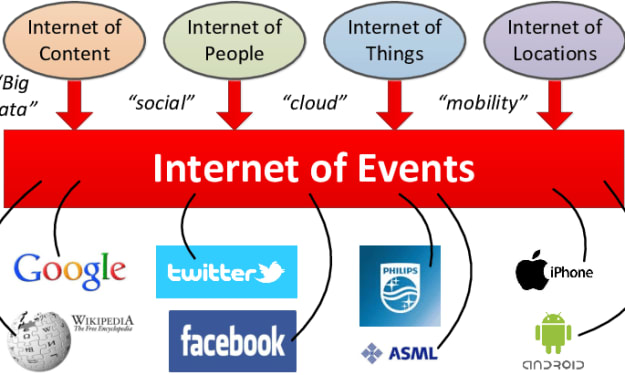
What is Internet of Events ?
What is an event? A thing that happens or takes place, especially one of importance. (OR) An event is any significant occurrence or change in state for system hardware or software. An event is not the same as an event notification, which is a message or notification sent by the system to notify another part of the system that an event has taken place.
By Samantha Sharma4 years ago in 01
15 Challenges Facing Urban Air Mobility Today
Urban Air Mobility (UAM) refers to the use of electric vertical takeoff and landing (eVTOL) aircraft to move people and cargo within cities. On paper, it promises shorter travel times, reduced ground congestion, and a new layer of transportation above crowded streets.
By Beckett Dowhan6 days ago in Journal
Miss Persephone's Manual to a Seemingly Ordinary Life
Miss Persephone was found at the dining table, her blue eyes swollen, her tears arriving and retreating like the tides of the ocean. Earlier that day, her family had visited her in the retirement home where she had lived for eight years. It was her eightieth birthday.
By Imola Tóth4 days ago in Fiction


Comments
There are no comments for this story
Be the first to respond and start the conversation.