
Residential Battery Market Size to Hit $43.28B by 2033: Strategic Insights & Trends
Rising solar adoption, advanced battery tech like lithium-ion, and high energy costs with grid instability drive residential battery demand for sustainable, reliable power.

Market Overview:
The residential battery market is experiencing rapid growth, driven by increasing adoption of renewable energy, advancements in battery technology, and rising energy costs and grid instability. According to IMARC Group’s latest research publication, “Residential Battery Market Size, Share, Trends and Forecast by Type, Power Rating, Operation, and Region, 2025-2033”, the global residential battery market size was valued at USD 15.57 Billion in 2024. Looking forward, IMARC Group estimates the market to reach USD 43.28 Billion by 2033, exhibiting a CAGR of 11.43% from 2025-2033.
This detailed analysis primarily encompasses industry size, business trends, market share, key growth factors, and regional forecasts. The report offers a comprehensive overview and integrates research findings, market assessments, and data from different sources. It also includes pivotal market dynamics like drivers and challenges, while also highlighting growth opportunities, financial insights, technological improvements, emerging trends, and innovations. Besides this, the report provides regional market evaluation, along with a competitive landscape analysis.
Download a sample PDF of this report: https://www.imarcgroup.com/residential-battery-market/requestsample
Our report includes:
- Market Dynamics
- Market Trends And Market Outlook
- Competitive Analysis
- Industry Segmentation
- Strategic Recommendations
Growth Factors in the Residential Battery Market
- Increasing Adoption of Renewable Energy
The rise in residential solar panel installations is a key catalyst for the residential battery market. Homeowners can go solar for less electricity expense and less carbon footprint, creating demand for energy storage capability. Batteries such as Tesla's Powerwall enable households to store solar energy that they generated during the day to be used at night, facilitating energy independence. For example, the penetration of solar in Australia is significant, which has caused the government to incentivize battery installations in conjunction with solar systems. This movement is driven by and tied to our growing responsibility regarding the environment and sustainable living, which ultimately drives the demand for reliable, high-capacity batteries.
- Advancements in Battery Technology
Technological advancements in battery performance, lifetimes, and costs are driving market growth. Lithium-ion batteries are the most commonly used batteries in residential energy systems, and improvements in energy density and safety make them more appealing to consumers. Companies like LG Energy Solution and BYD have introduced modular battery designs that could accommodate a greater variety of end-use applications. For example, the IQ Battery from Enphase Energy integrates seamlessly into residential energy systems and uses smart technology to optimize battery use. These patient worldwide developments will decrease user maintenance and improve overall efficiency, motivating battery adoption. Future battery research into solid-state batteries may also reduce product costs while improving performance. The outcome would be a larger battery market.
- Rising Energy Costs and Grid Instability
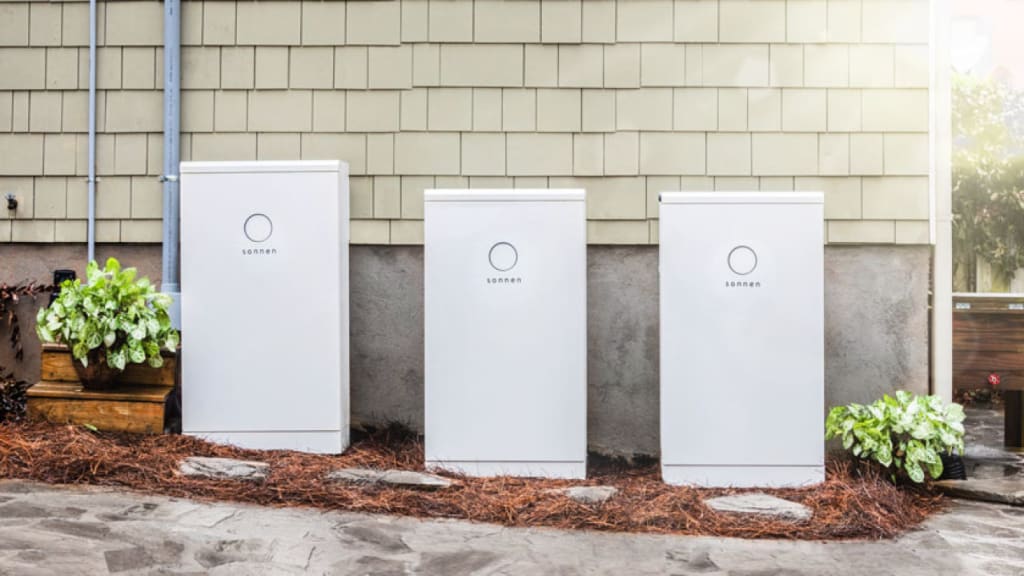
Rising electricity prices and increasing blackouts are causing many homeowners to invest in residential batteries for cost savings and reliability. In places like California that experience wildfires and power shutoffs, batteries provide incredibly important backup power. Systems like Sonnen’s ecoLinx allow households to maintain vital functions during blackouts which creates peace of mind. High energy prices also entice consumers to store cheap, off-peak grid energy or solar power for use during peak hours, which limits their reliance on expensive peak tariffs. This financial and practical driver is strong in regions with unreliable grids, leading to increased battery demand.
Key Trends in the Residential Battery Market
- Integration with Smart Home Systems
Smart homes are rapidly integrating residential batteries, allowing users more control and efficiency. Newer systems, like the Generac PWRcell, connect with home energy management systems which gives homeowners the ability to monitor and improve efficiencies through their smartphone. For example, batteries can charge during low-cost electricity periods (or periods of high solar generation). This trend is noteworthy given the increasing prevalence of smart homes with a growing array of smart devices and/or appliances capable of communicating with each other (such as smart thermostats). In terms of energy savings and user experience, the integration of batteries into smart home systems is extremely beneficial and enables homeowners to make batteries a valuable component of connected and eco-friendly homes.
- Growth of Virtual Power Plants
Virtual power plants (VPPs) are seen as a game changer, as they allow utility companies to have their grid stability bolstered by home, networked, batteries. Utilities work with homes where the homeowners are willing to aggregate their battery storage and dispatch that energy stored in the battery, during peak usage times, thereby optimizing the grid usage. In Germany, with companies such as Next Kraftwerke, they allow a household with a battery to provide energy back to the grid and therefore allow the household to earn revenue. One of the best parts of VPP\'s is that it makes the battery worth something by allowing it to be monetized while also incentivizing larger usage of batteries to support operators. Increasing battery potential also reduces usage pressure from traditional assets or battery resources and is important to the reforming efforts of a providers grid globally. Virtual power plants are already emerging as a really important axis within this emerging residential battery market.
- Emphasis on Circular Economy and Recycling
Concerns about sustainability are influencing the residential battery space, particularly with recycling and second-life applications. Suppliers are proactively creating programs for repurposing used batteries, for less demanding applications, such as stationary storage, prior to sending them to recycling. For example, in Japan, Nissan is repurposing Leaf EV batteries to offer home energy storage, therefore extending the life of the batteries. Recycling initiatives, like Redwood Materials, are intended to extract valuable materials, including lithium and cobalt, from discarded batteries while working to mitigate climate impact. Sustainability appeals to eco-conscious consumers, provides a favorable context for regulatory pressures to implement sustainable practices, builds trust, and supports long-term growth in the residential battery market.
Leading Companies Operating in the Global Residential Battery Industry:
- Amara Raja Batteries Limited
- Delta Electronics Inc.
- Eaton Corporation plc
- Energizer Holdings Inc.
- FIMER S.p.A.
- LG Energy Solution Ltd.
- Luminous Power Technologies Pvt. Ltd. (Schneider Electric SE)
- Panasonic Corporation
- Samsung SDI Co. Ltd.
- SMA Solar Technology AG
- Tesla Inc.
Residential Battery Market Report Segmentation:
By Type:
- Lithium-ion Battery
- Lead-acid Battery
- Others
Lithium-ion battery dominates the residential market in 2024 due to superior performance, longer lifespan, high energy density, and reduced costs.
By Power Rating:
- 3-6kW
- 6-10kW
- More than 10 kW
3-6 kW ideal for smaller households or moderate energy needs, providing cost-effective energy storage for basic appliances.
By Operation:
- Standalone
- Solar
Standalone operates independently from solar, storing grid electricity during low rates for use during high rates and outages.
Regional Insights:
- North America (United States, Canada)
- Asia Pacific (China, Japan, India, South Korea, Australia, Indonesia, Others)
- Europe (Germany, France, United Kingdom, Italy, Spain, Russia, Others)
- Latin America (Brazil, Mexico, Others)
- Middle East and Africa
Asia Pacific enjoys a leading position in the residential battery market due to the rising focus on reliable power solutions.
Research Methodology:
The report employs a comprehensive research methodology, combining primary and secondary data sources to validate findings. It includes market assessments, surveys, expert opinions, and data triangulation techniques to ensure accuracy and reliability.
Note: If you require specific details, data, or insights that are not currently included in the scope of this report, we are happy to accommodate your request. As part of our customization service, we will gather and provide the additional information you need, tailored to your specific requirements. Please let us know your exact needs, and we will ensure the report is updated accordingly to meet your expectations.
About Us:
IMARC Group is a global management consulting firm that helps the world’s most ambitious changemakers to create a lasting impact. The company provide a comprehensive suite of market entry and expansion services. IMARC offerings include thorough market assessment, feasibility studies, company incorporation assistance, factory setup support, regulatory approvals and licensing navigation, branding, marketing and sales strategies, competitive landscape and benchmarking analyses, pricing and cost research, and procurement research.
Contact Us:
IMARC Group
134 N 4th St. Brooklyn, NY 11249, USA
Email: [email protected]
Tel No:(D) +91 120 433 0800
United States: +1-631-791-1145
About the Creator
Andrew Sullivan
Hello, I’m Andrew Sullivan. I have over 9+ years of experience as a market research specialist.
Keep reading
More stories from Andrew Sullivan and writers in Journal and other communities.
Sports Medicine Market Size to Surpass $10.3B by 2033: Growth & Insights
Market Overview: The sports medicine market is experiencing rapid growth, driven by rising participation in sports and fitness activities, advancements in medical technology, and growing awareness of sports injury prevention. According to IMARC Group's latest research publication, "Sports Medicine Market: Global Industry Trends, Share, Size, Growth, Opportunity and Forecast 2025-2033", The global sports medicine market size was valued at USD 6.8 Billion in 2024. Looking forward, IMARC Group estimates the market to reach USD 10.3 Billion by 2033, exhibiting a CAGR of 5.38% during 2025-2033.
By Andrew Sullivan7 months ago in Journal
The goals I did not achieve
Every writing goal I made for the year is a wash. It has been this way for a while, but I think it's important to be open about my failures and the reality of how life can get in the way. This is especially true considering the several times I have posted on Vocal about my writing goals, how I was changing my approach, and where I was hoping to be for the upcoming year. I will probably do that again in a couple months, but for now, it is time to acknowledge where I am today.
By Kay Husnick24 days ago in Journal


Comments
There are no comments for this story
Be the first to respond and start the conversation.