
Red Dawn: The Rise of Mars Civilization The Beginning
The year was 2147, and humanity’s dream of colonizing Mars had become a reality. Decades of research, innovation, and sacrifice had led to the establishment of the first self-sustaining Martian city, Ares Prime. Nestled within the Valles Marineris canyon, the city was a beacon of hope and ingenuity, shielded by immense biodomes that protected its inhabitants from the harsh Martian atmosphere.

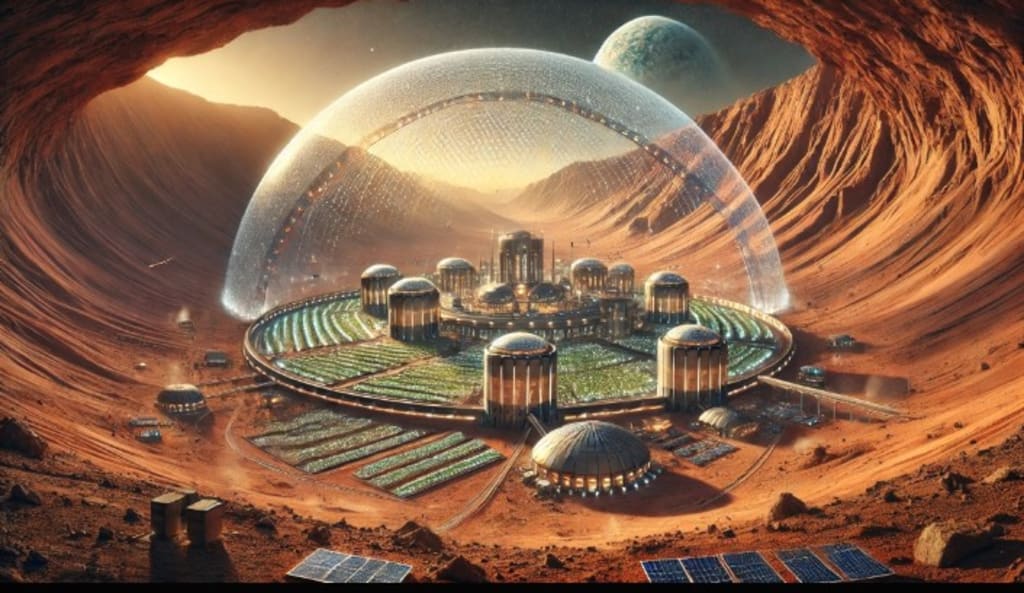
Ares Prime wasn’t just a settlement; it was a testament to human perseverance. The city was powered by a combination of nuclear fusion and solar energy, while its water came from the melting of subsurface ice. Crops grew in sprawling hydroponic farms, and oxygen was produced by advanced electrolysis systems. Over 50,000 settlers lived in harmony with the red planet, shaping a new era for humanity.
The Martian Society
Martian society was unlike anything Earth had ever seen. The constraints of the hostile environment necessitated unity, cooperation, and efficiency. Every citizen had a role to play, from scientists studying the planet’s geology to engineers maintaining life-support systems, and from farmers cultivating algae and crops to educators shaping the next generation of Martians.
The government of Mars was a technocracy, led by experts in various fields who prioritized the survival and prosperity of the colony. Laws were strict but fair, designed to preserve resources and ensure equal opportunities. The settlers were diverse, hailing from every corner of Earth, united by a common purpose: to make Mars a home.
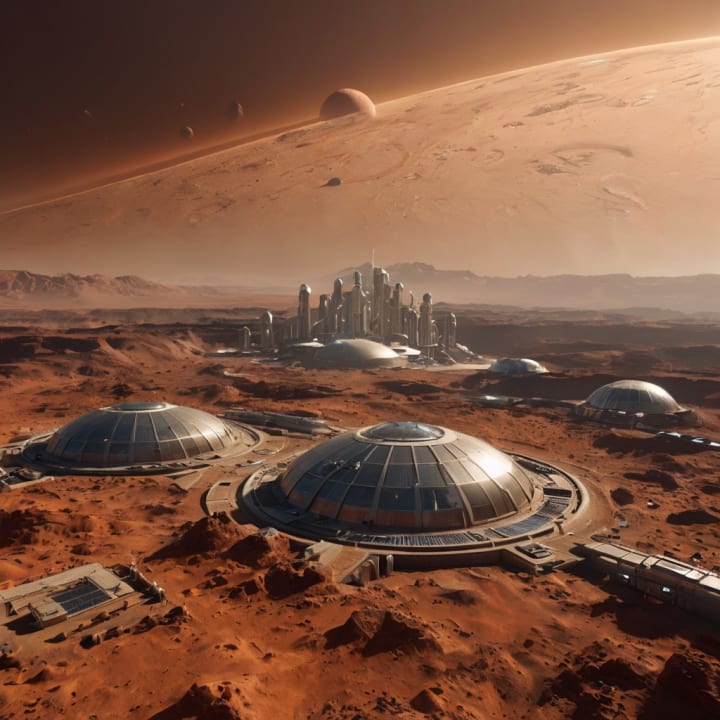
Technology played a central role in daily life. Autonomous robots roamed the city, performing maintenance, delivering goods, and assisting in construction. Communication networks allowed instant connectivity with Earth, though the delay of up to 20 minutes meant that Martians had to solve most problems independently.
Exploration and Expansion
Beyond the safety of the domes, the Martian wilderness beckoned. Teams of explorers, equipped with rugged rovers and advanced suits, ventured into the planet’s uncharted regions. They mapped the terrain, collected samples, and searched for signs of ancient life.
One such explorer was Dr. Elena Torres, a renowned astrobiologist. She led an expedition to the Jezero Crater, where a dried river delta hinted at the possibility of microbial fossils. After months of painstaking excavation, her team discovered structures resembling stromatolites, the fossilized remnants of ancient microorganisms. This discovery sent shockwaves through the scientific community, proving that Mars had once harbored life.
Meanwhile, engineers worked tirelessly to expand the colony. New biodomes sprouted like mushrooms, housing thousands of settlers and advanced research facilities. Underground tunnels connected the domes, creating a sprawling network that could withstand the planet’s frequent dust storms.
Challenges and Triumphs
Life on Mars was not without its challenges. Dust storms, some of which lasted for months, posed a constant threat, blocking sunlight and coating every surface in a fine layer of rust-colored particles. Settlers had to ration power and food during these periods, relying on their resilience and ingenuity.
Radiation was another major concern. While the biodomes were equipped with shielding, prolonged exposure to cosmic rays and solar flares could lead to health issues. To combat this, the settlers began constructing underground habitats within the planet’s lava tubes, using the natural rock as protection.
Despite these obstacles, the Martians thrived. Their culture evolved, blending elements from Earth with new traditions born from their unique environment. Festivals celebrated the Martian year, with colorful lights illuminating the domes and music echoing through the tunnels. Art and literature flourished, capturing the beauty and isolation of life on the red planet.
The Discovery of Helium-3
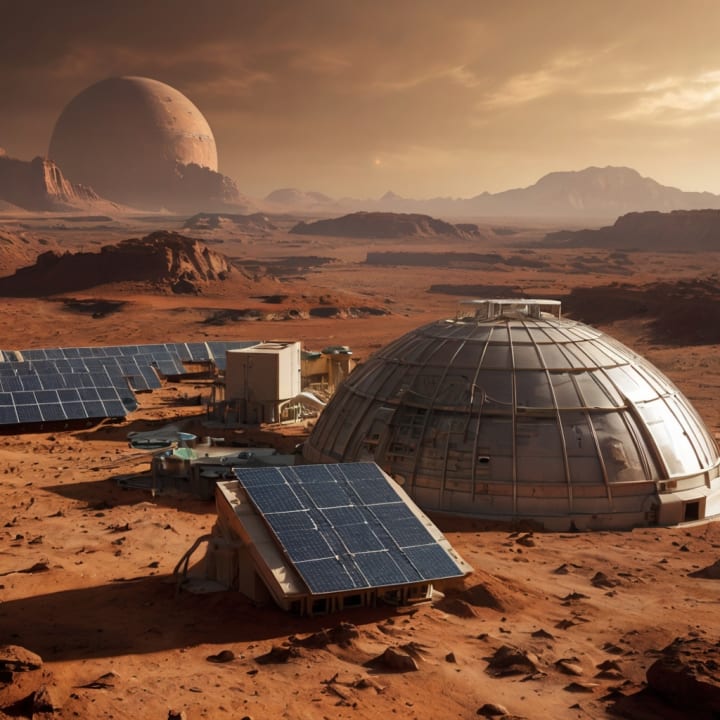
Mars held secrets that would transform the course of human history. In 2158, a team of miners discovered vast deposits of helium-3, a rare isotope crucial for nuclear fusion. This element, abundant in lunar soil and now found on Mars, promised a nearly limitless source of clean energy.
The discovery sparked a new space race. Earth-based corporations and governments scrambled to stake their claims, leading to tensions between the Martian settlers and their terrestrial counterparts. The settlers, who had grown independent and self-reliant, resisted Earth’s attempts to exploit their resources.
The Martian Revolution
In 2164, tensions reached a boiling point. Earth’s United Federation sent a fleet of mining ships to extract helium-3, bypassing the authority of the Martian government. Protests erupted in Ares Prime, as settlers demanded the right to control their resources.
The conflict escalated into a standoff when Earth attempted to impose trade restrictions on Mars. The settlers, now identifying as Martians rather than Earthlings, declared their independence. Led by Governor Marcus Ren, they issued the Martian Declaration of Sovereignty, a bold proclamation that challenged Earth’s dominance.
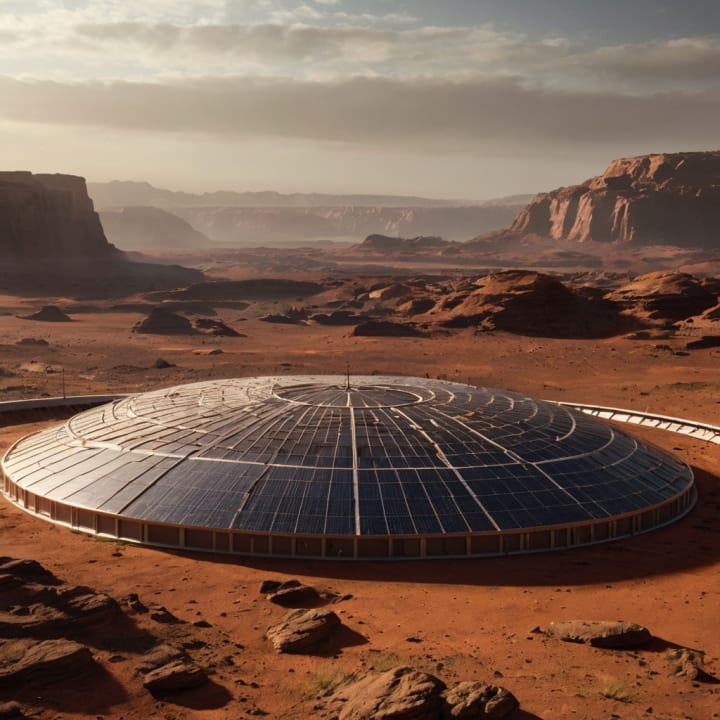
Earth responded with threats of sanctions, but the Martians held their ground. They had developed their own advanced technologies, including automated defense systems and fusion-powered spacecraft. In a surprising turn of events, sympathetic movements on Earth pressured their governments to negotiate.
A New Era
In 2170, the Treaty of Ares was signed, officially recognizing Mars as an independent entity. The treaty established guidelines for resource sharing, scientific collaboration, and mutual defense. For the first time in history, humanity was a multi-planetary species, united by a shared destiny.
The newly-formed Martian Federation flourished. Cities like Olympus Mons, Gale Crater, and Utopia Planitia became hubs of innovation and culture. The settlers continued to explore the planet, uncovering its mysteries and paving the way for future generations.
The Legacy of Mars
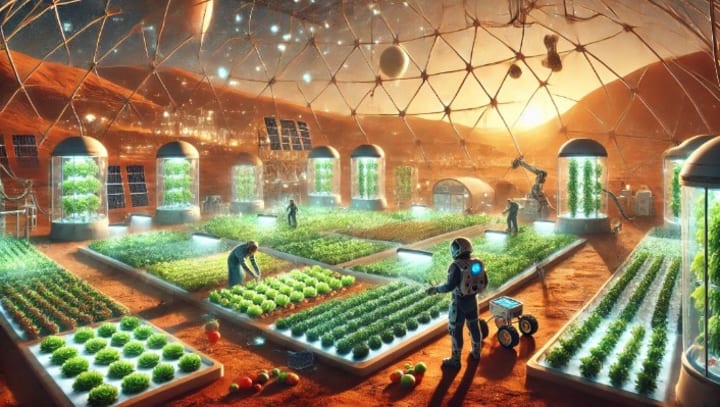
By the end of the 22nd century, Mars was no longer a colony but a civilization in its own right. Its people had forged a unique identity, blending the best of Earth’s cultures with the spirit of exploration and resilience.
Martian children grew up under the pinkish sky, their imaginations fueled by tales of their ancestors’ struggles and triumphs. They dreamed not of returning to Earth, but of venturing further into the cosmos—to Europa, Titan, and beyond.
Mars was a symbol of humanity’s potential, a reminder that even in the harshest environments, life could thrive. The red planet, once a barren wasteland, had become a vibrant home, proving that with courage and determination, anything was possible.
As the Sun set over Ares Prime, casting long shadows across the rust-colored plains, the Martians looked to the stars, knowing that their journey was only beginning.
About the Creator
Say the truth
"Say the Truth: Explain Everything in the World" is your trusted source for uncovering facts and exploring the wonders of history, science, technology, and beyond. We simplify complex ideas and reveal truths to inspire curiosity .
Keep reading
More stories from Say the truth and writers in Journal and other communities.
Birds on a Lamp Post in a Red Twilight: A Symbol of Tranquility and Mystery
Birds on a Lamp Post in a Red Twilight: A Symbol of Tranquility and Mystery The image of birds perched on a lamp post, silhouetted against a striking red twilight, evokes a sense of serenity and mystique. This visual, simple yet profound, has captured the imagination of artists, photographers, and poets throughout history. It represents a unique intersection of natural beauty, urban elements, and the subtle passage of time. In this article, we explore the symbolism, artistic interpretations, and emotional depth behind this captivating scene while delving into the science and cultural contexts that make it so compelling.
By Say the truth about a year ago in Journal
Instagram Stories: How Viewer Lists Work and What They Reveal About Engagement
Instagram Stories remain one of the most dynamic features on the platform, allowing users to share temporary photos, videos, text overlays, polls, questions, and music that vanish after 24 hours. Introduced in 2016, this format encourages authentic, in-the-moment sharing—whether it's a quick travel snapshot, a behind-the-scenes work moment, or a casual daily update. Unlike permanent feed posts, Stories create urgency and foster real-time interaction, making them a favorite for both personal expression and brand storytelling.
By Eliana Daisy2 days ago in Journal
A Dart at Dusk
Seconds ago, the sullen sun set on the two of us… my exuberant furry companion and me. A fresh breeze embraces us, delivering welcome relief from the day’s oppressive heat. His typical stumbling and staggering along — apace with a sloth — has turned into trip-trapping, high-stepping, almost skipping along.
By Angie the Archivist 📚🪶3 days ago in Petlife


Comments
There are no comments for this story
Be the first to respond and start the conversation.