
Radheecka Rakesh Garg: A successful self made Women Entrepreneur in real estate industry
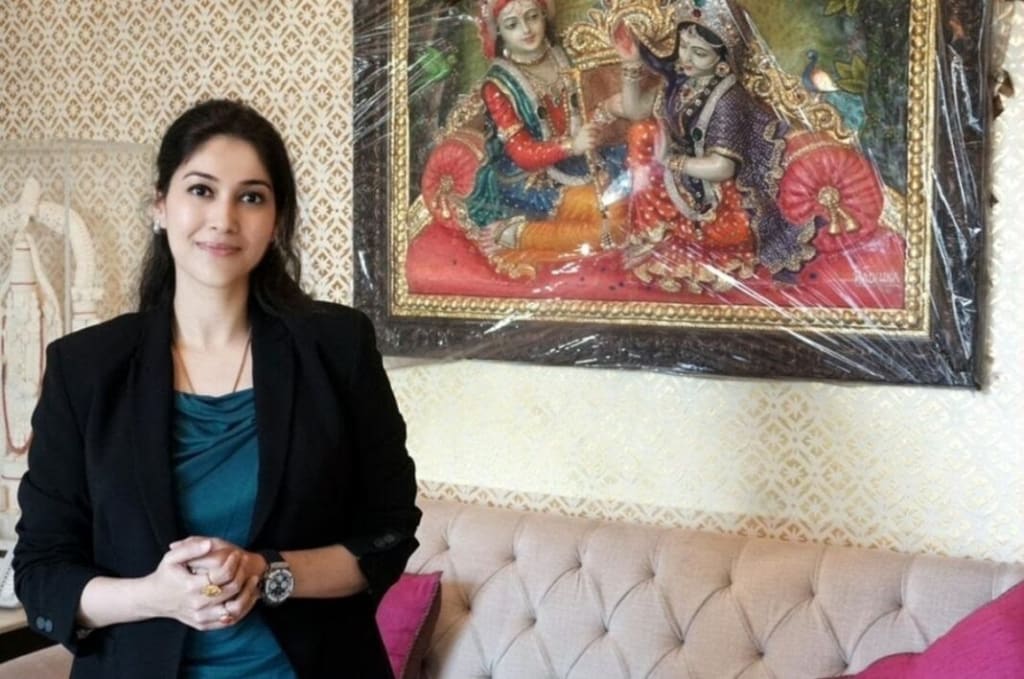
Radheecka Rakesh Garg Biography
A member of the Rajdarbar Group's Board of Directors is Radheecka Rakesh Garg (formerly Global Realty Group). She is an energetic Indian businesswoman with years of expertise in many different fields. She has 12 years of experience working in various capacities within her family's business and is qualified with an undergraduate degree and a master's in business management. She started her entrepreneurial path in 2009 and has since invested in and successfully established a number of businesses.
Rajdarbar Group operates in a number of industries, including real estate, special economic zones, commodities trading, transportation, dairy products, media, fast-moving consumer goods, and fintech. The Group has built numerous brand names in a short period of time, including Rajdarbar Capital, Global Foyer, Rajdarbar Spaces, Rajdarbar Commodities, Rajdarbar Dairy, and Rajdarbar Realty Numerous well-known people and domestic and foreign business houses have acknowledged the socioeconomic impact the Group has had.
Radheecka Rakesh Garg’s Career
-She now serves on Rajdarbar Limited's board of directors.
-Radheecka presently oversees Corporate Strategy and fills a number of other positions within the Rajdarbar Group's many divisions.
-Prior to that, she served as the company's founder and managing director.
-She has launched her own business endeavours in partnership with numerous prestigious national and international institutions while working with the Rajdarbar Group.
-Fintech, consumer products, healthcare, education, artificial intelligence, and information technology are her main focus areas.
Radheecka Rakesh Garg Social Service
She is a supporter of numerous NGOs, including ISCKON, the Red Cross Society, Goonj, the Blind School Foundation, Akshaypatra, Palna Divya Chhaya, and many more.
Radheecka Rakesh Garg Sheds Light on the Investment Prospects for Indian Retail Real Estate
A typical real estate investment comprises getting a house or other residential property. According to market conditions, the main justification is that capital growth on a house investment happens more quickly. Housing has always been the top choice for real estate speculators in India because consumers perceive it as a risk-free, income-producing real estate asset.
Other assets, like retail, have started to take centre stage as the real estate sector has developed and matured in recent years. The Director of Rajdarbar Realty Limited, Ms. Radheecka Rakesh Garg, claims that investing in retail real estate can give investors a consistent income through renting, leasing, or selling retail premises. Shopping malls, lone stores, and pop-up stores can all be considered as examples of these settings. Supermarkets, pharmacies, dry cleaners, and cafes are just a few examples of the many different kinds of retail establishments.
It's possible that the start of Covid-19 and the ensuing lockdowns initially slowed the retail industry down. However, when retailers adjusted to shifting consumer needs, it also sparked technology development and a plethora of innovations. Due to this, the demand for offline places expanded as well as omnichannel retail, which strikes a balance between practical and engaging shopping, flourished. As a result, by 2022, Tier 1, 2, and 3 cities will have access to around 10.15 million square feet of brand-new mall space, with an additional 7.25 million square feet coming online in 2023.
Ms. Radheecka Rakesh Garg also believes that India's retail real estate industry is responding to noticeably higher footfall counts as consumers resume more frequent shopping and socialising routines. High occupancy rates are once more being seen in malls and shopping centres, and it is clear that additional organised retail space is needed. In order to improve and streamline the consumer experience even more, brands are actively broadening their portfolios and implementing regional store strategies. According to a report by CBRE, a real estate advisory business, retail sector transactions increased by a staggering 160% in the first half of the calendar year 2022 and by more than 100% in the second quarter.
To grow their offline and online stores, retailers are luring customers with fresh and creative concepts. Over time, it was seen that H1CT 2022 saw an exceptional growth of 500%. All thanks to the market's opening up following the effects of Covid 19 the year prior and the ability for consumers to express themselves after living in seclusion for roughly a year or so.
Despite many advancements, Ms. Radheecka Rakesh Garg also believes that Covid 19 has significantly changed the customer’s mindset; hence, it is time for the retail sector to evolve and deliver according to the needs and requirements of the customer. The customer's satisfaction must be the main point of attention. The malls and retail spaces should offer more entertainment and target less of a transactional orientation.
What then lays ahead for commercial real estate, looking back? Industrial and multifamily properties are doing well so far in 2022. Consumer demand may further support the retail, multifamily, and industrial asset classes with sound balance sheets. Due to the fact that they not only sell at their store but also deliver to the customer at his doorstep, next-door retail has done reasonably well in populous and overpopulated areas. The hybrid model is currently effective for commercial places like offices and co-working areas, but as is often the case, it will inevitably alter over time. The important elements of ongoing connections between public and private entities in affordable housing, however, will determine the clear picture.
About the Creator
Keep reading
More stories from writers in Journal and other communities.
The goals I did not achieve
Every writing goal I made for the year is a wash. It has been this way for a while, but I think it's important to be open about my failures and the reality of how life can get in the way. This is especially true considering the several times I have posted on Vocal about my writing goals, how I was changing my approach, and where I was hoping to be for the upcoming year. I will probably do that again in a couple months, but for now, it is time to acknowledge where I am today.
By Kay Husnick23 days ago in Journal
Everyday Habits That Drain Your Energy and How to Protect Yourself.
You wake up tired. You move through the day on effort. You sleep yet feel depleted. Energy loss often starts with habits you repeat daily without question. These habits shape focus, mood, and physical strength. When you identify them, you regain control.
By Wilson Igbasi2 days ago in Journal


Comments
There are no comments for this story
Be the first to respond and start the conversation.