
Quick-Hitting Storms Return: Michigan Braces for Another Round of Turbulent Weather
Meteorologist Torregrossa’s Live Forecast Warns of Flash Floods, Wind Threats, and a Race Against Time

Déjà Vu Under Darkening Skies
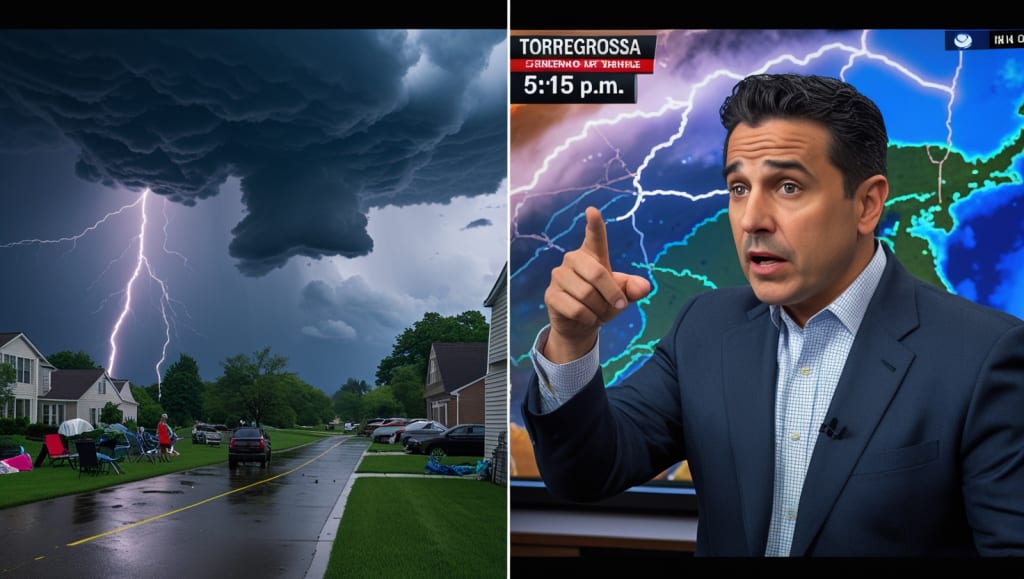
For the second time this week, Michigan residents are scrambling as another bout of rapid-fire storms takes aim at the Great Lakes State. Meteorologist Jeff Torregrossa’s live forecast this morning cut through the static of routine weather updates with a sobering message: “This isn’t your average summer sprinkle. These storms mean business.” With memories of Monday’s downed power lines and flooded basements still fresh, communities from Detroit to Grand Rapids are bracing for a sequel they didn’t ask for—and racing against the clock to prepare.
The Forecast: Timing, Threats, and Torregrossa’s Warnings
Torregrossa’s noon update laid out the stakes with military precision. The storms, fueled by a clash of humid Gulf air and a cooler Canadian front, are expected to fire up around 3 p.m. and march eastward, hitting peak intensity during the evening commute. Key risks include:
Flash Flooding: Already saturated ground from Monday’s 2.5-inch deluge raises the flood threat. Low-lying areas like Ann Arbor’s Huron River watershed and Detroit’s Jefferson-Chalmers neighborhood are on high alert.
Damaging Winds: Gusts up to 65 mph could topple trees and power lines, particularly in rural regions where aging infrastructure struggles to keep pace.
Lightning Onslaught: “When you’re seeing 40 strikes per minute,” Torregrossa warned, “that’s not just a light show. That’s a life-threatening situation for anyone outdoors.”
The meteorologist didn’t mince words about timing: “If you’re planning anything between 4 p.m. and sunset, assume it’ll be interrupted. These storms move like runaway freight trains.”
Ground Zero: Communities in the Crosshairs
While the entire Lower Peninsula faces risks, Torregrossa’s radar highlighted three bullseyes:
West Michigan (Grand Rapids to Holland):
Lake-effect dynamics could supercharge storms here. The National Weather Service (NWS) flagged the I-96 corridor for “considerable” tree damage risk, sparking worries about road closures during rush hour.
Metro Detroit:
Aging drainage systems in neighborhoods like Royal Oak and Ferndale turn even moderate rain into urban kayaking adventures. Detroit Department of Public Works crews were spotted clearing storm drains preemptively—a lesson learned after the 2021 floods that submerged cars on the Lodge Freeway.
Thumb Region (Port Huron to Bad Axe):
Tornado-weary residents here need no reminders of nature’s fury. Though the tornado risk today remains low (5%), the memory of 2022’s EF-2 in Sandusky Bay has farmers like Jim McClure taking zero chances. “I’ve got my weather radio duct-taped to my overalls,” he joked, while securing grain bins.
The Human Factor: Stories Behind the Storm Alerts
Behind every weather alert are human dramas unfolding in real time:
Small Business Anxiety: In Detroit’s Eastern Market, vendors scrambled to protect outdoor stalls. “We lost $8k in produce Monday,” said farmer Marisol Ruiz. “Today, we’re zip-tying tarps like our lives depend on it.”
Emergency Crews on Standby: Consumers Energy has 300 crews prepositioned, recalling last August’s outage chaos when 500,000 lost power. “We’re treating this like a chess match,” said spokesperson Josh Paciorek.
Canceled Summer Nights: From Holland’s Jazz Festival to countless Little League games, Michigan’s summer rhythm faces another disruption. “My kids are in the basement coloring storm pictures,” sighed Grand Rapids mom Lila Nguyen. “They think it’s a game. I’m just praying the sump pump holds.”
The Science of Sudden Storms: Why Michigan? Why Now?
Torregrossa broke down the meteorology in layman’s terms during his broadcast: “Imagine Lake Michigan as a giant spark plug. The lake’s still-cool waters (68°F) are crashing into 90°F air loaded with Gulf moisture. That temperature contrast is rocket fuel for storms.”
Climate data adds context:
Michigan has seen a 27% increase in heavy rainfall events since 2000 (GLISA data).
The state’s average annual severe weather days have jumped from 8 to 12 since 2010.
“This isn’t a fluke,” said University of Michigan climatologist Dr. Richard Rood. “Warmer atmospheres hold more moisture, turning what used to be routine storms into water bombs.”
Lessons from History: When Michigan Weather Turned Deadly
Longtime residents need no reminding of Michigan’s stormy past:
1953 Flint-Beecher F5 Tornado: 116 killed—still the state’s deadliest twister.
1986 Edmore Hailstorm: Baseball-sized ice chunks destroyed $100M in crops.
2011 “Derecho” Outbreak: 300k without power for days after 100 mph straight-line winds.
“Today’s tech gives us warnings Grandpa never had,” Torregrossa noted, tapping his studio’s 3D radar. “But complacency kills. These storms deserve respect.”
Preparing for the Punch: Expert Tips from the Frontlines
Torregrossa’s team distilled preparedness into three key actions:
Before 3 p.m.:
Charge devices; fill gas tanks
Secure outdoor items (”Your patio umbrella is a missile at 60 mph”)
Identify safe indoor spaces (interior rooms, away from windows)
During the Storm:
Avoid flooded roads (”Turn Around, Don’t Drown” isn’t a slogan—it’s survival)
Unplug electronics to prevent surge damage
Use weather apps with live radar (Torregrossa recommended the NWS and Red Cross apps)
Aftermath:
Document damage for insurance with time-stamped photos
Check on vulnerable neighbors
Report downed lines—never assume someone else did
Conclusion: Weathering the Storm Together
As the first thunder rumbles over Kalamazoo, Torregrossa signed off with uncharacteristic earnestness: “Look, we’ll get through this. Michiganders are tougher than any squall line.” His words encapsulate the state’s spirit—a blend of pragmatism and defiance honed by endless winters and capricious summers.
Tonight’s storms will pass, but their lessons linger: In an era of climate chaos, preparedness is patriotism, neighbors are the first responders, and a meteorologist’s urgent tone might just be the soundtrack of our times. Stay safe, stay informed, and remember—after the downpour comes the rainbow. Or at least a good story for the grandkids.
About the Creator
Shohel Rana
As a professional article writer for Vocal Media, I craft engaging, high-quality content tailored to diverse audiences. My expertise ensures well-researched, compelling articles that inform, inspire, and captivate readers effectively.
Keep reading
More stories from Shohel Rana and writers in Journal and other communities.
The Power of Protest in American History
The Rhythm of Rebellion America was born from protest. The Boston Tea Party, abolitionist pamphlets, and Stonewall riots are not mere footnotes—they are the heartbeat of a nation that reinvents itself through dissent. Protest is America’s oldest tradition, a tool to dismantle injustice and reimagine freedom. This article (penned with grit, not gigabytes) traces how grassroots movements, from the 18th century to today, have turned whispers of discontent into roars for change.
By Shohel Rana8 months ago in Journal
The goals I did not achieve
Every writing goal I made for the year is a wash. It has been this way for a while, but I think it's important to be open about my failures and the reality of how life can get in the way. This is especially true considering the several times I have posted on Vocal about my writing goals, how I was changing my approach, and where I was hoping to be for the upcoming year. I will probably do that again in a couple months, but for now, it is time to acknowledge where I am today.
By Kay Husnick23 days ago in Journal
Everyday Habits That Drain Your Energy and How to Protect Yourself.
You wake up tired. You move through the day on effort. You sleep yet feel depleted. Energy loss often starts with habits you repeat daily without question. These habits shape focus, mood, and physical strength. When you identify them, you regain control.
By Wilson Igbasia day ago in Journal



Comments
There are no comments for this story
Be the first to respond and start the conversation.