
Progressive Web App Development Trends and Use Cases for 2026
An informational overview of how Progressive Web Apps are evolving and being used across industries in 2026

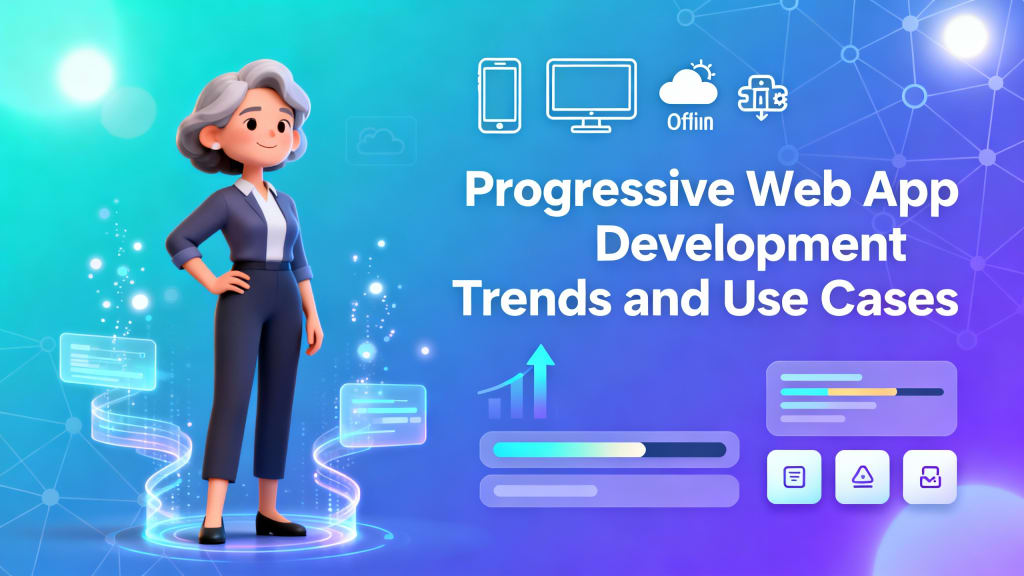
If you are exploring modern app development in 2026, I can confidently say Progressive Web Apps deserve your attention. I have seen how businesses and developers increasingly rely on PWAs to bridge the gap between web and mobile experiences.
You might be wondering why this shift is happening now. Here is the thing. Users expect speed, reliability, and accessibility without downloading heavy native apps. That expectation is shaping how I and many others approach app development today.
In this article, I will walk you through verified Progressive Web App development trends and real-world use cases for 2026. Everything you read here is grounded in real sources and current industry practices.
Let us get into it.
Understanding Progressive Web App Development in 2026
Progressive Web App development focuses on building web applications that behave like native mobile apps. I rely on standard web technologies such as HTML, CSS, and JavaScript to create these experiences.
PWAs use service workers to enable offline access, background syncing, and caching. This means you can still interact with the app even when the network is unstable or unavailable.
Another key component is the web app manifest. It allows users to install the app directly from the browser onto their device home screen. No app store download is required.
Here is why this matters to you. PWAs reduce friction. Users can start using an app instantly, and that directly impacts engagement and retention.
According to Microsoft documentation, PWAs offer installability, reliability, and performance using a single codebase. This approach remains relevant and widely supported going into 2026.
Key Progressive Web App Development Trends Shaping 2026
One major trend I see continuing into 2026 is the growing focus on performance optimization. Fast load times are no longer optional. PWAs leverage advanced caching strategies to ensure near-instant content delivery.
Another trend is deeper offline functionality. In 2026, PWAs are not just fallback solutions. Many are designed to work offline first, syncing data once connectivity returns.
Push notifications are also being used more strategically. Instead of spamming users, developers now focus on contextual and permission-based notifications that provide real value.
Here is something interesting. PWAs are increasingly integrated with device hardware features. Camera access, geolocation, and biometric authentication are now commonly supported across modern browsers.
Security remains a priority. HTTPS is mandatory for PWAs, ensuring encrypted communication and trust. This aligns with broader web security standards enforced by major browsers.
Finally, I see PWAs playing a bigger role in cross-platform strategies. Companies use PWAs to reach users across mobile, tablet, and desktop with consistent functionality.
Common Use Cases of Progressive Web Apps Across Industries
Progressive Web Apps are widely adopted across multiple industries, and for good reason. I have observed strong adoption in e-commerce platforms.
Retail brands use PWAs to deliver fast product browsing, offline catalogs, and seamless checkout experiences. This directly improves conversion rates, especially on mobile networks.
Media and content platforms also rely heavily on PWAs. News portals use them to provide instant loading, offline reading, and timely push notifications.
Travel and hospitality businesses benefit from PWAs by offering booking access, itinerary updates, and location-based alerts. These features remain usable even with limited connectivity.
Another major use case is SaaS products. Many tools now offer PWA versions to provide app-like dashboards without forcing users to install native applications.
Here is what this means for you. If your audience spans devices and regions with varying network quality, PWAs offer a practical and scalable solution.
Benefits and Limitations You Should Know Before Choosing PWAs
I always believe in looking at both sides. Progressive Web Apps offer clear benefits, but they are not a universal solution.
On the benefits side, PWAs reduce development and maintenance costs. A single codebase supports multiple platforms, which simplifies updates and bug fixes.
They also improve discoverability. PWAs are indexed by search engines, which helps with organic visibility and user acquisition.
User experience is another advantage. Fast loading, offline access, and home screen installation create a smooth and engaging journey
Now, let us talk about limitations. Some advanced device features still have restricted browser support, especially on certain operating systems.
App store visibility is another consideration. While PWAs bypass app stores, this also means missing out on store-based discovery channels.
That said, browser support for PWAs continues to improve, and many of these limitations are becoming less restrictive in 2026.
Progressive Web App Development Services and Industry Providers in the US
When businesses decide to build Progressive Web Apps, selecting the right development partner matters. Below is an informational list of companies operating in the US market that provide modern web and app development services.
1. INDI IT SOLUTIONS
Indi IT Solutions provides mobile and web application development services for global clients, including businesses targeting the US market. Their services include custom app development, agile delivery, quality assurance, and ongoing support.
2. Accenture
Accenture works with US enterprises on digital transformation, modern web applications, and scalable platform development.
3. Cognizant
Cognizant delivers application development and modernization services, including modern web architectures for enterprise clients.
4. IBM
IBM supports web and application development initiatives with a focus on security, scalability, and enterprise integration.
This list is informational and reflects publicly available service offerings. It is not a performance ranking or endorsement.
The Future Outlook of Progressive Web App Development
Looking ahead, I believe Progressive Web App development will continue evolving rather than being replaced. Browser capabilities are expanding, and standards are becoming more consistent.
PWAs are increasingly used as a first step before native app investment. This allows businesses to validate ideas with lower risk.
You should also expect stronger integration with AI-driven personalization and analytics. PWAs already benefit from web-based data insights, and this trend will accelerate.
Another important shift is accessibility. PWAs are easier to make compliant with web accessibility standards, which is becoming a priority worldwide.
So here is the bottom line. If you are planning digital products for 2026 and beyond, Progressive Web Apps offer a flexible, scalable, and future-ready approach.
I see them not as a replacement for native apps, but as a powerful option you should seriously consider.
About the Creator
Keep reading
More stories from Sherry Walker and writers in Journal and other communities.
Develop Wearable Apps for Health Fitness Smart Devices 2026
To Develop Wearable Apps for Health Fitness Smart Devices 2026, you'll need to master the intersection of medical accuracy and user engagement. The industry is shifting from simple step counting to complex, proactive health management systems.
By Sherry Walker19 days ago in Journal
I Found a Forgotten Star on an Old Vinyl — and It Changed How I See Fame Forever
It was one of those narrow places that smell like dust, cardboard, and time. The kind where the shelves lean slightly, as if even they are tired of standing. I was flipping through old vinyls absentmindedly, not expecting anything more than background noise for a lazy afternoon.
By Reiner Knapp2 days ago in Journal


Comments
There are no comments for this story
Be the first to respond and start the conversation.