
Prepress Process: The Key Step Before Printing Production
From prepress to postpress, expert prepress services help turn your designs into high-quality, print-ready products with a polished, professional finish.

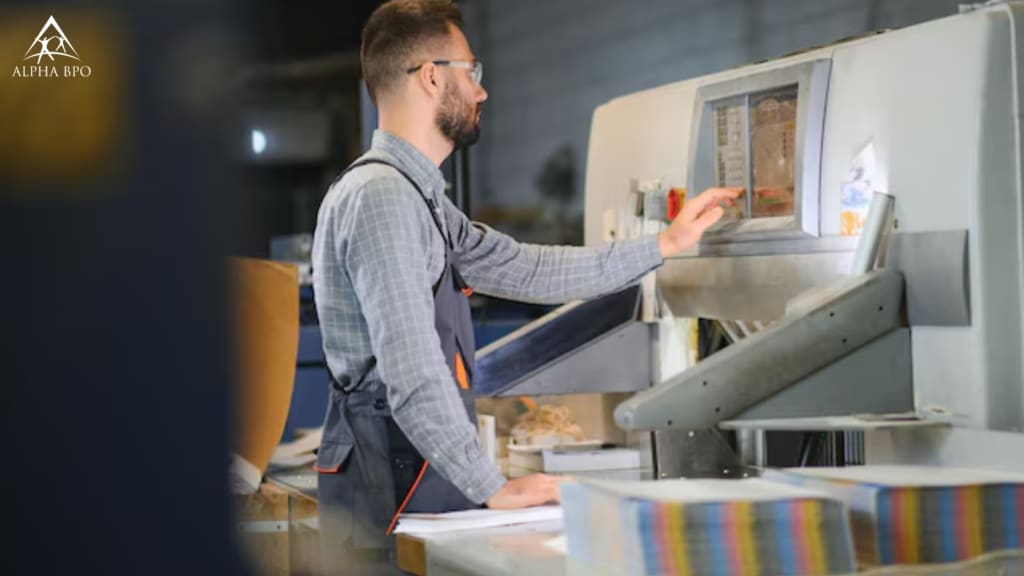
Print production is the process of converting a design from your screen into a tangible object that you can hold in your hands. Before your design hits the press, there is a quiet but powerful phase called Prepress that brings it all together. It is where vision meets precision, where every file, font, and layout gets fine-tuned to perfection.
Achieving a perfect print result can be significantly impacted by realizing the value of prepress services. To help you understand the whole journey a design takes before becoming a tangible object, we will explore each step of the process in this post.
From Screen to Print: The Role of Digital Prepress
Transforming a digital design into a printed piece requires multiple steps, and prepress plays a crucial role in that process. Before today's software, much of this work was done manually, creating plates, separating colours, and arranging text by hand. It was slow, detailed work, and accuracy mattered at every stage.
Now, thanks to digital prepress, things have become a lot smoother. Software does most of the heavy lifting, helping with file formatting, color adjustments, and proofing all before the press even begins. It saves time, reduces errors, and makes everything much more cost-effective than in the old days.
One of the best things about digital prepress? It gives flexibility to designers to make changes quickly without worrying about extra costs for reprints or delays. This ability to adapt has made custom printing and quick-turnaround projects easier to pull off, which is a big win for businesses racing against tight deadlines.
While new tech, like artificial intelligence (AI), is lending a hand with tasks like color management and file prep, it still relies on prepress services that are at the heart of it all. With the help of services, it ensures that designs transition smoothly from screen to print, making sure the final product is as polished as it can be.
Digital prepress has genuinely changed the way we approach print production, making it faster, more efficient, and more adaptable than ever before. And as technology continues to improve, the possibilities for prepress only get more valuable.
Understanding the Print Production Workflow Process
We will look into the three stages of how print production works and processes differently.
What is Pre-Press?
Pre-press is the terminology used to define tasks that happen before printing and finishing. The stage below involves some of the procedures, which include
1. File Preparation
The first stage involves receiving, checking, and preparing the client's artwork, ensuring they are print-ready so there will not be issues later.
2. Picking the Best Printing
Various printing methods are designed for different purposes. Digital printing provides quick, cost-effective results for smaller projects, while offset printing works well for large, high-quality runs.
3. Paper Choices Shape the Look
Paper weight, texture, and finish influence how your design appears. Matte has a calm, classy look to it, while gloss, on the other hand, boosts the color and makes everything stand out more.
4. Color Correction
Adjusting colors to ensure they match the desired output and are suitable for the chosen printing process.
5. Image Editing
Enhancing images for optimal print quality, such as adjusting resolution, sharpness, and contrast.
6. Proofing
Creating a proof of the final product to ensure it meets the client's expectations before printing.
What is Press?
It refers to the actual printing operations, where ink is transferred onto the substrate. After pre-press, the next phase is press. During printing, accuracy is crucial for both quality and time delivery, so projects only go to press after they have passed through pre-press, which will result in cutting down on reprint costs.
What is Post-Press? - Setup to Finishing
This is the final and crucial stage, after your design is good to go, the real printing starts. The press is set up, the paper is loaded, and the job is run. The time it takes can vary from minutes to hours, based on the design and printing method.
After actual printing is done, it is time to help in the final look, shape, and feel of the printed product. Some of the basic operations included in post-press are
1. Print Quality Review
Every print job needs a careful review to spot issues like color shifts or smudges, ensuring the finished piece looks polished and matches your expectations.
2. Finishing
Processes like trimming, folding, binding, and adding special effects (embossing, die-cutting, etc.) to create the final product.
3. Assembly
Gathering and organizing printed sheets into the correct order, especially for books or brochures.
4. Packaging
Making sure the printed items are sorted, packaged, and prepared for delivery or storage without damage.
The Evolution of Post-Press in the Digital Age
The work does not get completed once the ink dries. What happens after printing, known as post-press, has gone through a significant transformation, all thanks to advanced technology. This stage includes everything from cutting to binding and finishing, giving printed pieces that final, professional touch.
In earlier days, these steps were done by hand, relying on skilled technicians and a lot of time to get things right. Today, that has changed into digital tools to make post-press work quicker, more accurate, and far less labour-intensive.
The final step of print production has advanced significantly in recent years. With the help of intelligent, computer-driven devices, tasks that once required hours of meticulous manual labor can now be completed rapidly and precisely. Each piece appears neat, polished, consistent, and changes the way people experience printed materials.
In short, the digital transformation of post-press has changed the game. It is making the process faster, more flexible, and better suited to the needs of modern businesses. As innovation continues, print finishing will only get smarter, more creative, and more efficient.
How Print Production Shapes Today's Creative Industries
Print production plays a significant role in how brands communicate, shaping everything from marketing materials to large-scale publishing projects.
1. Maintain Quality and Consistency
One of the primary reasons in print production is maintaining quality control and consistency throughout the entire process. From the beginning design stage to the final printing, every step must be carefully observed to ensure that the final product meets the desired standards.
Print production involves various stages, including prepress, printing, and post-press. Professionals who understand the entire printing process are able to apply efficient quality control procedures at every stage. This guarantees consistency in the finished product's colour accuracy, print resolution, and general quality. To preserve brand identity and convey a unified message to the intended audience, print production must be consistent.
2. Cost-Effective Expansion
Another point regarding print production impact is on cost efficiency and scalability. The print production can be costly, mainly when producing large quantities or using specialized printing techniques. However, understanding the printing process allows buisnesses to optimize their production methods and achieve cost savings.
Many printers and print production companies offer various pricing models based on the quantity, size, and complexity of the print project. Understanding these pricing models can help make informed decisions about the most cost-effective printing options for their projects.
Companies can also investigate different printing methods or materials that might be more economical without sacrificing quality by having a thorough understanding of the printing process. For instance, the flexibility, affordability, and speed of digital printing have made it more attractive, and by investing in digital printing, professionals can produce smaller quantities or personalized prints without incurring high setup costs.
3. Driving Sustainable Impact
Understanding print production and how it is significant for impact on the environment, and considering its process, is essential for minimizing this impact and promoting sustainability. The printing industry has made significant advancements in adopting eco-friendly practices and materials, and professionals need to be aware of these options.
One of the primary concerns in print production is the choice of materials. Traditional printing often involves the use of paper, which contributes to deforestation and waste. However, with the advancement, you now have a wide range of eco-friendly paper options to choose from, such as recycled or FSC-certified paper.
Furthermore, buisnesses can also get knowledge of print production and process for better use of resources such as ink and energy, and printing methods such as waterless or UV printing, which help make them more sustainable and reduce the industry's overall carbon footprint.
Maximize Printing Efficiency with Effective Prepress Techniques
The print production from prepress to post-press is a complex process that requires precision at every stage, but many people do not realise how vital the prepress stage is until they run into issues with quality or delays.
That is where pre-press services providers, in particular, are the cornerstone of achieving high-quality results, ensuring that files are perfectly prepared, colors are accurately matched, and proofs meet expectations before the press even begins.
As the industry evolves, so do the tools that enhance prepress efficiency, contributing to faster turnarounds, cost savings, and reduced waste. By mastering these early steps, businesses can confidently move through the press and post-press phases with greater consistency and success.
About the Creator
Alpha BPO
Alpha BPO offers IT solutions, business solutions, and outsourcing solutions to small, medium and large scale enterprises and organizations in the USA.
Visit our website: https://www.alphabpo.com/
Einstein’s Early Struggle: The 1895 Swiss Federal Polytechnic Entrance Exam and Lessons in Talent and Perseverance
In 1895, a 16-year-old Albert Einstein faced a setback that many might have seen as a sign of failure: he failed the entrance exam for the Swiss Federal Polytechnic in Zurich. While this moment is often remembered as a youthful stumble in the life of one of history’s greatest scientific minds, it offers profound insights into the nature of talent, learning, and perseverance. Einstein’s experience reminds us that early academic challenges do not define one’s potential, and that success often comes from persistence and leveraging one’s strengths.
By Salaar Jamali5 days ago in Journal
Affection and Healing for Yourself
During the night of the last quarter moon, I gathered my ritual supplies. I carefully handled the chunk of black tourmaline that would protect me from your overall negative and narcissistic energy. I carefully walked the house with my stick of selenite in hand, asking the universe to cleanse our working space.
By Alisha Wilkins ✒️🦋🖋️2 days ago in Fiction



Comments
There are no comments for this story
Be the first to respond and start the conversation.