
Piergiorgio Corallo: when rock turns gentle
In via di sviluppo: a conversation with the italian artist

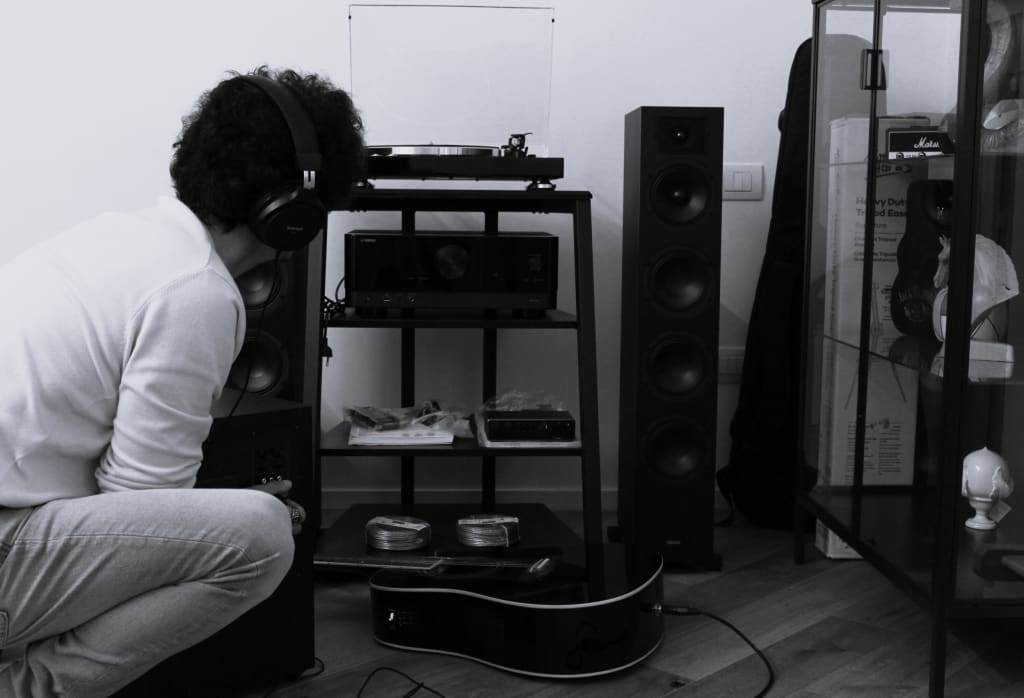
Piergiorgio Corallo is not an artist who rushes to occupy space. Not because he lacks things to say, but because he seems careful about when and how to say them. In a time when visibility is often confused with relevance, Corallo moves differently, almost laterally. In via di sviluppo is an album that exposes uncertainty, internal tension, and emotional imbalance, yet its author keeps a measured public presence, almost deliberately restrained. It’s a position that feels increasingly rare, especially within independent music scenes shaped by constant exposure.
This restraint does not come across as distance or detachment. Rather, it feels like a conscious way of protecting the work itself. The songs do not ask to be explained, nor do they seek attention through excess. They remain slightly open, unresolved, trusting the listener to stay with them rather than consume them quickly.
Q: You’re surprisingly underexposed for an independent artist today. Is that intentional?
A:
I don’t know if I would call it intentional in a strategic way. It’s more about where I come from. I grew up in clubs, in underground contexts where proximity matters more than reach. Those spaces taught me that presence is something physical, something that happens at a specific moment, not all the time. That audience gave me a lot, and I don’t want to disappoint it by turning everything into constant presence or endless self-narration. Too much exposure, in the long run, wears music out. It flattens it. I prefer to be there when it actually makes sense.
Q: Independence today often seems to mean being visible all the time.
A:
I understand that logic, and I don’t judge it. For some people it works, and maybe it’s necessary. But it’s not the only way. I don’t think independence is measured by how often you appear or how loud you are. For me it’s about coherence. If a record needs too much noise around it just to exist, maybe it doesn’t stand on its own. I like the idea that music can circulate quietly, find its listeners without being constantly pushed or framed.
Q: In via di sviluppo feels jagged, uneven, almost deliberately unresolved. Will the next album follow the same path?
A:
I’ll keep experimenting, because that’s part of how I work, but I don’t think the next record will be as fragmented. This album comes from a genuinely uneven phase, also on a personal level. I wasn’t interested in smoothing that out. For the next one, though, I’m looking for more unity. I’d like it to feel more compact, more readable as a whole. The sonic outbursts, the more extreme deviations, I see them working better in singles, where they can breathe without fragmenting everything else.
Q: The record seems to privilege process over statement.
A:
Yes, because I didn’t have a thesis to prove. I had a condition on me, a sense of instability that I didn’t want to fix or resolve. The songs came one by one, without a rigid plan. Only later did I realize they were all describing the same state, even if in different, irregular ways. I didn’t want to close that state into something definitive.
Q: Your voice is often kept slightly back in the mix.
A:
For me, the voice is a body in the room, not something that explains or directs. I don’t like voices that guide the listener too clearly. Sometimes the voice observes, sometimes it arrives late, sometimes it hesitates. I’m interested in that distance. It feels very human, very unperformative. It leaves space instead of filling it.
Q: There’s a recurring sense of escape in the lyrics.
A:
I wouldn’t call it a conceptual theme. It’s more a daily feeling. Being present, functioning, doing what you’re supposed to do, yet sensing that something of you doesn’t fully come through. That creates a quiet tension. A sense of escape that isn’t about running away, but about looking for air. I didn’t want to turn that into a message or a solution. I wanted to stay inside that feeling, without resolving it.
Q: Recently there’s been talk about a small fan club forming in East Asia.
A:
Honestly, I don’t think I can afford the idea of having fans. That word feels too big for me. They’re just some young girls who had a very kind thought, and I’m genuinely grateful for it. They made costumes inspired by Sailor Moon, and they were really beautiful. There was something very pure in that gesture. We’re in touch
Q: Does the idea of fandom make you uncomfortable?
A:
A bit, yes. The word “fan” creates distance and expectation. It implies projection. I leave certain big words to the major names in music — they don’t really belong to me. I prefer to think in terms of listeners. People who pass through the music, take what they need, and move on. I make records, not personas.
Q: Solitude seems central to your creative process.
A:
It is. I come from visual arts, from years of working alone in silence. That kind of solitude sharpens you. It teaches focus and discipline. But over time it also closes you in. You start circling around the same internal space. This album was born from the need to break that circle, to share something that usually stays internal, even if imperfectly, even if it’s not fully shaped yet.
Q: The guitar often feels more nervous than melodic.
A:
Because it doesn’t accompany — it registers. It’s a seismograph. It marks tension, small internal shifts, moments of instability. I didn’t want it to reassure anyone. I wanted it to react, to move with what’s happening underneath.
Q: What feels most important for you to protect right now?
A:
Credibility. With myself first of all, and with the people who listen. Even when that means exposing myself less than what’s expected today. I think music still needs spaces where things are allowed to remain unresolved, quiet, incomplete. That’s what I’m trying to protect.
From Chiara Adolfi, Musica e Dintorni, Linea Urbana Press
Gennaio 2026, Roma
The Global Verge
About the Creator
The Global Verge
Independent culture & music press reporting from Europe and Latin America.
Keep reading
More stories from The Global Verge and writers in Journal and other communities.
Independent press and the difficulty of reading a debut that refuses closure
I didn’t approach In via di sviluppo expecting resistance. Most debut albums, even those that claim to avoid definition, ultimately ask to be framed. They might complicate genre, blur authorship, or stretch form, but they still cooperate with the basic ritual of reception: identify the sound, locate the references, draw a trajectory.
By The Global Verge24 days ago in Journal
Understanding Competition in Your Local Market
Introduction Understanding competition in your local market is essential for building a sustainable and strategic practice or business. Competition influences pricing, service demand, referral patterns, and client expectations. Without a clear understanding of who else serves your target audience, it becomes difficult to differentiate your offerings or position your services effectively. A thoughtful analysis of local competitors helps organizations identify opportunities, refine strategy, and make informed decisions that support growth and long-term success.
By Abdul Mueed4 days ago in Journal




Comments