
Independent press and the difficulty of reading a debut that refuses closure
In via di sviluppo: how independent criticism has approached the work of Piergiorgio Corallo

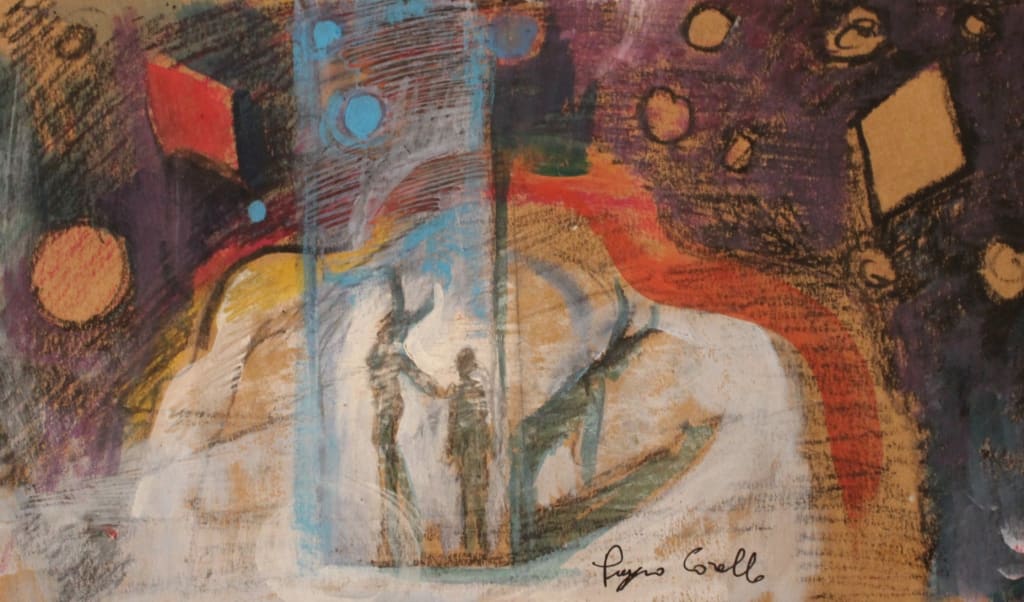
I didn’t approach In via di sviluppo expecting resistance. Most debut albums, even those that claim to avoid definition, ultimately ask to be framed. They might complicate genre, blur authorship, or stretch form, but they still cooperate with the basic ritual of reception: identify the sound, locate the references, draw a trajectory.
This album does not fully cooperate.
What becomes evident when looking at how independent magazines have engaged with In via di sviluppo is not a shared interpretation, but a persistent difficulty in settling on one. The critical responses do not align into a unified narrative. Instead, they circle the work from different angles, each time illuminating a specific tension while leaving others unresolved. This lack of convergence is not a failure of criticism; it is a clue to the album’s internal structure.
One of the earliest extended readings came from Indie-Eye Magazine, and it immediately avoided the usual entry points. Rather than anchoring the album to a lineage or scene, the analysis focused on pressure: how sound accumulates, compresses, and fractures. The language used was closer to physical description than stylistic taxonomy. Listening, in this account, becomes an act of following forces rather than recognizing forms. What matters is not where the music comes from, but what it does when it is set in motion.
This approach implicitly reframes the album as something closer to a system than a statement. Songs are not isolated units but zones of stress within a continuous field. The reading resists the temptation to extract highlights or representative moments. Instead, it treats In via di sviluppo as a material process, one that unfolds unevenly and refuses equilibrium.
A different sensibility appears in the coverage by Bored City, where the emphasis shifts away from force and toward control. Here, the album is approached through what it withholds rather than what it asserts. Arrangements are described as measured, sometimes deliberately narrow. Vocal delivery is restrained, almost cautious. The absence of overt climactic gestures becomes meaningful. Intensity, in this reading, is not produced through expansion but through compression.
What is interesting is that this perspective does not contradict the earlier one. It reframes it. Where Indie-Eye hears pressure, Bored City hears calibration. The album’s tension is acknowledged, but its management becomes the focal point. The work is placed within a tradition that values discipline over display, suggesting that its strength lies in refusing excess rather than pursuing it.
The long-form interview published by Indie Italia Magazine complicates the picture further by shifting attention from the object to the process behind it. Instead of asking what the album represents, the conversation repeatedly returns to what it is becoming. Development is not described as progress toward clarity or maturity, but as sustained exposure to instability. The album is framed as a provisional state rather than a conclusion.
This perspective subtly undermines the very category of “debut.” Rather than functioning as an introduction or declaration, In via di sviluppo is presented as a moment within a longer, unresolved trajectory. The emphasis on transition challenges the expectation that a first release should stabilize identity. Here, identity remains open, contingent, and deliberately unfinished.
If these readings already resist unification, the contribution of Indie Boulevard makes that resistance explicit. Their review and interview refuse the impulse to smooth the album into a coherent narrative. Unevenness is not treated as a problem to be corrected, but as a central feature. Diversity of tone, shifts in texture, and moments of apparent contradiction are foregrounded rather than resolved.
In this account, polish is viewed with suspicion. Consistency would risk falsifying the human dimension of the work. The album’s refusal to align its parts into a single aesthetic posture becomes an ethical position rather than a stylistic one. Fracture is not accidental; it is allowed to remain visible.
Across these readings, one absence becomes striking: genre fixation. None of the critics attempt to stabilize In via di sviluppo within a single stylistic container. When genre references appear, they function as temporary coordinates rather than defining boundaries. This reluctance to categorize is not simply a critical courtesy. It reflects the album’s own resistance to categorical closure.
What emerges, then, is not a portrait of an album that invites consensus, but of one that sustains divergence. Independent criticism, in this case, does not function as validation or correction. It functions as sustained attention. The critics do not agree, but they listen carefully. They do not resolve ambiguity; they articulate it from different positions.
For a debut release, this is a notable condition. The album is not treated as a preliminary sketch awaiting refinement, nor as a manifesto demanding allegiance. It is treated as a space — a field in which different modes of listening can coexist without collapsing into a single meaning. Its identity is not produced through agreement, but through the tension between readings.
In this sense, the reception of In via di sviluppo says as much about the state of independent criticism as it does about the album itself. It suggests that criticism still has the capacity to engage with work that resists simplification, to remain with uncertainty rather than eliminate it. The press response does not close the album’s meaning. It keeps it open, mobile, unresolved.
And that refusal of closure may be the most accurate reading available.
About the Creator
The Global Verge
Independent culture & music press reporting from Europe and Latin America.
Keep reading
More stories from The Global Verge and writers in Journal and other communities.
A debut that refuses exposure: Piergiorgio Corallo and the anatomy of a first step
Piergiorgio Corallo did not step into music. He emerged from it the way some objects are found rather than made. Before In via di sviluppo, his name circulated quietly in Italian visual circuits: painter, sculptor, photographer — someone for whom matter has always mattered more than exposure. The shift into sound was not a conversion but an extension, the same gesture of removal and incision carried into another frequency.
By The Global Vergeabout a month ago in Journal
Essential Collaboration Skills for Hybrid Work Environments
Introduction Hybrid work has changed how we collaborate—not just where we work, but how we connect, communicate, and contribute. When teams are split between physical offices and remote spaces, collaboration no longer happens naturally. It must be designed, practiced, and protected.
By Nimra kanwala day ago in Journal



Comments