
New Zealand Faces Job Market Crisis as Unemployment Soars
Economic Uncertainty Leaves Thousands Struggling to Find Work

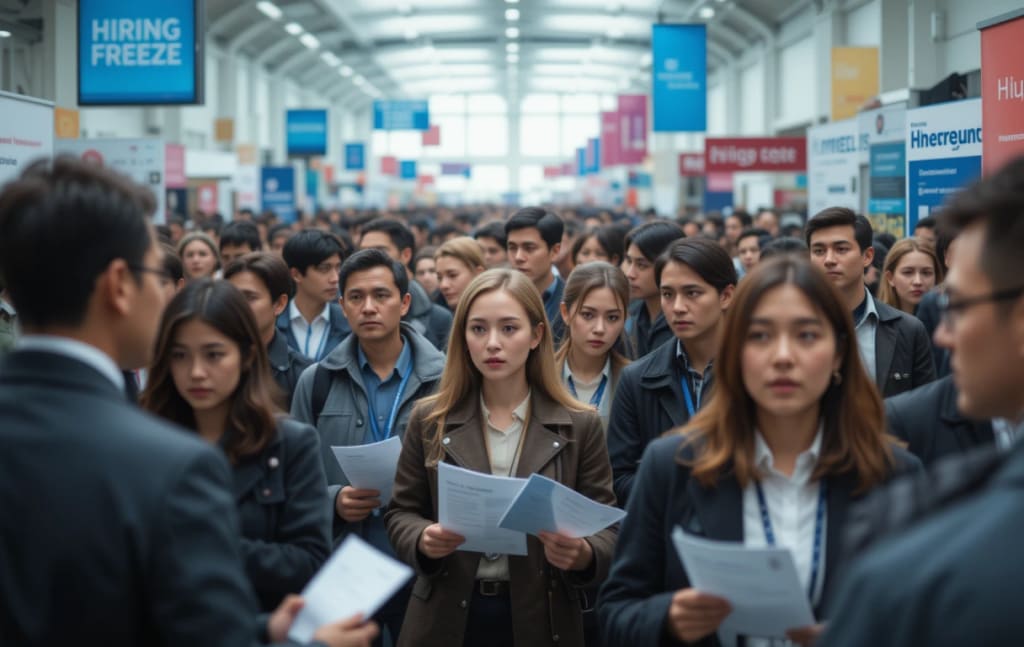
Disclaimer: The images presented are for illustration and conceptual purposes only. They do not depict actual events, objects, or persons but are artistic interpretations based on available information.
The other day, a close friend shared a story that hit hard. His cousin, who had been working at a well-established manufacturing company for years, suddenly found himself unemployed. No warning, no backup plan—just gone. Stories like his are becoming all too common as New Zealand's unemployment rate spikes to 5.1%, the highest in five years. That means approximately 156,000 people are now jobless, a number that cannot be ignored.
What’s particularly concerning is that the brunt of these job losses is hitting specific industries harder than others. Men, especially those in trade jobs, technical fields, and machine operation, have been disproportionately affected. In fact, they make up 85% of the total workforce reductions over the past year.
Economists have been waving red flags for months, warning that a slowing economy would inevitably take a toll on employment. Now, that reality is unfolding, and while some experts believe we may be near the bottom of the downturn, job markets tend to lag behind overall economic recoveries. The numbers are clear, but the human cost is what really matters—families struggling to make ends meet, individuals facing financial uncertainty, and an overall sense of instability rippling across the country.
Despite the grim figures, there are signs of relief on the horizon. Interest rates have started to ease, giving some breathing room to households with mortgages and debt. With lower borrowing costs, people might begin spending again, giving businesses a much-needed boost. But here’s the tricky part—when people feel uncertain about their job security, they tend to hold onto their money instead of fueling the economy through spending.
For those still holding onto their jobs, now is a good time to reassess personal finances, cut back on unnecessary expenses, and build up savings. It’s a strategy that can offer some peace of mind in case the job market gets even tougher. Meanwhile, for those actively searching for work, there are resources and support systems available—career counseling, job placement services, and government assistance programs that can help bridge the gap while navigating these uncertain times.
Another major factor that needs to be considered is the impact on mental health. Unemployment isn't just about finances; it takes a toll on a person's emotional and psychological well-being. Many people are facing increased stress, anxiety, and depression due to job loss and financial instability. Support networks, whether through family, community organizations, or professional counseling, are essential during these times. The government has also been urged to allocate more funding for mental health services to accommodate the growing demand.

Beyond individual challenges, businesses are also feeling the weight of economic downturns. Many companies, particularly small businesses, are struggling to keep up with rising operational costs while experiencing a decline in consumer spending. Some businesses have resorted to downsizing or shutting down completely, exacerbating the unemployment crisis. The government has implemented various relief packages, but there’s an ongoing debate about whether these measures are enough to sustain businesses long-term.
Additionally, the rise of automation and artificial intelligence is further complicating the job market. While technological advancements have improved efficiency in various sectors, they have also contributed to job losses in industries where machines can replace human labor. This shift emphasizes the need for workers to upskill and adapt to new employment trends. Learning digital skills, technical expertise, and business adaptability will be crucial in securing stable employment in the future.
One of the most significant discussions right now revolves around government intervention. Some economists argue that more aggressive stimulus plans are necessary to create jobs and boost the economy, while others caution against excessive spending, warning that it could lead to long-term debt issues. Either way, the government will need to make tough decisions to balance economic recovery with fiscal responsibility.
While the current unemployment rate is unsettling, it’s important to recognize that New Zealand has weathered worse economic storms before. The key is resilience. People and businesses have bounced back from tough times, and history has shown that recovery, while not immediate, is possible with the right strategies in place.
Now more than ever, community support plays a crucial role. Shopping locally, helping out a neighbor in need, and offering emotional or financial support to those struggling can make a world of difference. A nation’s economy is ultimately built on its people, and when people support each other, the road to recovery becomes much smoother.
Challenges like these remind us how interconnected we all are. Staying informed, making thoughtful financial choices, and looking out for one another will make all the difference. The numbers may look bleak today, but the story isn’t over yet. Brighter days are ahead, and with a strong collective effort, New Zealand can work its way back to stability.
About the Creator
Ojo
🔍 I explore anything that matters—because the best discoveries don’t fit into a box...
The goals I did not achieve
Every writing goal I made for the year is a wash. It has been this way for a while, but I think it's important to be open about my failures and the reality of how life can get in the way. This is especially true considering the several times I have posted on Vocal about my writing goals, how I was changing my approach, and where I was hoping to be for the upcoming year. I will probably do that again in a couple months, but for now, it is time to acknowledge where I am today.
By Kay Husnick24 days ago in Journal
Stanislav Kondrashov: How Social Media Is Quietly Changing the Way We Experience Travel Photography
Travel photography has always been about more than images. At its best, it captures atmosphere, emotion, and the subtle details that define a place beyond landmarks and guidebooks. Yet the way these stories are created and shared has changed dramatically in recent years. Social media platforms have not simply introduced new tools; they have reshaped the language of travel photography itself.
By Stanislav Kondrashov 4 days ago in Journal



Comments (1)
Unemployment isn’t good! Well written! Informative!