
Moment Southwest Airlines Pilot Was Escorted from Cockpit for Suspected Drunkenness + Video
What Really Happened and Why It Matters

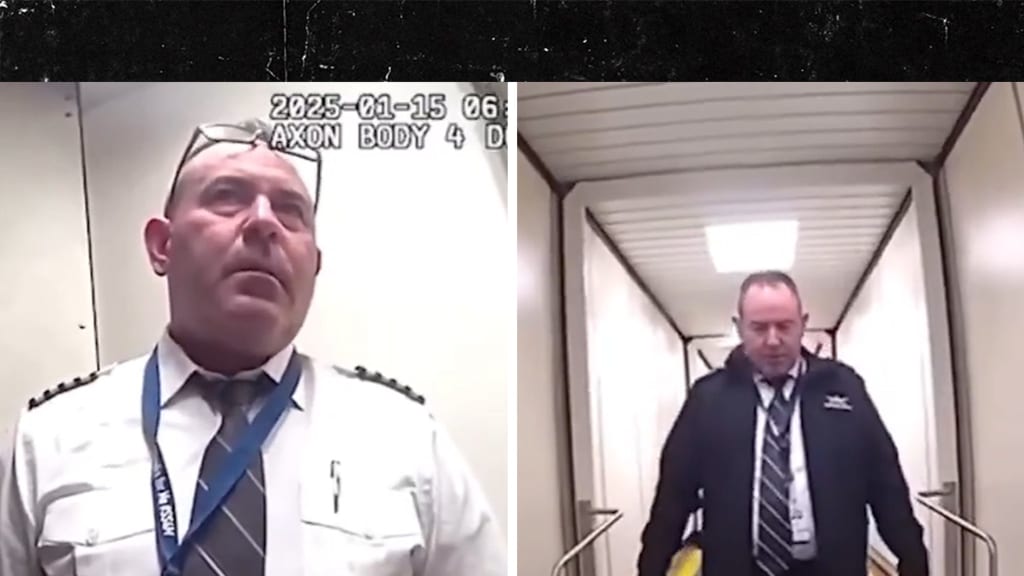
On an ordinary day in January at Savannah/Hilton Head International Airport, passengers preparing to fly from Georgia to Chicago on Southwest Airlines Flight 3772 were shocked by an extraordinary scene. Moments before takeoff, police officers entered the cockpit, confronted the captain, and escorted him off the plane under suspicion of intoxication.
The man at the center of the scandal was David Allsop, a 52-year-old veteran pilot with nearly two decades at Southwest Airlines and a career that began in the U.S. Air Force’s 50th Airlift Squadron. But on that morning, his long career came to a sudden and dramatic halt.
This incident not only rattled passengers and tarnished Southwest’s reputation, but also reignited global conversations about airline safety, alcohol policies for pilots, and passenger trust in aviation.
In this article, we will break down the full story, analyze what happened, look at the rules governing pilot conduct, and examine the wider implications for aviation safety worldwide.
The Incident: A Routine Flight Turns into a Police Escort
Bodycam Footage: Police on the Jet Bridge
According to police reports and widely circulated bodycam footage, TSA agents flagged suspicious behavior before Flight 3772 departed. Police confronted Captain Allsop on the jet bridge, noting a strong smell of alcohol.
When questioned, he first claimed the odor came from a nicotine pouch, but later admitted he had consumed alcohol the previous evening. His story: “a few beers”—specifically three Miller Lites—shared with his first officer roughly 10 hours before the scheduled flight.
Field Sobriety Tests
Officers conducted field sobriety tests on the spot.
Allsop failed two out of three tests, showing clear signs of impairment.
He refused to take a blood alcohol test, which in aviation circles often carries serious consequences, including immediate suspension.
Arrest and Charges
Allsop was placed in handcuffs, escorted from the airport, and booked on DUI charges. Passengers, already seated and waiting for departure, were left stunned as news of the captain’s arrest began spreading through the cabin.
Southwest Airlines’ Response
Southwest Airlines wasted no time. The company confirmed that Allsop was terminated shortly after the incident.
In an official statement, the airline said:
“The safety of our passengers and employees is our highest priority. We hold all staff members to the highest standards of conduct and professionalism. This individual is no longer employed at Southwest Airlines.”
For an airline that prides itself on safety records and passenger loyalty, swift and decisive action was not only expected but necessary.
FAA Revokes License
The Federal Aviation Administration (FAA), which enforces strict regulations for pilots, revoked Allsop’s pilot license. The revocation signals that regulators viewed his behavior as a serious breach of federal aviation safety rules.
Allsop may also face federal prosecution, since aviation safety violations often fall under federal jurisdiction in the U.S.
Who Is David Allsop?
- Age: 52
- Career: Over 19 years with Southwest Airlines
- Military Background: Served with the U.S. Air Force’s 50th Airlift Squadron
- Reputation: Known as an experienced aviator with thousands of flight hours before the scandal
- Despite his decorated career, Allsop’s choices on that day placed him at the center of a controversy that may define his legacy.
The Rules: Alcohol and Aviation
One of the most pressing questions passengers ask is: “How much alcohol is too much for a pilot?”
FAA Alcohol Rules for Pilots
The FAA enforces the “8-hour bottle-to-throttle rule,” which means pilots cannot consume alcohol within 8 hours of flying an aircraft.
Additionally:
Pilots must not fly with a blood alcohol concentration (BAC) of 0.04% or higher (half the legal limit for driving in most U.S. states).
They must not be under the influence of alcohol or drugs at any time when performing flight duties.
Random alcohol and drug testing is required by law for commercial pilots.
Airline Policies
Most airlines, including Southwest, adopt even stricter internal rules. Many carriers recommend a 12-hour limit between alcohol consumption and flying. Some airlines follow a 24-hour rule for international flights.
Given that Allsop admitted to drinking just 10 hours before the flight, he was already skating dangerously close to violation—before sobriety tests even entered the picture.
Why This Matters: Aviation Safety and Public Trust
Passenger Confidence at Risk
Airline passengers place complete trust in the pilots at the controls. Unlike a taxi driver or bus operator, a pilot commands an aircraft carrying hundreds of lives at high altitudes and speeds. Even a small lapse in judgment can have catastrophic consequences.
When a pilot is arrested for suspected drunkenness, it shakes public confidence in air travel safety.
Safety Culture in Airlines
Incidents like this raise questions about how airlines monitor their staff. Key concerns include:
Should airlines conduct pre-flight breathalyzer tests for pilots?
Are peer-reporting systems strong enough?
How can airlines better identify and support pilots struggling with alcohol dependency?
Historical Context: Other Pilots Caught Drunk
This is not the first time a commercial pilot has faced alcohol-related misconduct.
2016 – American Airlines Pilot Arrested in Detroit: A pilot was arrested before a flight to Philadelphia after TSA detected alcohol.
2018 – Japan Airlines Pilot in London: Caught with 10 times the legal alcohol limit before a flight, later sentenced to prison.
2022 – Delta Airlines Pilot in Minneapolis: Arrested at security after failing sobriety checks.
These cases reveal a troubling pattern: while rare, alcohol-related incidents do occur among professional pilots across the world.
Legal Consequences for Pilots
Being caught drunk as a pilot is far more serious than a normal DUI. Possible outcomes include:
Permanent Revocation of FAA License – as in Allsop’s case.
Criminal Charges – federal or state DUI charges may lead to fines or prison time.
Civil Lawsuits – airlines and passengers could pursue damages.
Career Termination – most pilots never recover professionally from such scandals.
Aviation Experts Weigh In
Aviation experts stress that the system worked in this case. TSA flagged suspicious behavior, local police acted quickly, and Southwest removed the pilot before the plane left the ground.
However, experts also warn that proactive testing is better than reactive policing. According to former FAA safety inspector Michael Santoro:
“Every pilot should undergo mandatory breathalyzer checks before entering the cockpit. We have the technology; what we lack is the policy framework.”
Passenger Reactions
Passengers on Flight 3772 expressed a mix of shock, relief, and frustration.
Some praised TSA and police for acting quickly.
Others complained about delays and flight cancellations, arguing that better preventive measures could have avoided the incident entirely.
Social media quickly filled with passenger videos and eyewitness accounts, fueling global news coverage.
The Wider Debate: Should Pilots Be Tested Before Every Flight?
Currently, U.S. law mandates random testing, but not mandatory pre-flight testing. Critics argue this leaves gaps in enforcement.
Countries like India and Japan already enforce mandatory breathalyzer tests before every pilot takes control of an aircraft. Advocates suggest the U.S. should adopt similar policies.
Protecting Passengers: What Airlines Can Do
Mandatory Pre-Flight Alcohol Testing – remove guesswork and suspicion.
Increased Peer Reporting – encourage co-pilots and crew to flag suspicious behavior.
Wellness Programs for Pilots – provide resources for managing stress and dependency.
Technology-Based Monitoring – biometric scans and alcohol sensors may one day be standard.
The Human Side: Stress and Pilot Culture
Piloting is a high-stress profession. Long hours, jet lag, irregular schedules, and isolation contribute to mental health struggles. Some pilots turn to alcohol as a coping mechanism.
This does not excuse Allsop’s behavior, but it underscores the need for support systems in aviation.
Why This Story Went Viral
The story gained global traction because it combines:
A shocking video (bodycam footage shared online)
Passenger safety fears
A trusted airline brand under scrutiny
Dramatic imagery (pilot escorted in handcuffs from the cockpit)
For aviation news outlets and mainstream media, it ticked all the boxes of a viral scandal.
A Wake-Up Call for Airlines and Regulators
The case of David Allsop, the Southwest pilot arrested for suspected drunkenness, is more than an isolated scandal. It’s a wake-up call for the aviation industry.
Airlines must rethink alcohol testing policies.
Regulators must enforce stricter pre-flight screening.
Passengers deserve full transparency and reassurance that their safety comes first.
At the end of the day, the message is clear: aviation safety depends on vigilance, responsibility, and trust. One pilot’s mistake cannot be allowed to undermine an entire industry’s reputation.
About the Creator
Omasanjuwa Ogharandukun
I'm a passionate writer & blogger crafting inspiring stories from everyday life. Through vivid words and thoughtful insights, I spark conversations and ignite change—one post at a time.
Keep reading
More stories from Omasanjuwa Ogharandukun and writers in Journal and other communities.
Mega-Tsunami Threat, How Could a 1,000-Foot Wave Strike the U.S. Pacific Coast?
Overview: A Catastrophic Scenario Unfolds Scientists are raising alarm over a potential mega-tsunami—a wave nearly 1,000 feet high—that could devastate parts of the U.S. Pacific Coast. The trigger: a massive earthquake along the Cascadia Subduction Zone (CSZ), a 600-mile-long fault stretching from Northern California to Vancouver Island
By Omasanjuwa Ogharandukun5 months ago in Journal



Comments
There are no comments for this story
Be the first to respond and start the conversation.