
Mike Johnson Told Not to Count on Dems’ Votes to End Shutdown
House Speaker Mike Johnson faces a tough road as Democrats refuse to back funding legislation, prolonging the partial government shutdown and raising stakes for federal workers and the nation.

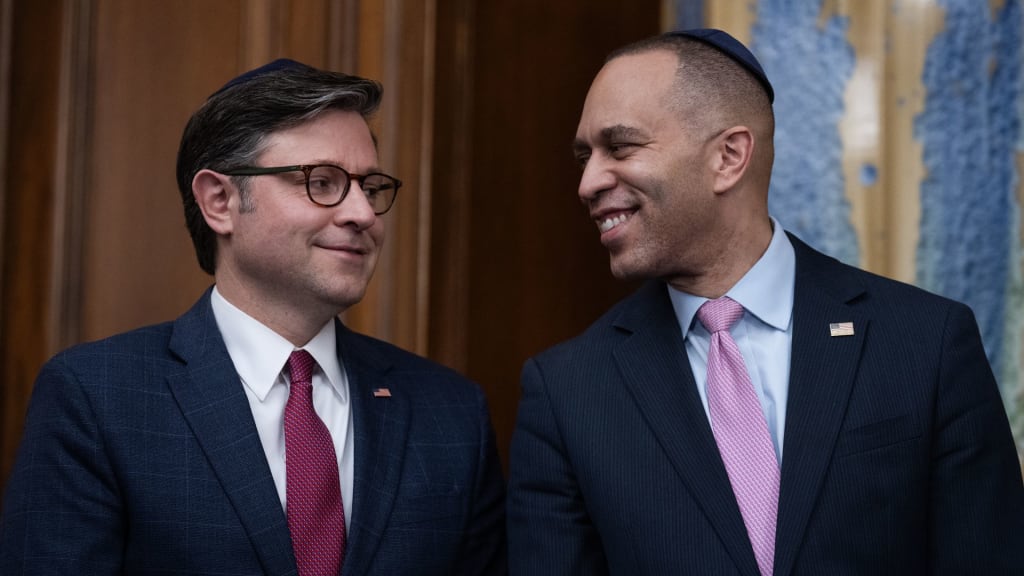
A Standoff in Washington
House Speaker Mike Johnson has been warned by Democratic leaders that they will not provide votes to end the ongoing partial government shutdown. This warning complicates efforts to reopen the federal government and highlights the deep partisan divide in Washington. As agencies remain unfunded and federal operations stall, Johnson faces a critical test of leadership and political strategy.
What Led to the Shutdown
The United States entered a partial government shutdown after federal funding for several agencies expired. While the Senate negotiated a bipartisan deal to fund most government operations and extend funding for the Department of Homeland Security (DHS) for two weeks, the measure still requires House approval.
Johnson initially hoped to count on votes from both Republicans and Democrats to pass the funding legislation. But Democratic leaders have now made it clear they will not support the current proposal, citing unmet policy priorities and concerns over spending and agency operations.
Why Democrats Are Refusing to Vote
House Minority Leader Hakeem Jeffries and other Democratic leaders have refused to back the GOP-led funding bill unless key issues are addressed, including:
Protections for social programs
Immigration enforcement reforms
Broader budgetary concerns
Many Democrats view a short-term DHS extension as insufficient without meaningful policy commitments. They also aim to shift responsibility for the shutdown onto Republicans, rather than allowing the GOP to rely on Democratic votes to fund the government.
The Challenge for Johnson
Johnson’s initial strategy depended on bipartisan support in the House. With Democrats withholding their votes and some Republicans demanding deeper spending cuts, passing the bill has become far more difficult.
To move forward without Democratic support, Johnson must rely solely on Republican votes. This is risky because the Republican caucus is split between hardliners seeking aggressive cuts and moderates advocating for a cleaner, less ideological funding bill. In a narrowly divided House, even one defection could block a party-line vote.
The Stakes Are High
The consequences of the shutdown are immediate and widespread:
Federal employees may face furloughs or delayed paychecks
National parks and essential services operate with reduced staff
Some government programs and social safety net services may be disrupted
A prolonged shutdown not only affects daily life but also threatens public trust in government and could have economic repercussions. Past shutdowns have shown that even short-term funding lapses can create long-term political consequences.
Possible Paths Forward
Lawmakers are exploring several options to break the deadlock:
1. Short-term continuing resolutions to buy more time for negotiation
2. Revised bipartisan deals offering concessions on both sides
3. Party-line funding bills relying entirely on Republican votes
Each option carries risks. Short extensions delay the problem without resolving it, bipartisan deals may face opposition from party bases, and party-line bills risk failure if any GOP members dissent.
Why This Matters
This shutdown reflects broader challenges in U.S. politics:
Compromise is increasingly difficult in a deeply polarized Congress
Legislative victories require strategic maneuvering, not just negotiation
Leadership tests, like the one Johnson faces, can define political influence and party cohesion
For Mike Johnson, uniting his party and finding a path forward without Democratic support is now a central test of his leadership and political strategy.
What Comes Next
The public, federal employees, and lawmakers alike are watching closely. Whether Congress can move from deadlock to compromise will determine the immediate future of federal operations and potentially influence the 2026 elections.
For now, the shutdown continues, and every hour that passes puts pressure on lawmakers to find a resolution — one that balances political priorities with the real-life consequences of a government partially closed.
About the Creator
Asad Ali
I'm Asad Ali, a passionate blogger with 3 years of experience creating engaging and informative content across various niches. I specialize in crafting SEO-friendly articles that drive traffic and deliver value to readers.
EU Set to Add Iran’s Guards to Terror List After France U-Turn
The European Union is poised to take one of its most significant diplomatic steps in years by moving to designate Iran’s Islamic Revolutionary Guard Corps (IRGC) as a terrorist organization — a decision that only days ago seemed unlikely due to political resistance, particularly from France. The shift in Paris’s stance has unlocked what many diplomats in Brussels describe as “a political green light” for the controversial measure, reflecting deepening concern in Europe over Iran’s internal repression and international conduct.
By Haque!Nawaz2 days ago in Journal




Comments
There are no comments for this story
Be the first to respond and start the conversation.