
EU Set to Add Iran’s Guards to Terror List After France U-Turn
A Landmark Shift in European Policy as Paris Backs Labeling the IRGC a Terror Organization

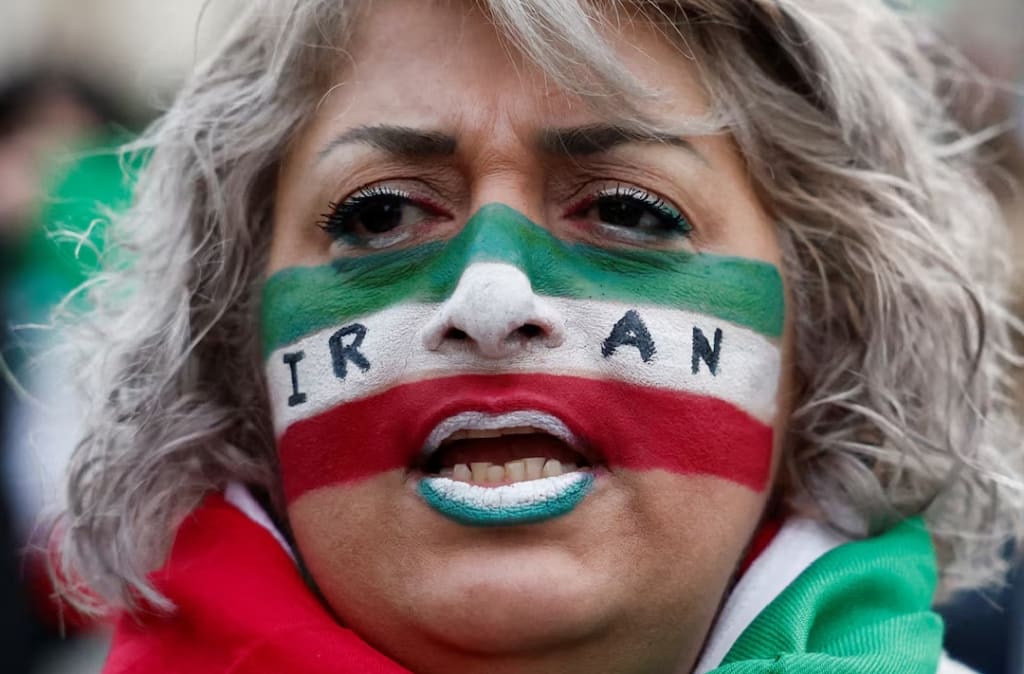
The European Union is poised to take one of its most significant diplomatic steps in years by moving to designate Iran’s Islamic Revolutionary Guard Corps (IRGC) as a terrorist organization — a decision that only days ago seemed unlikely due to political resistance, particularly from France. The shift in Paris’s stance has unlocked what many diplomats in Brussels describe as “a political green light” for the controversial measure, reflecting deepening concern in Europe over Iran’s internal repression and international conduct.
A Diplomatic U-Turn in Paris
For months, several EU member states — including Germany, Italy and Spain — had advocated for placing the IRGC on the bloc’s terrorist list. However, France remained the chief holdout. Paris’s hesitation was rooted in traditional caution: designating a foreign military organization of a sovereign state as “terrorist” could fracture diplomatic relations with Tehran, complicate negotiations on nuclear diplomacy, and jeopardize efforts to secure the release of European detainees held in Iran.
That calculation changed dramatically on January 28, 2026, when French Foreign Minister Jean-Noël Barrot announced France would support the designation at an upcoming meeting of EU foreign ministers in Brussels. Barrot said that the European Union must respond to the “unbearable repression of the peaceful uprising of the Iranian people” and that the courage shown by protesters facing “blind violence” must not be ignored.
In his statement, Barrot also called on Tehran to release political prisoners, halt executions, end the digital blockade, and allow a United Nations Human Rights Council fact-finding mission to investigate alleged atrocities. He underscored that those responsible should face travel bans and asset freezes within the EU.
Why the IRGC?
The Islamic Revolutionary Guard Corps was established in the aftermath of the 1979 Islamic Revolution to safeguard Iran’s new clerical leadership and has since evolved into a powerful force within the Iranian state. It not only commands a parallel military structure alongside the regular armed forces but also wields considerable influence over Iran’s economy, intelligence services, and foreign policy. The IRGC oversees Iran’s ballistic missile and nuclear programs and maintains an extensive network of affiliated militias and political actors throughout the Middle East.
Those backing the designation argue that the IRGC’s involvement in violent repression of domestic protests makes it deserving of the terrorist label. Since late 2025, Iran has been rocked by widespread protests met with brutal force, resulting in thousands of deaths and mass arrests, according to international observers — though Tehran disputes many of the reported figures.
Supporters of the designation also highlight the IRGC’s activities abroad, linking the organization to terrorist attacks, proxy groups and destabilizing actions across the Middle East. Independent analysts and security institutes have documented the IRGC’s support for groups like Hezbollah in Lebanon, Palestinian militant factions, and the Houthi movement in Yemen, and have pointed to alleged involvement in past terrorist plots outside Iran.
EU Dynamics and the Path to Unanimity
For the EU to formally add the IRGC to its terrorist list, all 27 member states must agree unanimously — a demanding threshold that has historically stalled bold foreign policy initiatives. Until France’s U-turn, its resistance was seen by diplomats as a diplomatic brake on the proposal. Now, with Paris aligned with Rome and Berlin, the measure has enough political support to likely clear the necessary approvals at the ministers’ meeting.
The shift is emblematic of growing frustration within the bloc over Tehran’s policies. Countries such as Italy had already intensified pressure on Brussels to escalate punitive actions against the IRGC, describing its conduct as “heinous” and calling for both sanctions and official listing.
Still, unanimity is not a foregone conclusion. Some EU capitals have voiced concerns over the legal and geopolitical ramifications of the designation, including how it might affect diplomatic channels, economic ties, and cooperation over security issues such as counter-terrorism. Historically, debates over adding the IRGC date back years, with European institutions periodically pushing for action while others have urged restraint, citing legal hurdles and fears of escalation.
International Context and Reactions
The United States, Canada and Australia have already designated the IRGC as a terrorist organization. The U.S. did so years earlier under the Trump administration, citing the Corps’ involvement in global terrorism and threats to U.S. interests. This precedent has increased pressure on European allies to align their policies accordingly, particularly as transatlantic security cooperation remains a priority for NATO members and partners.
Iran’s government has strongly opposed the move, warning of “destructive consequences” for European relations if the designation proceeds. In response to earlier EU proposals, Tehran has summoned foreign diplomats and labeled Western criticism as interference in internal affairs.
Strategically, Tehran’s leadership views the IRGC as central to national defense and ideological security, dismissing external pressure as part of a broader geopolitical rivalry with Western powers. Iranian officials have often characterized the IRGC’s activities as legitimate state action against terrorism and foreign threats.
Implications for EU-Iran Relations
If the EU moves forward with the terrorist designation, the implications could be far-reaching. Diplomatic ties between Brussels and Tehran may deteriorate further, potentially affecting cooperation on issues ranging from nuclear negotiations to regional security. The decision would likely strengthen sanctions regimes, leading to asset freezes, travel bans and restrictions on any entity or individual connected with the IRGC across EU member states.
For Iranian civil society and activists, the move is widely seen as symbolic recognition of their struggle and suffering amid brutal crackdowns. Many diaspora communities in Europe have long campaigned for stronger actions against the IRGC, viewing the designation as a moral imperative.
For European policymakers, the decision reflects a complex calculus: balancing condemnation of human rights abuses, solidarity with democratic movements, and the geopolitical risks of antagonizing a powerful regional player. Whatever the outcome, Paris’s U-turn marks a watershed moment in EU foreign policy — one that signals greater willingness among European capitals to confront Iranian state actors directly on the world stage.
About the Creator
Keep reading
More stories from writers in Journal and other communities.
🅼🅸🅳🅽🅸🅶🅷🆃 🆂🅽🅰🅲🅺🆂
"It's 10 in Tuscon! We all know what that means... It's Time for Midnight Snacks with your man, Gerald Gee! Ready to spend the night together? Me too! I'm full of snacks and can't wait to regurgitate them all back into your hungry ears. Crack a brew! Pop some corn! Anything to get ready for one hell of a show where the talk maybe cheap but the words cut deep...
By Lamar Wiggins8 days ago in Fiction


Comments
There are no comments for this story
Be the first to respond and start the conversation.