
Merkel Was Right! The Biggest Loser of the Russia-Ukraine Conflict Has Emerged—and It’s Not Russia or the U.S.
Merkel Was Right! The Biggest Loser of the Russia-Ukraine Conflict Has Emerged—and It’s Not Russia or the U.S.


Merkel Was Right! The Biggest Loser of the Russia-Ukraine Conflict Has Emerged—and It’s Not Russia or the U.S.
In October 2021, Angela Merkel formally stepped down as Germany’s Chancellor, ending the political career of Germany’s first female leader. Just four months later, the Russia-Ukraine conflict erupted, soon growing into a geopolitical crisis impacting global stability and development.
Before leaving office, Merkel had predicted that a Russia-Ukraine conflict would be a "disaster." However, her warning could not prevent this crisis from unfolding. As the conflict nears three years, it has become clear that this crisis is not just a struggle between Russia and Ukraine. So, who is the biggest loser in this ongoing conflict? And will future changes in the Russia-Ukraine situation offer the losers a chance to turn the tide?
### I. The “Biggest Loser” of the Russia-Ukraine Conflict
The Russia-Ukraine conflict has transformed into a battleground for various global powers vying for interests, with a multitude of forces at play. Whether willingly or reluctantly, those involved quickly realized that the situation was not developing according to anyone’s plan.
For instance, the U.S. and Europe didn’t expect vast amounts of weapons sent to Ukraine to end up on the black market. Meanwhile, Russia was caught off-guard by Ukrainian strikes in the Kursk region.
The battlefield has produced both winners and losers, and the EU finds itself in a complicated dilemma of supporting Ukraine against Russia while also advocating for peace. The EU had hoped to draw Ukraine closer via NATO, curbing Russia’s influence, but this attempt backfired and ultimately ignited the conflict.
Now, with support for Ukraine comes an “economic bleeding” for the EU, resistance to Russia entails “self-harm,” and alignment with the U.S. risks accelerating the relocation of domestic industries. Germany, as the EU’s largest economy, has suffered losses even greater than Russia’s.
Most can see that this conflict is, at its core, a proxy war between the U.S. and Russia. However, in this confrontation, the U.S. and Russia are not the biggest losers.
In fact, much of the U.S. assistance to Ukraine is given as loans, with these funds ultimately circulating back to benefit the U.S. domestically. This way, the U.S. not only earns a reputation for supporting Ukraine but also profits through the financial flow.
On Russia’s side, it has remained firm in maintaining control over the four Ukrainian regions it annexed and is working to stabilize the economic fallout from exiting the SWIFT payment system. Russian energy still finds buyers, and its trade system is demonstrating a shift towards a model independent of the U.S. dollar.
In 2023, Germany reclaimed its position as the world's third-largest economy, surpassing Japan, and it holds significant influence within the EU. This raises a critical question: How did a country as politically and economically powerful as Germany end up as the biggest loser in the Russia-Ukraine crisis?
After Merkel left office, the new German government likely didn’t anticipate the extent of Germany’s dependence on Russian energy, nor its reliance on the U.S. for military security. Moreover, when a country plays the role of both challenger and leader within an alliance, it often has to “pay” more before seeing any results.
### II. A Predicament Built on Multiple Factors
Let’s examine the “negative gains” Germany has endured amid the Russia-Ukraine crisis.
At the start of the conflict, severe energy and food security crises nearly brought Europe to the brink. Despite measures like rationing and reducing hot water usage, the EU has continued to impose economic sanctions on Russia. The Nord Stream pipeline explosions intensified Europe’s energy crisis to an unprecedented level.
The Nord Stream pipelines were a critical energy supply route for Germany and Europe. As the main recipient of Nord Stream gas, Germany has struggled to cope with the pipeline’s disruption.
While grappling with an energy shortage at home, Germany also faces pressure to support Ukraine in the war, aiming to show resolve as a European power.
Adding to this, Germany is now embroiled in a trade dispute between the EU and China. Efforts to shift the Ukraine conflict’s frustrations onto China’s supposed “support for Russia” have strained trade relations, further impacting Germany’s already struggling industrial base. Meanwhile, other EU nations continue to import Russian energy despite the EU’s stance, and significant differences exist within the EU on how to approach trade with China.
### III. Political Shifts at Home
The multiple adverse effects stemming from the Russia-Ukraine conflict are disrupting Germany’s economic and social stability. In a recent development on November 6, German Chancellor Olaf Scholz dismissed Finance Minister Christian Lindner, signaling political turbulence. The Free Democratic Party subsequently announced its exit from the “traffic light” coalition formed after the last election, foreshadowing an era of political realignment.
Analysts expect Germany’s political climate to veer rightward after the European Parliament elections displayed strong right-leaning trends. However, even if right-wing parties gain power, a smooth transition and new policy direction will take time, during which global conditions could shift dramatically.
Regardless of which faction ultimately takes charge, the question remains: Can Germany or the EU truly achieve strategic autonomy? After Donald Trump’s win in the 2024 U.S. presidential election, the U.S. is likely to adopt a conservative stance on NATO and EU policy.
Amid rising energy prices and tense trade environments, Germany faces a serious challenge in retaining its manufacturing sector, as firms reconsider staying in Europe.
### IV. Future of Russia-EU Relations
Trump has promised to resolve the Russia-Ukraine conflict within a day if elected, a pledge that remains unlikely yet shows widespread desire for peace. However, any resolution will not heal Russia-EU relations overnight. Even if Europe urgently needs Russian energy, trade relations between Russia and Europe may remain minimal.
The freezing of Russian sovereign assets as a sanction has eroded trust in Western ideals of asset sanctity.
Currently, the EU is pursuing “de-risking” strategies toward China, hoping to sever economic ties to harm China’s economy, ignoring the fact that affordable “Made in China” products sustain their standard of living.
In summary, Germany’s significant losses in the Russia-Ukraine conflict illustrate a profound reality: without control over the alliance’s strategic direction, the leading member often suffers the most in intra-alliance conflicts.
This period of pain also serves as a reminder for Germany to pursue change. Recent political shifts in early November may be Germany’s first step in overcoming its challenges. And the outcome of the U.S. presidential election will inevitably affect Germany’s domestic landscape.
Whoever leads Germany next must prioritize stabilizing the economy. Even if the Russia-Ukraine conflict ends in a peace agreement, rebuilding Russia-EU relations will be a long process. For Germany, retaining trade links with Russia will at least protect it from a hollowed-out industrial sector.
About the Creator
L-doctor
Share medical science knowledge from time to time
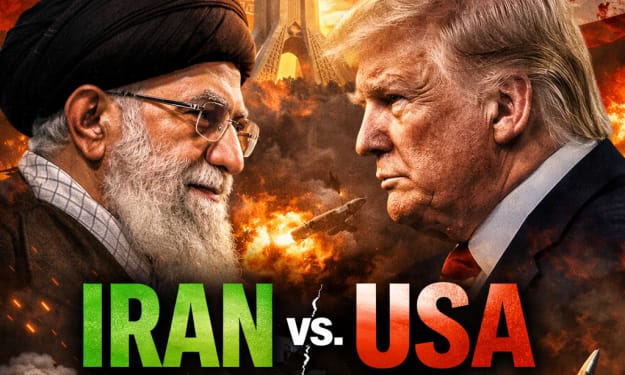
“Iran VS United States, Tensions at the Breaking Point. Trump’s Next Move Could Reshape the Middle East”
1. Background: What’s Happening Now • Nationwide protests in Iran are ongoing due to a severe economic crisis, skyrocketing inflation, and public anger about conditions inside the country. • President Donald Trump has publicly threatened Iran, warning that if Tehran violently suppresses protesters or gets too aggressive, the U.S. could intervene. • Iran’s government has responded by warning of swift and comprehensive retaliation if the U.S. attacks. • Iran’s airspace and infrastructure remain tense, but some diplomatic communications have briefly reopened, signaling both sides are weighing options.
By USA daily update 5 days ago in Journal



Comments
There are no comments for this story
Be the first to respond and start the conversation.