
Lu You's Poetry and Frustration
"The Spring Rain in Lin'an" is one of Lu You's masterpieces, and has received many comments in the past dynasties.
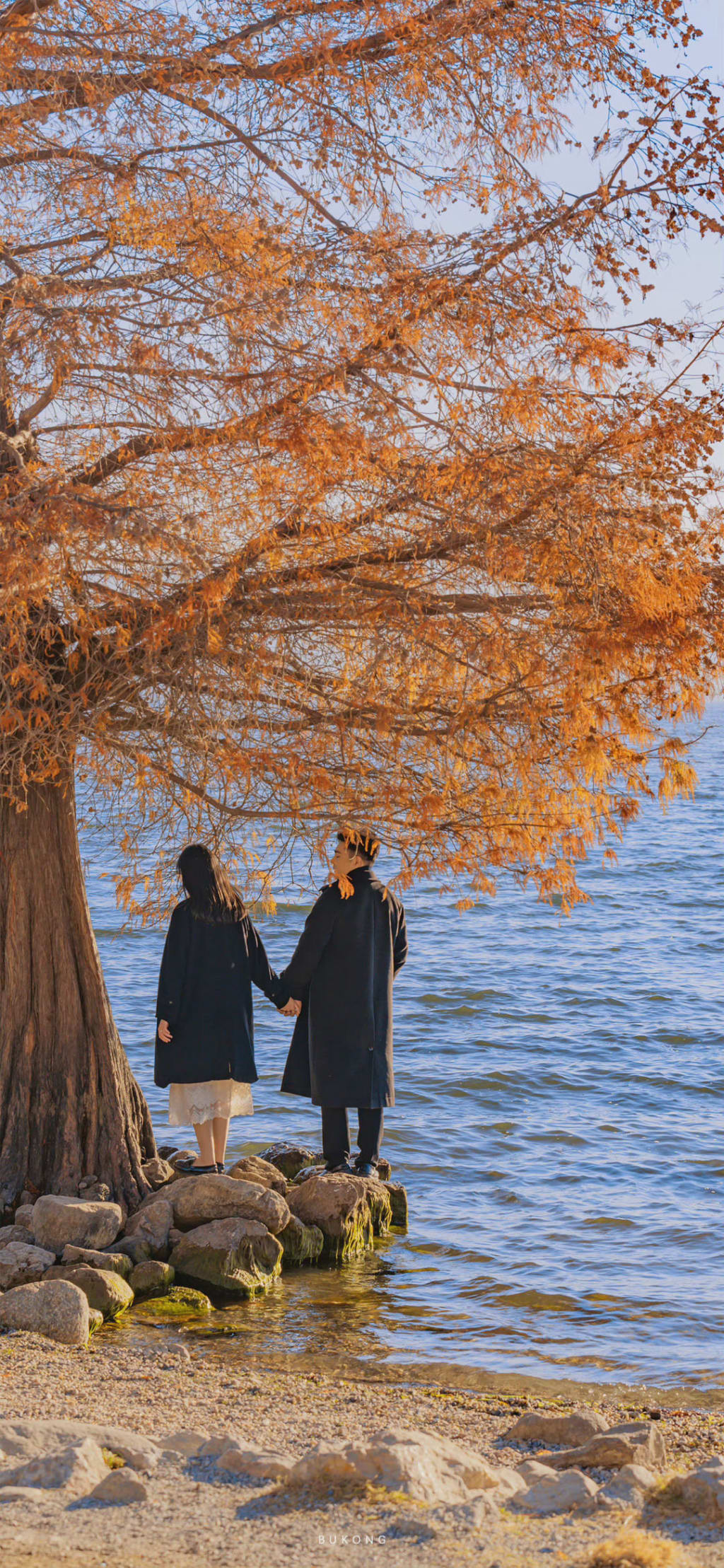
"The Spring Rain in Lin'an" is one of Lu You's masterpieces, and has received many comments in the past dynasties. Huang Chang once said that "A small building listens to the spring rain all night", "Fourteen characters paint the spirit of Jiang Nanchun". Lu You was 62 years old when he wrote this poem, and had been idle for 5 years in his hometown of Shanyin (now Shaoxing, Zhejiang). When he entered Beijing again, the high spirits of the poet in his youth and the frivolity of Qiu Ma in his prime were all tossed away in the ups and downs of his life. Although his ambition to restore the Central Plains has not faded, he is increasingly despairing of the weak and dark Southern Song Dynasty. In the spring of the thirteenth year of Chunxi (1186), the author entered Beijing by edict and accepted the post of governor of Yanzhou. Before taking office, he first went to Lin'an (now Hangzhou, Zhejiang) to meet the emperor, and lived in an inn beside the West Lake to wait for his summons. In the midst of boredom, he wrote this masterpiece that has been passed down through the ages.
"The world has been thin like a veil over the years, who made the horses come to Jinghua?" The opening of the poem expresses the helplessness of the scorching world and the waste of living in Jinghua in the form of a question. After 5 years of idleness in his hometown, he came to Beijing again. The old poet and hero are twilight and his lofty ambitions can never be returned. Therefore, "the world is like a veil" is not only a painful life experience for the poet, but also a denial of the reality. The poet used "Jinghua" as a metaphor for the imperial court. To the imperial court, the poet was just a guest, with neither real power nor the right to remonstrate. In the physical space, the poet is a guest of the capital, a guest living in the capital, coming and going in a hurry; in his ideal aspiration, he is also a guest of politics, a hero lost his way, and his ambitions are hard to be rewarded. For the poet, the taste of the world is like yarn, and the capital is like a dream.
The chin couplet is a famous phrase that has always been praised. "A small building listens to the spring rain overnight, and a deep lane sells apricot flowers in the Ming Dynasty." Yin Guangxi also said in Appreciation and Analysis of Famous Poems of Song Dynasty: "The 'small building' has three levels in terms of the artistic conception of the poem. Living in a small building and listening to the rain all night is a poetic state; Continuously, the apricot blossoms are blooming, the dew is gorgeous, another poetic realm; the deep alley selling flowers, the sound is in the ear, another poetic realm." This sentence has a beautiful artistic conception, fresh and bright, but as Shu Wei wrote in "The Preface to the Poems of Shu Jiannan" In the commentary: "The sound of flowers selling in the deep alley of a small building, the seven-character spring sorrow is born overnight." The helplessness and sadness expressed by the poet in the first couplet are more delicately and tactfully reflected in the couplet.
First of all, the "Xiaolou" couplet once again highlights the coolness of the world. From the visual point of view, from the vast capital city to the narrow small buildings and deep alleys, the transformation of space reflects the poet’s gradual claustrophobia and deliberate escape; The words "Xinghua" have a clammy and deep nature, and form an equivalent metaphor with the coolness of "the taste of the world is like yarn"; The words show that the spring rain has not stopped all night, and the poet has not slept all night. At the same time, the seller of apricot flowers is also alone, and the sound of selling flowers monotonously echoes in the empty deep alley, making it even more mournful in the coolness of the morning. The loneliness of the poet and the flower seller form an isomorphism, both of them stand alone, accompanied only by a night of spring rain and apricot blossoms in the morning.
Second, the chin couplet expresses the poet's inner sorrow and resentment with extremely delicate brushwork. "Spring rain is like sorrow" is a common image in ancient poetry. For example, "spring rain is always regarded as spring tears, and it is not half as sorrowful as Sijun" (Zhang Lei's "Tide Two Songs"), which both take spring rain and sorrowful thoughts as continuous and numerous. . At the same time, the night rain is also a symbol of the poet's adversity, and the one night spring rain represents the rough career and political frustration of the poet's life. The sentence "Xinghua" is transformed into Chen Yuyi's poem "In the poems of the guest in time, the news of apricot is in the rain" ("Huaitianjing Zhilao's Visit"), the poet entered politics again during the Qingming season, just like apricot flowers Bring news, and at the same time the news is lost in the sound of rain, just as a poet loses hope in the sound of rain at night. The word "Apricot Blossom" also has spatial characteristics. From "Shenxiang Ming Dynasty Selling Apricot Flowers", we can perceive the whole artistic conception of "Apricot Blossoms in Spring Rain Jiangnan". The narrow space of Loushen Lane brings the boundless spring and beautiful south of the Yangtze River. The torment of the poet's sleepless night was reconciled and comforted in the spring scenery in the south of the Yangtze River. The poet brought himself from the narrow to the vast, and the one opened up, and the realm was deep.
The neck couplet reads "Short paper slantingly walks leisurely to make grass, and clear windows and fine milk play to share tea". On the surface, the poet is writing "cursive script" and "subdivided tea" leisurely and elegantly, but in fact it is "leisure but not leisure", reflecting The anguish and melancholy of the poet's political frustration and no way to serve the country is another expression of the hero's loss. At the beginning of the spring rain, the weather is fine and the scenery is infinite, but the poet lives in the first room of the small building to kill time by writing cursive script and sharing tea. This not only reflects the poet's bleak mood, but also reflects the loss of the poet's inner expectations, so although the spring is full of eyes, he has no heart to appreciate it.
The end couplet "Don't sigh in plain clothes, it's like Qingming, you can go home", in contrast to the poetic meaning of "Jingluo is full of dust, plain clothes are turned into torso", on the surface, it is to comfort myself that I don't have to worry about the bad atmosphere of the capital will pollute myself. Quality, in fact, is helpless self-mockery. The poem begins with leaving his hometown "King Jinghua" and ends with "coming home" in other capitals. The poets of "Jinghua on horseback" come in a hurry and leave in a hurry. The poet's itinerary and emotional movement have completed a cycle. Exclamations are also included. "The crown covers the capital, and the people of Sri Lanka are alone and haggard." "Don't sigh in plain clothes" is not only the helplessness and self-mockery of the poet after his ideal is lost again, but also the poet's emotion has fallen from the fierceness of ambition to the indifference of returning home.
The first couplet of the whole poem is depressing and difficult to disappear, and the lonely peak is especially raised; the neck couplet is fresh and gratifying, like a clear spring; the neck couplet is meticulously described and explained; "The small building listened to the spring rain all night, and the deep alley sold apricot flowers in the Ming Dynasty." The continuous spring rain was written by the poet's hearing; the dull spring light was revealed in the sound of selling flowers. The old poet lived alone in a small building, without sleep all night, listening to the patter of spring rain, thinking of apricot blossoms blooming, although fresh and beautiful, but full of loneliness. The boredom of the poet's living as a guest, the sigh of unrequited ambition, and the grief and indignation of being unable to serve the country are all scattered in the spring rain of apricot flowers in the south of the Yangtze River for thousands of years.
About the Creator
shiguang1
The order of Wenfeng Pagoda.


Comments
There are no comments for this story
Be the first to respond and start the conversation.