
Live Streaming v/s Video Conferencing- Know The Difference
If you are wondering what is the difference between live streaming and video conferencing, this article can help.

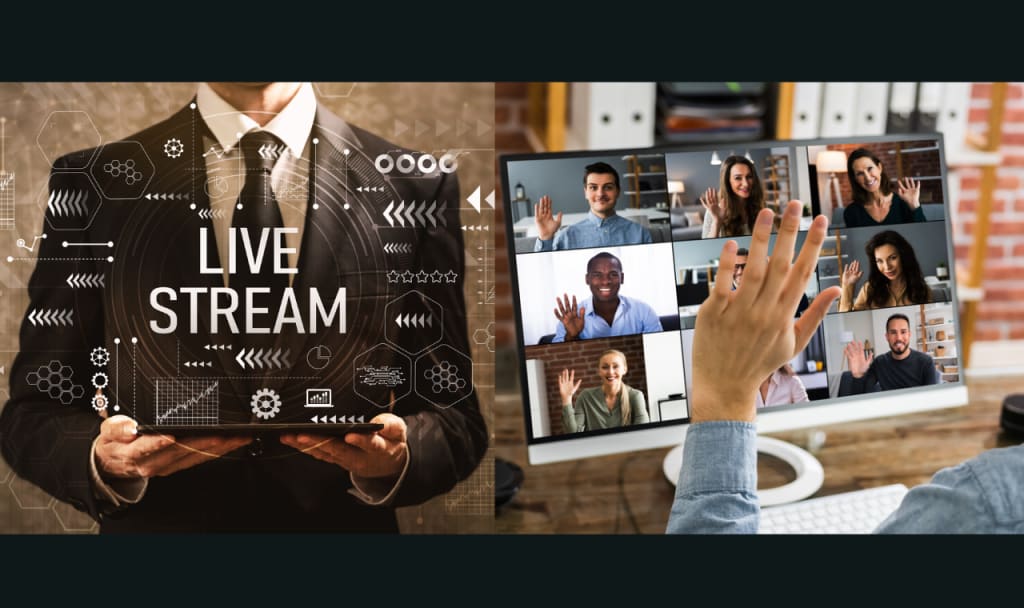
Digitalisation is the new normal in the business world. Townhall meetings, press conferences, product launches, and award shows; everything is digital now. Organisations worldwide are connecting with their audience in real-time using two innovative technologies; Live Streaming and Video Conferencing. Both are used interchangeably in the communication market; however, they are different!
Live streaming is a one-way streaming tool that broadcasts live video or audio coverage of the event. On the other hand, video conferencing is a telecommunication tool which enables two-way communication with people across different electronic devices across the globe. While the former lets an organisation stream live videos on other social media platforms like Facebook, YouTube, and Instagram; the latter serves as a single-professional business platform to conduct formal meetings with potential audiences.
The primary objective of both these technologies is to instantly connect & communicate with targeted audiences across any geographical location in real-time. But knowing their differences will help companies decide which is the best for their business.
From definition to use cases & similarity, we provide a detailed explanation of live streaming and video conferencing in this article.
Live Streaming
What is Live Streaming?
Live streaming is a concept of broadcasting any digital content across different electronic devices like laptops, smartphones, tablets, or televisions. Using a stable internet connection, organisations can stream live events & make a digital presence in the community.
In this digital world- where everything is online- going live is the only way to make a successful existence in the minds & hearts of consumers. Be it gaming, product launch, or special announcement organisations can live stream across multiple digital platforms. It enables them to increase reach & engage audiences with a broader visibility. Simultaneously, it allows viewers to like, comment, and share streaming content with their friends and family.
Usually, live streaming is broadcasted with a delay of 5 to 10 seconds for the viewers. Enabled with Adaptive Bitrate Streaming (ABS), this feature adjusts video quality based on network conditions, hence improving video streaming over HTTP networks. Also, live streams can be recorded using the Video-On-Demand (VoD) facility.
Benefits of Live Streaming
- A huge number of participants can join a live stream.
- It allows video playback options.
- It can be recorded in High-Definition (HD) quality.
- Have an in-built screen sharing feature.
- It enables the host to stream over multiple digital platforms in real time.
Use Cases of Live Streaming
- Public Announcements
- Webinars
- Gaming
- Virtual Summits & Events
- Product Launches
- Video Conferencing
What is Video Conferencing?
Video conferencing is the new means of communication in the corporate world. It is a technology tool that allows two or more participants to communicate in closed groups from any geographic location in real time.
A video conferencing tool caters for a limited number of participants, the ones invited by the host. This technology is secured with passcodes initiated by the host of the meeting. Backed with advanced features- like whiteboards, chatbots, presentations, live recording, and screen sharing- this online tool enables the participants to communicate effectively with each other by eliminating geographical boundaries.
Video conferencing tools don't require an extensive network bandwidth. Using low latent video & audio transmission, this technology allows participants to conduct face-to-face discussions, share presentations, and make connections across digital realms. At the same time, this system provides no lag in the delivery of messages to the participants.
Benefits of Video Conferencing
- Feasible Two-Way Communication
- Supports Screen Sharing
- Easy Schedule of Meetings
- Real-Time Communication Without Lagging
- Sharing/Transferring Confidential Data Via Secured Network
Use Cases of Video Conferencing
- TownHall Meetings
- Interviews
- Investors-Stakeholders Meetings
- Rewards & Recognition Awards
- Annual General Meetings
- HR-Employees Meeting
Similarities Between Live Streaming & Video Conferencing
- Live Action
Both technologies operate on live platforms. By streaming the content live, viewers are able to connect and provide instant feedback across digital platforms.
- Accelerating Engagements
These technologies draw maximum engagement. From displaying presentations to answering participants' queries, hosts can communicate with audiences using chatbots, polls, and feedback sessions.
- Screen Sharing
The video conferencing and live streaming options allow a screen-sharing feature that displays video content and images on the screen. Also, participants can record the sessions for future reference.
- Chat Features
Both these technologies allow participants to chat during live streaming. A chatbox enables participants to communicate and engage with the host, despite being busy with other work.
To Conclude: Which One Suits The Best For The Next Virtual Event?
Both live streaming and video conferencing have their own advantages and different use cases.
For making a public announcement or launching a product, companies should live stream their virtual or hybrid event; this technology can reach millions of viewers even after the streaming is over (post-event promotion across social media handles).
While a video conferencing tool can assist them in training new employees or conducting town hall meetings from multiple geographical locations in real time. This technology keeps a window for each participant, hence promoting active involvement & communication throughout the sessions.
If you still have questions about which one to choose for your next virtual event, feel free to contact us. Our marketing team will be happy to assist you.
About the Creator
Vcnow Digital
Vcnow is a brand of Unified Collaboration Services, a provider of Unified Conferencing and Collaboration Services, including virtual meeting rooms, video, audio and web conferencing.
Keep reading
More stories from Vcnow Digital and writers in Journal and other communities.
Benefits of Implementing Video Conferencing Tools For A Business
The 2020 pandemic brought a significant change in the communication world. From conducting an in-person internal meeting to remotely collaborating over digital platforms, the enterprise leaders transformed the way of operating business. At the same time, video conferencing tools enabled them to communicate effectively with their colleagues and customers.
By Vcnow Digital3 years ago in Journal
Everyday Habits That Drain Your Energy and How to Protect Yourself.
You wake up tired. You move through the day on effort. You sleep yet feel depleted. Energy loss often starts with habits you repeat daily without question. These habits shape focus, mood, and physical strength. When you identify them, you regain control.
By Wilson Igbasi4 days ago in Journal


Comments (1)
Share your thoughts and visit our website to know more:https://vcnow.in/