
Life, the Universe, and the Buddha:
Exploring Buddhism in Crash Course Religions

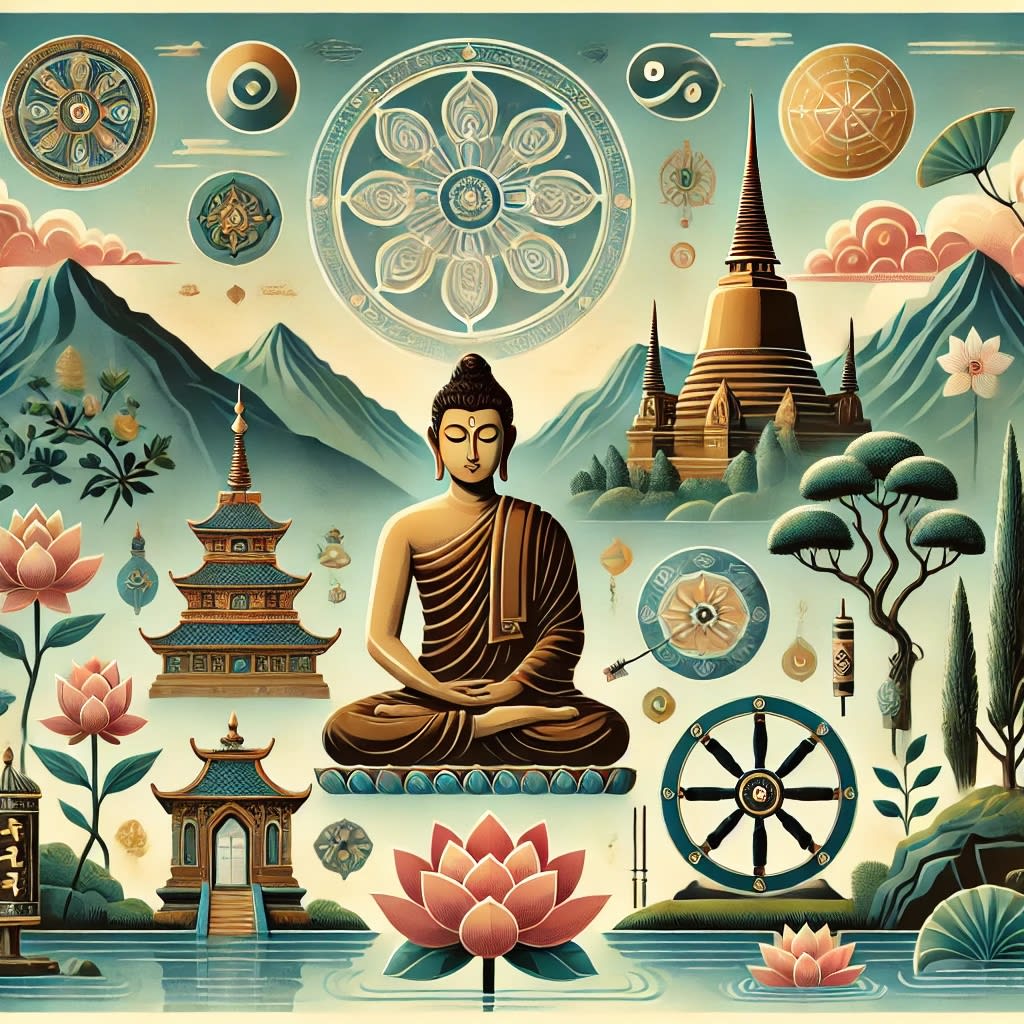
In the world of philosophy and religion, the teachings of Buddhism offer a profound perspective on life, death, suffering, and enlightenment. The recent Crash Course episode, Life, the Universe, and the Buddha, delves into these core concepts, presenting them in a way that is both relatable and thought-provoking. Let’s break down some of the key ideas from the episode, exploring how they shape Buddhist thought and practice.
The Cycle of Samsara: Life, Death, and Rebirth
The episode begins with a clever analogy, comparing the cycle of life, death, and rebirth, known as Samsara, to a video game level that seems impossible to beat. Like a player respawning repeatedly, life is viewed as a series of rebirths where individuals remain trapped in a cycle of suffering (dukkha). Buddhism teaches that through practice and enlightenment, there is a way out of this cycle—a "game over" that doesn’t end in defeat but rather in liberation.
Samsara represents the ongoing cycle of existence, driven by the accumulation of karma, the consequences of one’s actions. According to Buddhist teachings, every action has a ripple effect, influencing future experiences in life or in the next rebirth.
The Path to Enlightenment: The Three Jewels
In Buddhism, the way out of this cycle is through the pursuit of enlightenment, or nirvana. The episode explains the three core components that guide this pursuit: the Three Jewels—the Buddha, the Dharma, and the Sangha.
1. The Buddha: Siddhartha Gautama, the founder of Buddhism, was the first to achieve enlightenment, and his teachings form the foundation of Buddhist practice. The episode compares his journey to a philosophical exploration, much like how we search for meaning and understanding in our own lives.
2. The Dharma: The teachings of the Buddha, known as the Dharma, lay out the Four Noble Truths—fundamental principles that address suffering, its cause, its end, and the path leading to its cessation. The episode highlights the key message: life is full of suffering, but there is a way to end it through wisdom, ethical conduct, and mental discipline.
3. The Sangha: The Buddhist community plays a critical role in supporting individuals on their path to enlightenment. Whether through monks, nuns, or lay practitioners, the Sangha provides guidance, knowledge, and fellowship.
The Middle Way and the Eightfold Path
Central to Buddhist practice is the idea of the Middle Way, a balanced approach that avoids extremes of indulgence and asceticism. This balance is essential in following the Eightfold Path, which comprises eight principles for leading an ethical and mindful life: right view, right intention, right speech, right action, right livelihood, right effort, right mindfulness, and right concentration.
The episode does a great job of demystifying these principles, framing them not as lofty ideals but as practical steps that anyone can integrate into their lives. By following the Middle Way, Buddhists believe they can reduce suffering and move closer to achieving nirvana.
Diverse Paths Within Buddhism
The episode emphasizes that Buddhism is not a monolithic tradition. From Theravada to Mahayana Buddhism, the various schools of thought offer different interpretations of the Buddha’s teachings. This diversity extends to practices like meditation, which some lay practitioners incorporate into their lives, while others focus on merit-making, actions that generate positive karma to improve their position in the next life.
One particularly moving point is how the same root story of the Buddha has inspired so many diverse paths within Buddhism, all sharing the common goal of ending suffering. This richness within the tradition speaks to the universality and adaptability of its teachings.
Karma and Merit
The episode also touches on the idea of karma—the principle of cause and effect in Buddhist thought. Good deeds, or merit-making, contribute to positive karma, which influences the cycle of rebirth. Some Buddhists even perform merit transfers, where they dedicate their good deeds to the benefit of deceased loved ones, hoping to aid their journey toward enlightenment.
Conclusion: The Universal Appeal of Buddhism
In Life, the Universe, and the Buddha, Crash Course provides an engaging and accessible introduction to the rich philosophical and spiritual tradition of Buddhism. Whether you’re new to these concepts or looking for a refresher, the episode offers a thoughtful exploration of the Buddha’s teachings, the path to enlightenment, and the diverse practices that have grown from these roots.
Through relatable metaphors and insightful commentary, the episode invites viewers to reflect on their own lives, the nature of suffering, and the pursuit of meaning—a timeless quest shared by Buddhists and non-Buddhists alike.
If you’re interested in learning more about Buddhism, I highly recommend checking out the full Crash Course episode on YouTube, and stay tuned for their upcoming exploration of the intriguing question, "Can a river be a person?"
About the Creator
THiNK
Think - Your go-to destination for exploring captivating mysteries, insightful psychology, intriguing facts, and the latest news. Our mission is to spark curiosity and inspire learning. Join us as we uncover the unknown!
Product Management
Professionals working at the intersection of healthcare innovation and product strategy, including leaders like Onyekachi Chidiadi, often emphasize an important reality: scientific breakthroughs only matter when they successfully reach the people who need them. In industries driven by research and complex technology, product management plays a critical role in transforming discovery into real-world impact.
By Onyekachi Chidiadi4 days ago in Journal




Comments (1)
well written