
The Science of Hibernation: Why We Can’t Nap Through Winter (Yet)
Exploring the Science and Potential of Human Hibernation for Long-Distance Space Exploration.

Have you ever heard that turtles can breathe through their butts? Well, that's not entirely true. When turtles are trapped under ice, hibernating through the winter without surfacing for air, they absorb oxygen through their skin. Interestingly, a few turtle species in Australia can actually absorb oxygen through their, well, you-know-whats. While it may sound strange, nature has come up with some pretty wild ways for animals to survive harsh winters.
For example, some lemurs reduce their heart rate from over 300 beats per minute down to six and can go 10 minutes without breathing. Bears, on the other hand, don't eat for months during winter, and they recycle nutrients from their urine to keep their muscles from wasting away before spring arrives. These animals have fascinating abilities to slow down their biological processes, allowing them to survive extreme cold or periods when food is scarce. But with all this clever biology going on, why can’t humans hibernate?
### What Exactly is Hibernation?
Winter is a tough time for animals. It's freezing cold, and they have to burn more calories to stay warm while food is harder to find. To make it through until spring, animals typically have three options:
1. They can continue hunting for food.
2. They can migrate to warmer areas.
3. They can hunker down and slow their life processes through hibernation.
When animals hibernate, they reduce their metabolism, meaning they burn less energy. This is achieved by slowing down their heart rate, breathing, and even lowering their body temperature. While this may sound like deep sleep, it’s more like turning off your car’s engine completely to save fuel, rather than just idling. Many animals, like hummingbirds, enter states of torpor to survive short periods of energy deficit. For instance, a hummingbird has such a high metabolism that it needs to eat every 10 minutes to survive. At night, it slows everything down to avoid starving.
### Different Types of Dormancy
Beyond torpor, there are other types of dormancy. Some animals enter **estivation**, which is similar to hibernation but occurs during hot, dry periods. Others, like reptiles, experience **brumation**, where they slow down in response to cooler temperatures. A great example is the wood frog, which essentially freezes in place during the winter thanks to compounds in its blood that act like antifreeze.
But mammals do things a little differently. They rely on **hibernation**, a more extreme form of dormancy seen almost exclusively in mammals, which allows them to survive long, cold winters.
### The Secrets of Hibernation
Hibernation is triggered when days get shorter, temperatures drop, and food becomes scarce. Special neurons in the hypothalamus of these animals send signals that tell the body it's time to slow down. Before hibernating, animals bulk up by eating more food. The extra calories are stored as brown fat, which is rich in mitochondria (the “powerhouses” of cells). Brown fat helps animals stay warm without expending too much energy.
During hibernation, some animals, like arctic ground squirrels, can drop their body temperatures drastically, from a normal 37°C down to -3°C. Every so often, hibernating animals wake up briefly to warm themselves, burn more fat, or even stir to deal with a germ. Surprisingly, hibernators don’t truly sleep; they may actually suffer cognitive loss and need to relearn things after waking up.
### Why Don’t Humans Hibernate?
Unfortunately for us, hibernation just isn’t in the human biological toolkit. Humans evolved in Africa, where food is available year-round, and cold winters are a non-issue. Instead of evolving to hibernate, we became problem-solvers. Cold? We make clothes and build fires. Hungry? We store food for later. But perhaps the biggest reason is our brains. Hibernation causes mammals to lose a significant number of brain synapses, leading to cognitive loss. This would be particularly problematic for humans, who rely heavily on mental acuity.
However, ancient human ancestors may have had the ability to hibernate around half a million years ago. This suggests that the genetic blueprint for hibernation could still exist within us.
### Can Humans Hibernate in the Future?
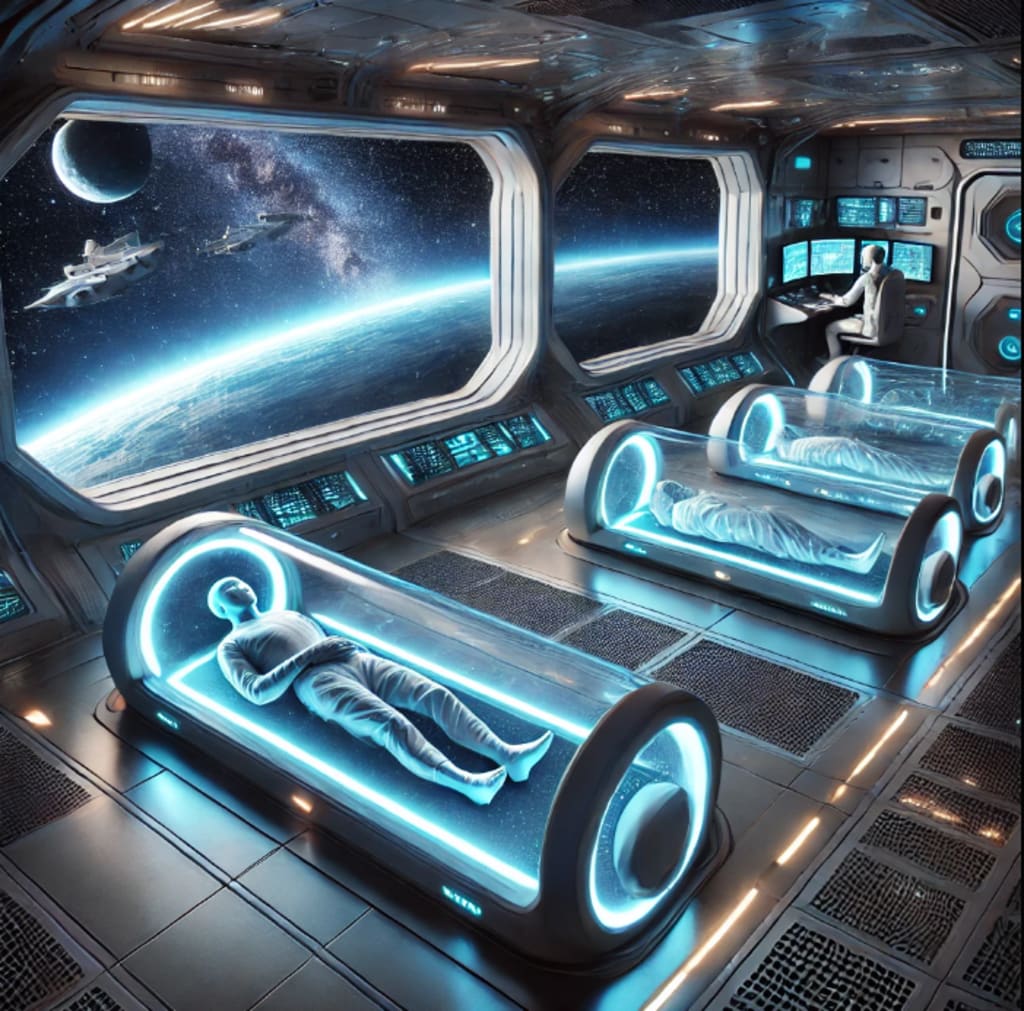
Hibernation for humans isn’t just science fiction. NASA has been researching the possibility of human hibernation since 2014, exploring how it could help with space travel. For example, a trip to Proxima Centauri, the nearest potentially habitable planet, would take more than 6,000 years with our current technology. Hibernation might allow astronauts to endure such long journeys by slowing down their bodies’ metabolic processes.
Hibernation could also offer medical benefits, such as helping treat traumatic injuries or extending human life by slowing aging. However, there are challenges. While we know cold temperatures can slow human metabolism, we haven’t yet figured out how to keep our bodies from starving during extended periods of inactivity. Our immune systems would also need to be sustained while hibernating, and let’s not forget the issue of waste management. Unlike bears, humans would need a way to eliminate waste safely to avoid sepsis.
### A Future in the Stars?
Despite these hurdles, NASA’s studies show that there’s no fundamental biological reason why humans *couldn't* hibernate. We just haven’t developed the technology to make it happen yet. But perhaps in the future, we’ll be able to nap like fat bears in space, drifting amongst the stars.
Until then, stay curious!
About the Creator
THiNK
Think - Your go-to destination for exploring captivating mysteries, insightful psychology, intriguing facts, and the latest news. Our mission is to spark curiosity and inspire learning. Join us as we uncover the unknown!
The 5 AM Myth: Why I Trashed My Alarm Clock to Finally Find My Edge
The blue light of the smartphone screen felt like a laser beam hitting my retinas at 4:58 AM. Outside my window, the world was a bruised purple—silent, freezing, and utterly indifferent to my "ambition."
By George Evan7 days ago in Journal



Comments
There are no comments for this story
Be the first to respond and start the conversation.