
Lawyers Imaan Mazari and Hadi Ali Chattha Arrested by Police in Islamabad: A Deepening Flashpoint in Pakistan’s Rights and Rule-of-Law Debate
Prominent human rights lawyers Imaan Mazari and Hadi Ali Chattha taken into custody in Islamabad amid social media controversy, sparking nationwide debate over legal protections and freedom of expression.

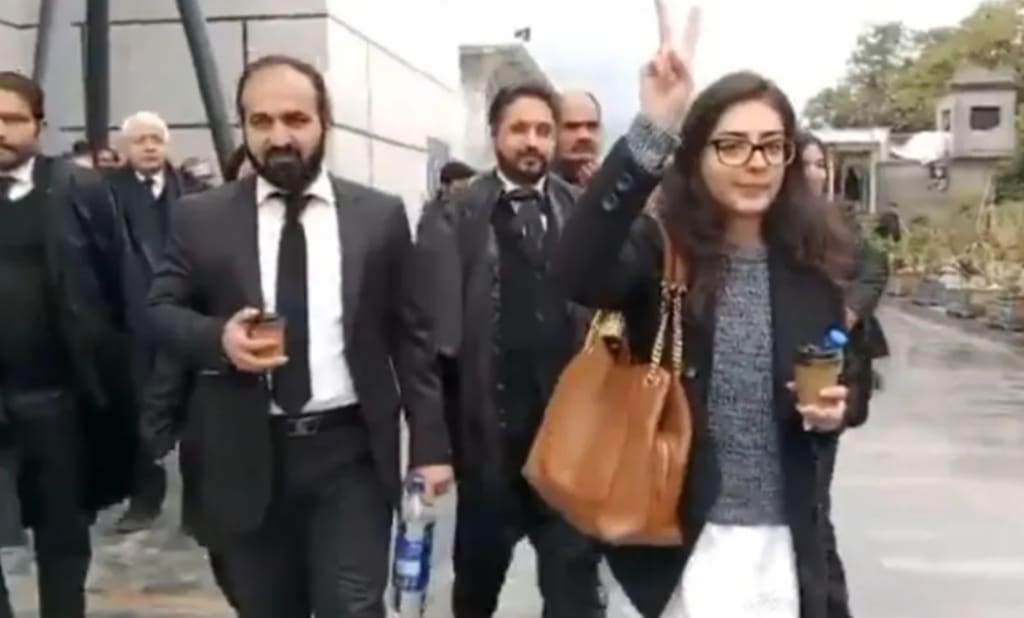
On Friday, January 23, 2026, prominent human rights lawyer Imaan Zainab Mazari-Hazir and her husband, legal advocate Hadi Ali Chattha, were arrested by Islamabad police while they were en route to attend court proceedings — an event that has intensified ongoing national and international debates about freedom of expression, judicial process, and state authority in Pakistan.
The couple was taken into custody near the Serena Chowk underpass in Pakistan’s capital while traveling in a bar association van from the Islamabad High Court (IHC) Bar Office to the District and Sessions Court. According to multiple news accounts, police blocked their vehicle, forcibly removed them, and then transported them in separate police cars to undisclosed locations.
The dramatic events unfolded despite protective bail previously granted by the Islamabad High Court earlier this week — a development that briefly eased fears of arrest only for those fears to materialize within days.
Background of the Case
The arrests stem from a controversial social media case lodged against Mazari and Chattha that has been active since August 2025. The complaint was filed with the National Cybercrime Investigation Agency (NCCIA), alleging that Imaan Mazari’s posts on the social platform X allegedly “targeted key state institutions” and included content deemed offensive under Pakistan’s Prevention of Electronic Crimes Act (PECA). Her husband was implicated for sharing or reposting the same material.
The case has been widely criticized by human rights groups, legal observers, and international organizations — including Amnesty International, which described the legal actions as a blatant abuse of the justice system and part of what it calls judicial harassment aimed at silencing critical voices.
Throughout 2025, the couple’s legal journey included multiple court appearances, contentious bail applications, and non-bailable arrest warrants issued by the trial court. Despite efforts to secure legal protections, the Islamabad High Court’s intervention was insufficient to prevent the eventual arrests this week.
The Arrest: Tensions and Allegations
Witnesses including bar association officials and journalists present at the scene have detailed contested accounts of how the arrest was carried out, with some alleging the use of excessive force. The president of the Islamabad High Court Bar Association, Wajid Gilani, claimed that police personnel broke vehicle windows and physically assaulted bar representatives accompanying the couple.
Reports also indicate that security forces confiscated the mobile phones of Mazari and Chattha and moved them to the Women’s Police Station, though authorities have not officially confirmed these details.
Former federal minister and human rights advocate Shireen Mazari, the mother of Imaan Mazari, took to social media to condemn the arrests, asserting that no First Information Report (FIR) was shown at the time of detainment and decrying the operation as an attack on independent legal practitioners. She described the move in strong political terms, prompting criticism from political observers as well as supporters of the couple.
Legal and Constitutional Questions
The episodes raising around these arrests have prompted serious legal questions about due process and judicial discretion in Pakistan. The protective bail that was earlier granted — intended to prevent arrest — had raised both hopes and confusion among legal analysts. The Islamabad High Court had recognized the protective bail request and granted temporary relief ahead of scheduled hearings, yet the subsequent police action has cast uncertainty on how such protections are enforced on the ground.
The manner of arrest — particularly allegations of forceful removal and lack of transparency about FIR disclosures — has drawn condemnation from within Pakistan’s legal community. The Islamabad Bar Association has announced collective actions including strikes in protest. The Islamabad Bar Council has also labeled the arrests as a violation of fundamental constitutional rights and has demanded an independent inquiry into the conduct of law enforcement.
Human Rights and International Reactions
International rights groups have amplified concerns about the implications of the case for freedom of expression, fair trial standards, and the space for dissenting voices in Pakistan. Amnesty International’s statement calls on Pakistani authorities to end what it describes as judicial harassment and coercive tactics used against lawyers advocating for human rights.
These broader criticisms reflect a pattern seen in other high-profile cases involving activists, lawyers, journalists, and critics of state institutions — particularly when cases involve social media expression, allegations of anti-state speech, or sensitive national security contexts.
Political and Societal Impact
The arrest of Imaan Mazari and Hadi Ali Chattha is likely to reverberate across Pakistan’s legal and civil society sectors. Lawyers’ organizations have warned that the incident could undermine public confidence in the legal system and weaken protections for those who use legal channels to challenge state actions.
Political commentators suggest that the case intersects with broader tensions between state authorities and civil society advocates, especially in issues related to free speech, accountability, and institutional transparency.
For many in Pakistan and abroad, the episode underscores the difficulties lawyers and activists face when their work touches on topics perceived by some authorities as sensitive or contentious — from enforced disappearances to security sector oversight. The reaction to the arrests may shape future debates on legal reforms, judicial independence, and the balance between national security concerns and constitutional freedoms.
Conclusion
The arrests of Imaan Mazari and Hadi Ali Chattha represent more than an isolated legal incident; they highlight ongoing debates around rights, rule of law, and the space for dissent in Pakistan. With widespread reactions from legal bodies, rights advocates, and the public, the case continues to evolve — raising fundamental questions about how justice and free expression are balanced in a complex political and social landscape.
-
About the Creator
Keep reading
More stories from Salaar Jamali and writers in Journal and other communities.
This Italian Entrepreneur Became A Billionaire Investing In India. Up Next: Space And AI
In a world increasingly dominated by technology and globalization, entrepreneurial vision often transcends borders. One Italian businessman has demonstrated this with remarkable success, turning early bets on India’s burgeoning economy into a multi-billion-dollar fortune—and now setting his sights on the final frontier and artificial intelligence.
By Salaar Jamaliabout 23 hours ago in Journal
So You Decided To Become a Nurse Practitioner:
So you decided to become an "Advanced Practice" nurse. Congratulations!... is what I would say if this was a good idea. Grad school? In this economy? What were you thinking? Likely it was something along the lines of either 1) “I've seen these other chucklefucks do it— Why can't I?” or even 2) “I've got a nice career, I should shake it up. I miss feeling like I have no clue what I'm doing.”
By Sandor Szabo7 days ago in Fiction


Comments
There are no comments for this story
Be the first to respond and start the conversation.