
Is the Fall of Pokrovsk, Ukraine’s Key Eastern Stronghold, Inevitable?
“Inside the battle for Pokrovsk — how a small eastern city became the latest test of Ukraine’s resilience and Russia’s relentless advance.”

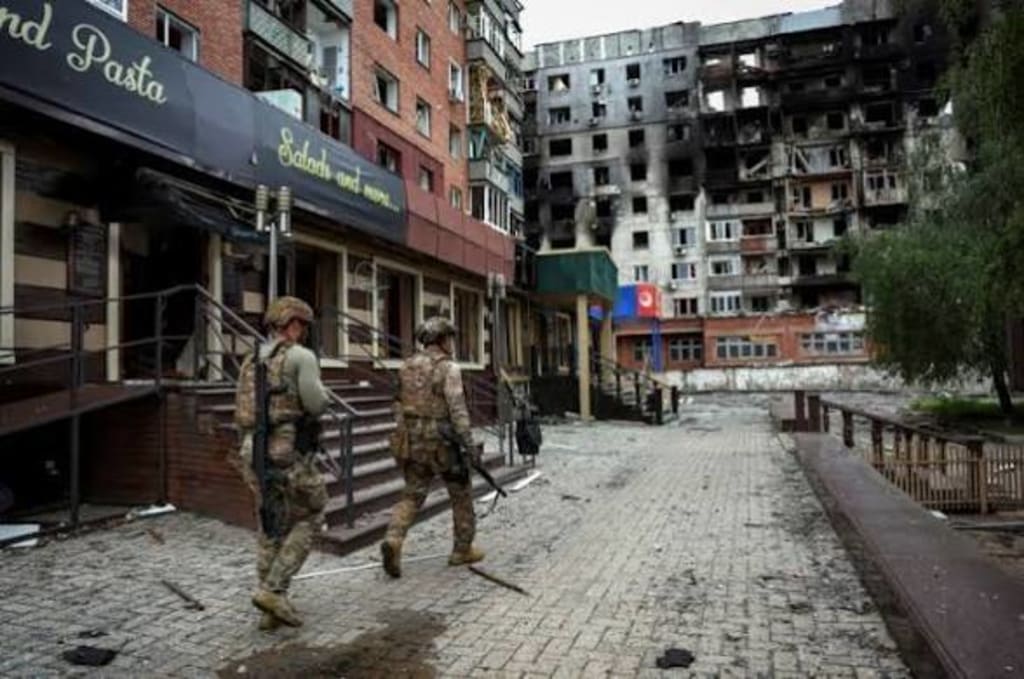
Pokrovsk has become one of this war’s most watched battlegrounds — a battered transport hub in Donetsk that, if lost, would open a broad gateway for Russian advances deeper into government-held Donbas. Over recent weeks the city has endured grinding urban combat, claims of encirclement, and mounting pressure on Kyiv’s logistics and morale. But “inevitable”? That’s a loaded word. The answer depends on tactics, supplies, international support, and whether commanders on either side are willing to pay the human and material costs required to change the front line.
Why Pokrovsk matters
Pokrovsk sits on roads and rail links that feed the larger Ukrainian defensive network in northern Donetsk. For Moscow, capturing it would create a springboard toward larger population centres such as Kramatorsk and Sloviansk and would squeeze remaining Ukrainian positions in the region. That strategic logic explains why Russian forces have focused significant resources on the town and its approaches. Conversely, for Ukraine, holding Pokrovsk preserves critical supply lines and a foothold from which counterattacks can be staged.
What’s happening on the ground
Recent reporting describes intense house-to-house fighting, artillery barrages, and Russian attempts to encircle the town by seizing surrounding high ground and satellite villages. Moscow’s defence ministry has claimed advances inside Pokrovsk, while Ukrainian commanders have denied full encirclement and insist troops are still resisting within the city. Independent battlefield analysts note that fighting has become attritional — gains are costly and measured in building-by-building contests rather than sweeping maneuvers.
Why “inevitable” is not a foregone conclusion
There are four key reasons the fall of a city like Pokrovsk is not automatically inevitable:
1. Defensive depth and urban advantages. Urban terrain favors defenders: rubble, narrow streets, and fortified buildings blunt mechanized assaults and multiply the effectiveness of light infantry and anti-tank teams. A well-prepared defence can turn an attacker’s numerical advantage into a liability.
2. Ukrainian resilience and improvisation. Kyiv’s forces have repeatedly shown an ability to adapt — from using drones and precision fires to improvising anti-armor tactics and local fortifications — which can blunt offensives even when outmanned.
3. External support. Continued Western deliveries of artillery ammunition, air-defense systems, and intelligence can keep supply lines open and buy time for countermeasures. Conversely, a slowdown in support materially increases the risk of a collapse.
4. Russian operational limits. Sustained offensives require logistics, reserves, and air-ground coordination. Analysts note that Russian forces have taken heavy casualties and face strains in manpower and sustainment; that reality can slow or stall advances despite local successes.
What would make defeat likely?
That said, scenarios exist where Pokrovsk could fall. The most dangerous combination would be coordinated Russian advances that sever key supply roads while Ukraine simultaneously faces ammunition shortages and degraded command reports up the chain. If Ukrainian forces cannot resupply or rotate units, defensive lines will thin and positions will become untenable. Political pressure to hold symbolic ground — rather than executing an organised withdrawal to stronger lines — can also turn a tactical risk into a rout. Recent reporting warns of difficulties keeping supplies flowing into the embattled sector, even as Kyiv publicly disputes claims of encirclement.
The wider stakes
If Pokrovsk falls, the consequences would be both military and psychological. Militarily, it would give Russia better staging areas and threaten nearby towns that constitute Ukraine’s remaining defensive “belt” in Donetsk. Politically, the symbolic loss could be exploited by Moscow to claim strategic momentum — an argument aimed at undermining Western resolve and domestic support for further aid. Analysts warn that such a rout could shift international perceptions about the conflict’s trajectory.
What Kyiv can do — and what it cannot
Realistically, Kyiv’s options include trading territory for a shorter, more defensible line; funneling scarce precision fires and air-defense support to the threatened sector; and conducting local counterattacks to disrupt Russian consolidation. However, all of these require ammunition, political will, and accurate battlefield intelligence — commodities that have been inconsistent at times during the war. Withdrawal to avoid encirclement would be painful politically but might preserve forces for later campaigns; stubbornly staying put without resupply risks encirclement and disproportionate casualties.
Bottom line
The fall of Pokrovsk is not a mathematical certainty — it is a possibility whose likelihood rises or falls with logistics, foreign aid, battlefield adaptation, and political choices on both sides. Urban defenses and Ukrainian ingenuity have kept other cities from collapsing in the past, but attritional pressure and supply shortfalls can change momentum quickly. In the coming days and weeks, the true answer will come from what commanders and politicians decide to accept in blood and materiel — and whether partners provide the tools to keep the town in Ukrainian hands. For now, Pokrovsk remains a knife-edge: strategically vital, fiercely contested, and emblematic of how wars are won or lost not just by units on maps but by supply, will and timing.
---
If you’d like, I can add a short suggested subtitle and the best Vocal Media community and tags for this piece.
About the Creator
Fiaz Ahmed
I am Fiaz Ahmed. I am a passionate writer. I love covering trending topics and breaking news. With a sharp eye for what’s happening around the world, and crafts timely and engaging stories that keep readers informed and updated.
Keep reading
More stories from Fiaz Ahmed and writers in Journal and other communities.
Ukraine Facing Widespread Power Cuts After Generating Capacity Reduced to ‘Zero’ by Russian Attacks
A Nation Plunged Into Darkness Ukraine is once again fighting battles beyond the frontlines — this time, against freezing temperatures and collapsing power systems. Over the past week, Russia has launched one of its most intense waves of airstrikes targeting Ukraine’s energy grid, leaving large parts of the country without electricity. Officials say the nation’s power generation capacity has been reduced to “zero”, forcing widespread blackouts and energy rationing across cities including Kyiv, Kharkiv, and Odesa.
By Fiaz Ahmed 2 months ago in Journal
The goals I did not achieve
Every writing goal I made for the year is a wash. It has been this way for a while, but I think it's important to be open about my failures and the reality of how life can get in the way. This is especially true considering the several times I have posted on Vocal about my writing goals, how I was changing my approach, and where I was hoping to be for the upcoming year. I will probably do that again in a couple months, but for now, it is time to acknowledge where I am today.
By Kay Husnick24 days ago in Journal
The Eucharist: Why Catholics Believe in the Real Presence
The Eucharist is the center of Catholic life and worship. At Mass, Catholics receive the Body and Blood of Christ under the forms of bread and wine, a belief that sets Catholicism apart from many other Christian traditions. This doctrine, known as the Real Presence, teaches that Jesus Christ is truly present in the Eucharist, not symbolically or metaphorically, but in reality. Understanding why Catholics believe this and how it impacts their lives can deepen appreciation for this sacred sacrament.
By Sound and Spirit5 days ago in Journal


Comments
There are no comments for this story
Be the first to respond and start the conversation.