
Is Apple’s Innovation Crown Slipping?
How Xiaomi Went from “Cheap Brand” to the Biggest Threat Apple Has Faced in Years
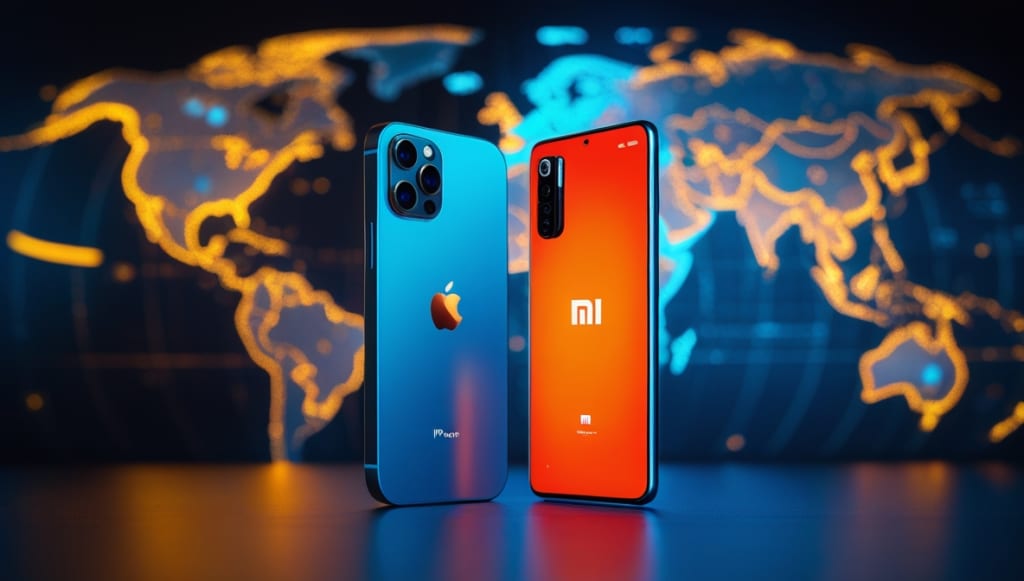
For nearly two decades, Apple has been the unchallenged monarch of the smartphone world. From the day Steve Jobs walked onto that stage in 2007 and unveiled the very first iPhone, the rules of technology shifted forever. Touchscreens became mainstream. Design became luxury. And the word ecosystem suddenly became part of our everyday lives. Apple wasn’t just selling products—it was selling a world where your phone, watch, laptop, and earbuds all spoke the same language.
Fast forward to 2025, and Apple is still enormous—worth nearly $3 trillion, with millions of fans camping outside stores before each launch. Yet, beneath the glossy surface, whispers are growing louder: Has Apple lost its edge?
And if the crown is indeed slipping, the one waiting in the shadows to claim it might surprise you: Xiaomi—a company once dismissed as “just another cheap brand.” Today, Xiaomi is rewriting the rules of technology, not by being the most luxurious, but by being the most accessible.
The Apple Gamble: Luxury at All Costs
Apple’s problem doesn’t come down to one disappointing iPhone model or an underwhelming keynote. It runs deeper—it’s about strategy.
Think back to 2017, when the iPhone X launched at $999. That was the moment Apple staked its future on exclusivity and premium pricing. Since then, the price curve has only bent higher. The latest iPhone 16 Pro Max starts at $1,199, while the top-tier version easily crosses $1,599. Throw in accessories, and your bill could soar to nearly $2,000.
No doubt, the devices themselves are world-class—A18 chips, cinematic-grade cameras, and the smoothest iOS experience you’ll find. But Apple’s “walled garden,” however polished, is locked behind golden gates. And not everyone can afford the ticket.
Enter Xiaomi: The Hungry Challenger
This is where Xiaomi has found its moment. In markets like India, China, and Southeast Asia—where affordability decides who wins—Apple’s high prices leave a massive gap. Xiaomi, like a chess grandmaster, moves swiftly to fill it.
The numbers tell the story. Back in 2015, Apple’s global smartphone market share was 13.5%. By 2024, it had slipped to 12.1%. Xiaomi, meanwhile, surged to 14.3%. In China, Xiaomi occasionally outsells Apple outright. These aren’t just statistics—they’re alarm bells.
From the very beginning, founder Lei Jun’s mission was clear: deliver premium technology at accessible prices. Look at Xiaomi’s 2025 Pengda phone—Snapdragon 8 Elite processor, AMOLED display, cameras that rival the iPhone—all for under $600. Compare that with Apple’s so-called “budget” iPhone SE, which still costs more.
The contrast is even sharper with wearables. Xiaomi’s Mi Smart Band? $50. Apple Watch? $250 at minimum. Xiaomi isn’t just selling cheap gadgets—it’s executing a carefully designed disruptor strategy:
Minimal profit margins to gain market share.
Flash sales that move millions of units in minutes.
Community-driven feedback that shapes design and updates.
Where Apple is slow and meticulous, Xiaomi is agile and fast.
Innovation vs. Perfection
Apple’s identity has always been tied to perfection. Nothing leaves Cupertino’s labs until it gleams. That promise of polish has built customer trust for decades—but it comes at a cost.
In a world where speed is rewarded, Apple often ends up playing catch-up. Dual-frequency GNSS for ultra-accurate GPS? Xiaomi did it first. Real-time AI translation in multi-language markets like India? Xiaomi again. Apple eventually delivers, but it’s rarely first anymore.
Even in emerging fields like electric vehicles, the contrast is clear. Xiaomi launched its EV in 2022, and within three years was challenging Tesla. Apple? After a decade of research and billions spent, it canceled its car project. Not just a mistake—an omen.
The Growth Gap
Apple’s iPhone sales remain massive—over $200 billion annually. But growth has slowed to just 3%. Xiaomi, on the other hand, hit $48 billion in 2024 revenue, growing at 20%.
In emerging markets like India, Indonesia, and Latin America, 6 out of 10 buyers choose phones under $500. Apple’s luxury-first model simply doesn’t fit. And with inflation tightening wallets worldwide, Xiaomi’s accessibility looks like the smarter long-term bet.
The One Battlefield Apple Still Owns
Yet Xiaomi’s rise isn’t without challenges. To dethrone Apple completely, it must conquer the West—and that means overcoming its biggest weaknesses: privacy, data security, and trust.
This is where Apple still shines. Consumers in the U.S. and Europe trust Apple to guard their data, a trust Xiaomi hasn’t fully earned. Innovation grabs attention, but trust keeps customers loyal. Until Xiaomi secures that foundation, Apple’s dominance in Western markets remains safe.
The Bigger Question
Ultimately, this isn’t just Apple vs. Xiaomi—it’s a clash of philosophies.
Apple stands for perfection. Wait until the product is flawless, then release.
Xiaomi stands for speed. Adapt quickly, experiment boldly, and put products into people’s hands fast.
So, which is better: to be perfect, or to be first?
Apple now faces the challenge of rediscovering its balance. It needs products that are not just polished, but also timely. Because Xiaomi won’t wait.
And make no mistake: this battle is bigger than two brands. It’s a glimpse of the future of technology itself. As billions of new users come online, the crown of innovation no longer belongs to just one company. The arena is wide open.
The question is, who will wear the crown next?
About the Creator
Keep reading
More stories from Shahjahan Kabir Khan and writers in Journal and other communities.
Samsung’s Game-Changer: The Biggest New Phone in Years Could Hit the US This Year
Samsung has been a strong participant in the Android scene for more than ten years with its Galaxy series, always pushing boundaries. Samsung has always welcomed innovation; this is evident in its flagship Galaxy S series and modern Galaxy Z Fold and Flip phones. Industry sources, though, contend that 2025 may bring something revolutionary: a phone capable of transforming the sector. What was the highlight? This gizmo could possibly arrive in the United States this year.
By Shahjahan Kabir Khan4 months ago in Journal
The Town That Banned Wi Fi. A 10 Year Case Study on Electrosensitivity.
A small European town took a radical step. Local leaders banned public Wi Fi. They removed routers from schools, libraries, and offices. Private hotspots faced strict limits. The decision followed complaints from residents who reported headaches, fatigue, and sleep problems. They linked these symptoms to wireless signals. Officials labeled the condition electrosensitivity.
By Wilson Igbasi5 days ago in Journal
A Dart at Dusk
Seconds ago, the sullen sun set on the two of us… my exuberant furry companion and me. A fresh breeze embraces us, delivering welcome relief from the day’s oppressive heat. His typical stumbling and staggering along — apace with a sloth — has turned into trip-trapping, high-stepping, almost skipping along.
By Angie the Archivist 📚🪶5 days ago in Petlife


Comments
There are no comments for this story
Be the first to respond and start the conversation.