
Intel shares drop after Trump calls for CEO to resign immediately
Trump’s Bold Statement: Intel CEO “Highly Conflicted” Must Resign

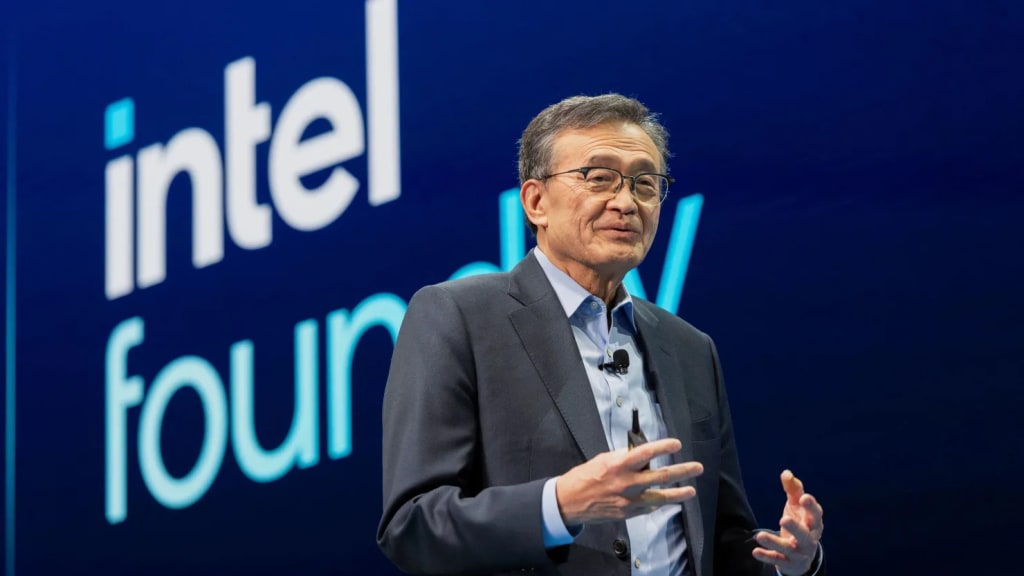
On August 7, 2025, former President Donald Trump shook the markets with a blunt verdict: “The CEO of INTEL is highly CONFLICTED and must resign, immediately. There is no other solution to this problem.” The demand dropped like a bombshell on Wall Street, sending Intel’s stock into a sharp pre-market dive—nearly 5% in some metrics, around 4% in others
What prompted this fierce public rebuke? The story unfolds at the nexus of trust, national security, symbolism, and raw political theater.
1. A Leader Enmeshed with China—And Intel, A National Icon
Lip‑Bu Tan stepped into the Intel CEO role in March 2025, taking the helm of America's most storied chipmaker during a turbulent time
His background includes leading Cadence Design Systems and extensive investments in Chinese semiconductor and techno‑manufacturing firms—allegedly multiple connections that trigger alarm bells in Washington
Trump’s critics framed this as a potential conflict of interest. Imagine entrusting the nation's most advanced chip infrastructure to someone with financial ties to foreign firms—some possibly linked to the Chinese military. For a politician staking much on national security and economic sovereignty, the optics were unacceptable.
2. Tom Cotton’s Letter: A Launching Pad for Political Fire
The week before Trump’s post, Senator Tom Cotton delivered a pointed letter to Intel’s board chair. In it, he raised eyebrows over Tan’s stakes in “dozens” of Chinese firms—at least eight potentially tied to the People’s Liberation Army. He emphasized that federal subsidies Intel has received demand a steely commitment to U.S. security
For Trump and his allies, this wasn’t just business—it was about safeguarding American interests. Cotton’s letter provided political cover, while Trump escalated emotionally and dramatically.
3. Cadence Controversy: A Lingering Shadow
Before Intel, Tan helmed Cadence, which recently admitted to criminal violations involving exports of chip design tools to a Chinese military-connected university
This wasn’t a vague background detail—it was a direct violation of U.S. export laws.
Trump’s declaration that Tan was “highly conflicted” almost reads like a shorthand for: “He’s entangled with potential adversaries, and that’s non-negotiable.”
4. Intel’s Strategic Crossroads & a High-Stakes Showdown
Intel isn’t just any company—it’s the last major U.S.-based player capable of advanced chipmaking. But it’s been stalled behind competitors like TSMC and Nvidia. Tan arrived with big promises, including cost-cutting and reorganizations, but investors remain skeptical
Trump—seeking to stand firm on “America first”—seized on Tan’s perceived dual allegiances as justification to demand a change in leadership. It was as much a political statement as a security concern.
5. The Intel of the 90s vs. Today
Remember Intel in the 1990s—a Silicon Valley behemoth that powered PCs across the globe? Its CEO then would be a national hero, with their allegiance beyond question.
Contrast that with today’s geopolitical climate—where a CEO’s foreign entanglements can become a flashpoint. In that context, Trump’s demand isn’t surprising—it’s a throwback to the era when American tech leadership was unambiguously domestic.
6. Market Ripples: Confidence Cracks Under Political Pressure
The political drama had immediate consequences. Intel’s pre-market stock slumped—a gut reaction that traders understood: uncertainty and suspicion can erode investor confidence quickly
Even beyond Trump's brand, the episode dramatizes a truth: tech giants don’t operate in a vacuum. National security concerns and political narratives can eclipse quarterly earnings.
7. Inside the Headlines: Tangled Loops of Power, Policy, and Trust
Here’s how the narrative loop unfolds:
Background—Tan has deep China ties.
Trigger—Cotton flags potential security risks.
Flashpoint—Trump weaponizes the issue publicly.
Market Reaction—Intel shares tumble.
Symbolism—American techno-leadership vs. foreign exposure.
Political Theater—Trump doubles down, making resignation the only “solution.”
Impact—Raises questions about how Intel moves forward under scrutiny.
8. Why This Matters—Beyond Intel
This saga underscores a broader shift:
Tech leadership is now political ground.
National security and business strategy are intimately linked.
Integrity, optics, and fiduciary backgrounds are becoming as critical as profit.
A CEO’s personal investments can become a corporate liability overnight.
And for Intel, the aftershocks will last—strategy must now also navigate political trust.
Final Thoughts: Why Trump’s Demand Resonated So Deeply
Symbolic force: Trump weaponized national security concerns in a sector symbolic of U.S. industriousness.
Political positioning: By demanding resignation, he cast Tan as incompatible with an “America-first” vision.
Market reality: Investors immediately responded—4–5% dips are upheavals in the semiconductor world.
Narrative shift: It’s no longer just about chipmaking—it’s about loyalty, trust, and the intersection of commerce and geopolitics.
In summary, Trump's call for Lip‑Bu Tan to resign is not just a headline—it's a moment in time where politics, national identity, and technology intersect. It recalls a time when leadership meant more than profitability. And for Intel—and all U.S. tech—it signals that the future of leadership must be not only smart, but also secure and unambiguously aligned.
About the Creator
Omasanjuwa Ogharandukun
I'm a passionate writer & blogger crafting inspiring stories from everyday life. Through vivid words and thoughtful insights, I spark conversations and ignite change—one post at a time.
Keep reading
More stories from Omasanjuwa Ogharandukun and writers in Journal and other communities.
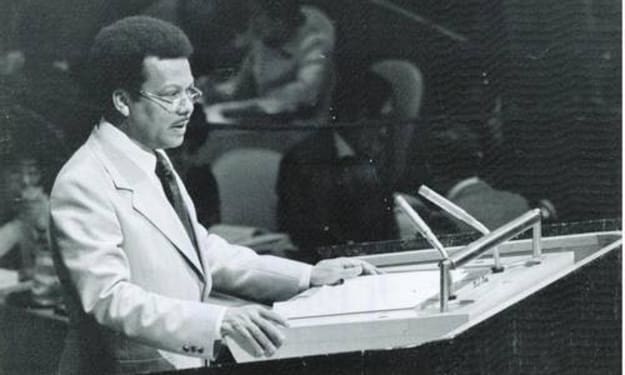
Who Is Leslie Oriseweyinmi Harriman ?
Leslie Oriseweyinmi Harriman, sometimes styled Leslie Oritseweyinmi Harriman—was a distinguished Nigerian diplomat, best known for his service as Nigeria’s Permanent Representative to the United Nations in New York from 1975/76 to 1979, and as a senior ambassador in multiple key postings.
By Omasanjuwa Ogharandukun6 months ago in Journal
The Invisible Hand That Rules
In the heart of the city, there’s a building that no one notices. Its glass walls reflect the sun, its elevators glide silently, and its corridors smell of polished ambition. Decisions are made here that shape millions of lives, yet outside, the city breathes, unaware. The air hums with traffic, the chatter of cafes, the distant wail of sirens, and life moves on as though the building’s influence is nothing more than an echo.
By Jhon smith6 days ago in Journal



Comments
There are no comments for this story
Be the first to respond and start the conversation.