
Who Is Leslie Oriseweyinmi Harriman ?
A brief history about his works and contributions to the Nigerian Dream

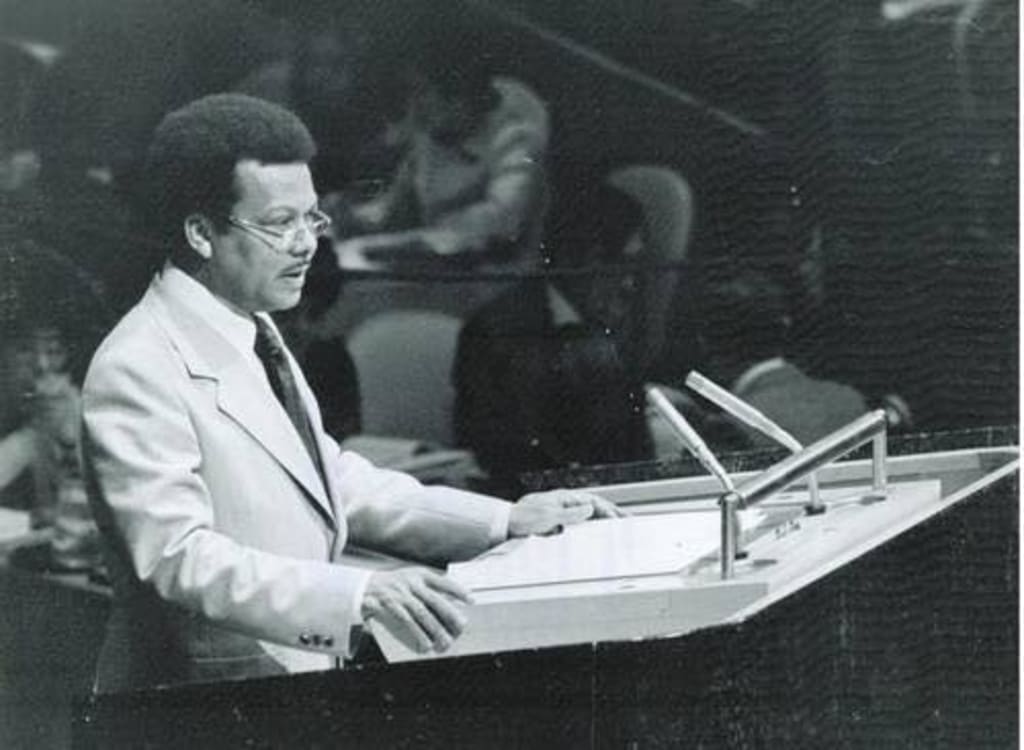
Leslie Oriseweyinmi Harriman, sometimes styled Leslie Oritseweyinmi Harriman—was a distinguished Nigerian diplomat, best known for his service as Nigeria’s Permanent Representative to the United Nations in New York from 1975/76 to 1979, and as a senior ambassador in multiple key postings.
Quick Facts at a Glance
Born: July 9, 1930, in Warri, Bendel State (now Delta State), Nigeria
Education: Government School and Edo College, Benin City; Government College Ibadan; University College Ibadan (now University of Ibadan); Pembroke College, Oxford; Imperial Defence College, London
Family: Married to Clara Edewor; father of four (one son, three daughters)
Honours: Awarded Officer of the Order of the Federal Republic (OFR) in 1981
Diplomatic Journey & Career Highlights
Early Career
Began his professional life as a Manager at Unilever in Lagos (1955–58)
Served as Assistant Secretary at the Nigerian Commission in London (1957–58)
In the Nigerian federal civil service, served as Senior Secretary at the Ministry of External Affairs from 1959 onwards
Rise in Foreign Service
Posted to Kenya in 1960, then as Counsellor and Acting High Commissioner to Ghana (1961–63)
Became Deputy Permanent Secretary at the Ministry of External Affairs in Lagos (1965–66)
Ambassadorial Roles
Appointed High Commissioner to Uganda (1966–69) and concurrently High Commissioner to Kenya (1966–70)
Elevated to Ambassador to France (also accredited to Tunisia and UNESCO) from 1970 to 1975
United Nations Representation
Served as Nigeria’s Permanent Representative to the United Nations in New York from about 1975–79
Chaired the UN’s Special Committee on Apartheid, and participated in UN committees on peacekeeping operations and hostage-taking conventions
Legacy & Impact
Vocal Diplomat: He was known for sharp diplomatic insight—once describing Nigeria’s Ministry of Foreign Affairs as “a Zoo,” implying chaos demanding a zoologist's order—an analogy reflecting his candor and high standards for institutional professionalism
Voice Against Apartheid: As Chairman of the UN Special Committee Against Apartheid, he was an authoritative advocate for international action during a critical era in Southern African politics
Representative of a Golden Era: Harriman served during a time when Nigeria’s diplomacy was widely respected for leadership on African and global moral issues—especially in peacekeeping and independence movements
Notable Contributions & Footprint
Delivered statements in UN Security Council debates, including the Southern Rhodesia Question in 1978—part of Nigeria’s principled stance against colonial regimes
Held roles on UN-backed committees working toward an international convention on hostage-taking and improved peacekeeping protocols
Commonwealth Oral History Project
Later became Director of the World Trade Centre in Lagos, contributing to Nigerian involvement in global commerce
Biographical Legacy Foundation
Career Timeline
Period Role Location/Organization
1955–58 Manager, Unilever Lagos
1957–58 Assistant Secretary, Nigerian Commission London
1959–65 Senior Secretary, Ministry of External Affairs Nigeria
1961–63 Counsellor & Acting High Commissioner Ghana
1965–66 Deputy Permanent Secretary Ministry of External Affairs
1966–70 High Commissioner to Kenya and Uganda Kenya & Uganda
1970–75 Ambassador to France (also accredited to Tunisia & UNESCO) Paris
1975–79 Permanent Representative of Nigeria to the UN New York
1970s–80s Chair, UN Special Committee on Apartheid; Peacekeeping+Hostage Committees UN
Post-UN Director, World Trade Centre Lagos
Why Leslie Harriman Still Matters
Model Professionalism: Harriman’s trajectory highlights not only diplomatic success but also an emphasis on education, institutional development, and consistent improvement.
Principled Voice: His public statements about institutional effectiveness, including his “zoo” analogy for the Foreign Ministry, reflect integrity and clarity.
Historical Innovator: His tenure coincided with Nigeria taking a leading international role—from anti-apartheid activism to global peacekeeping.
Educator & Legacy: Receiving high national honors and holding leadership roles in trade and governance reflect sustained impact beyond diplomacy.
Leslie Oriseweyinmi Harriman was a standout figure in Nigeria’s diplomatic history. Born in 1930 in Warri, Nigeria, educated across Nigeria and the UK, he served in senior roles in Africa and Europe before representing Nigeria at the UN. His leadership on critical global issues—especially apartheid—helps define Nigeria’s contributions to international diplomacy during a key era. Known for integrity, honesty, and sharp wit, Harriman remains a model for future generations of diplomats.
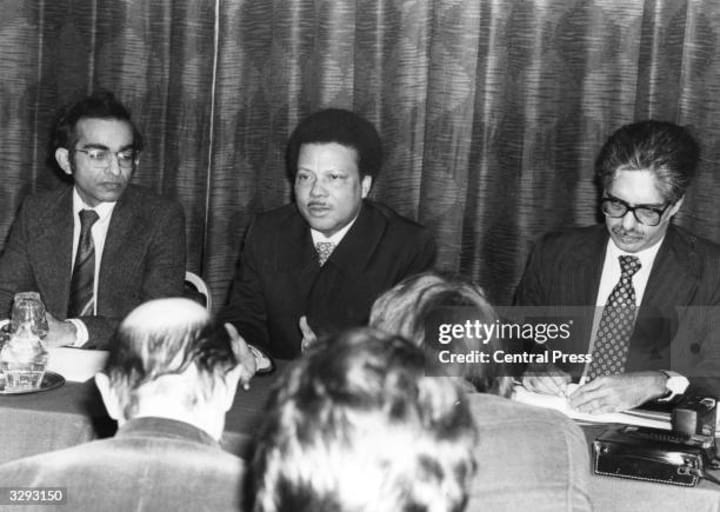
An official portrait shows H.E. Leslie O. Harriman, Nigeria’s Permanent Representative to the United Nations in New York, presenting credentials to Secretary‑General Kurt Waldheim in September 1975.
Nigeria UN Mission
Notable Speeches & UN Contributions
Permanent Representative & Committee Leadership
Harriman served as Nigeria’s Permanent Representative to the UN from 1976 to 1979, and chaired critical committees including the UN Special Committee against Apartheid.
Commonwealth Oral History Project
He also chaired UN panels on peacekeeping operations, hostage‑taking conventions, and economic and natural resource matters.
Security Council Speeches
On March 17, 1978, in Security Council on Southern Rhodesia (now Zimbabwe) and Zambia, Harriman delivered a formal statement.
On November 9, 1976, he contributed under agenda item Middle East Situation, addressing policy matters of regional and international importance.
Arms Embargo Committee – June 1978
Leading the South Africa Arms Embargo Committee, Harriman delivered a powerful, hour‑long address in June 1978. He criticized Western nations—particularly France and Israel—for weak enforcement of the embargo, calling it “a little step that came too late.” He advocated for stronger measures: a comprehensive nuclear embargo, oil embargo, and restrictions on subsidiaries supplying military support.
🗣️ Legacy & Impact
Voice of Principle & Change
As Chairman of the Special Committee against Apartheid, Harriman was a forceful voice against racial injustice—urging the UN to escalate its efforts and hold complicity to account. His stance earned Nigeria respect in global forums.
Institutional Critic with Integrity
Harriman famously described Nigeria’s Ministry of Foreign Affairs as a “Zoo,” implying it desperately needed the discipline of a zoologist to bring order—not as insult, but as a metaphor for institutional disarray. Critics consider this comment a reflection of his commitment to professionalism and order.
Educational & Diplomatic Excellence
Leslie Harriman's career spanned diplomatic posts in Ghana, Kenya, Uganda, France, and UNESCO before culminating at the UN. Educated at University College Ibadan, Oxford, and Imperial Defence College in London, he consistently upheld high standards of diplomatic conduct and intellectual rigor.
Summary Table
Year Role / Event Highlights
1970–75 Ambassador to France (also Tunisia & UNESCO) Multilateral diplomacy experience
1975–79 Nigeria’s Permanent Representative at UN NYC Led Nigeria's UN engagement
1978 Jun Chair, Arms Embargo Committee against Apartheid Delivered strong critique and policy proposals
1978 Mar Security Council speaker on Southern Rhodesia Engaged on colonial and regional issues
1976 Nov Security Council speaker on Middle East situation Participated in high‑level global discourse
Where to Find Full Speeches & Records
United Nations Digital Library: Houses meeting records and speeches under Harriman’s name during Nigeria’s Security Council terms and committee sessions. Search by country (Nigeria), speaker (Leslie O. Harriman), and years 1976–1979.
UN Record Series (e.g. S/PV.2070, S/PV.1968, S/PV.2113): These contain transcripts of formal speeches he delivered on major international issues.
🧭 Final Thoughts
Leslie Harriman remains a towering figure in Nigeria’s diplomatic history. As a global diplomat, institutional reformer, and moral voice, he embodied leadership at a critical era—from fighting apartheid to shaping Nigeria’s international profile. His speeches—archived in UN records—offer timeless lessons in principled diplomacy.
About the Creator
Omasanjuwa Ogharandukun
I'm a passionate writer & blogger crafting inspiring stories from everyday life. Through vivid words and thoughtful insights, I spark conversations and ignite change—one post at a time.
Keep reading
More stories from Omasanjuwa Ogharandukun and writers in Journal and other communities.
ITSEKIRI LEADER SENDS SOS TO FEDERAL GOVERNMENT, INTENTIONAL COMMUNITY OVER INCESSANT THREATS FROM HATEFUL NEIGBBOURS
A prominent Itsekiri leader and human rights advocate, Comrade Omolubi Newuwumi, has issued a distress call to the federal government, international community, citing incessant threats from neighbouring ethnic nationalities.
By Omasanjuwa Ogharandukun6 months ago in Journal
Shane Windmeyer and the Promise of 2026 DEI: What to Look Forward To
As 2026 gets underway, it’s worth correcting a common framing error right up front: we’re not looking back from the middle of the year, and we’re not predicting from a distant horizon. We’re at the start of 2026—close enough to feel the carryover from last year, and close enough to shape what happens next.
By Shane Windmeyer3 days ago in Journal


Comments
There are no comments for this story
Be the first to respond and start the conversation.