
How Working Class Impacts Double Girder Gantry Crane Safety Requirements
Understanding How Duty Cycles Shape Structural, Mechanical, and Operational Safety
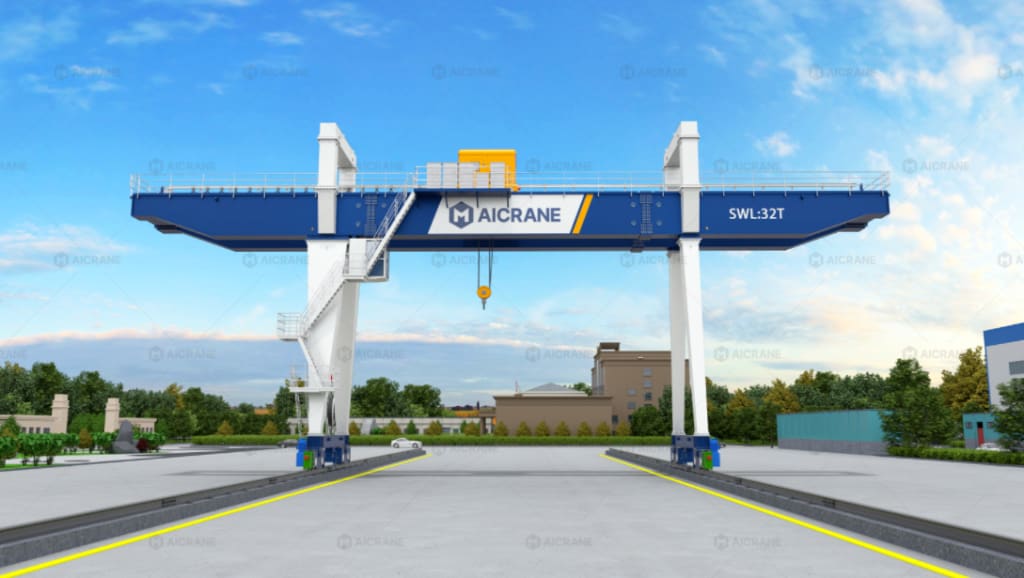
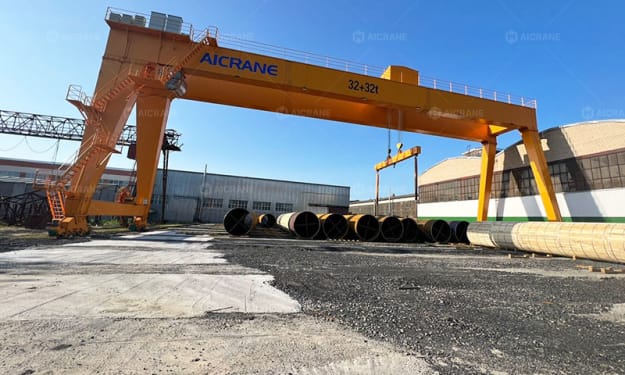
Double girder gantry cranes are widely used in heavy industrial environments such as steel yards, precast concrete plants, shipyards, rail terminals, and fabrication workshops. Because these cranes typically handle large, heavy, and high-value loads, safety requirements are strict and vary significantly depending on the working class (also known as duty class or work duty). Understanding how working class affects safety requirements is essential when designing, selecting, operating, and maintaining double girder gantry cranes.
In global crane standards - such as FEM, ISO, and CMAA - the working class defines the crane’s expected usage intensity, frequency of operations, average load weight, and maximum load handling cycles. As working class increases, so do the structural durability requirements, component strength, control precision, and safety mechanisms.
This article explains how different working classes influence the safety requirements of double girder gantry cranes and why aligning safety features with duty class is critical for reliable crane performance and risk reduction.
Understanding Working Class in Gantry Crane Systems
Before exploring the safety implications, it is essential to understand what "working class" means.
Definitions in Major Standards
FEM (European): FEM 1m, 2m, 3m, 4m
Higher classes mean more heavy-duty cycles.
ISO: M4, M5, M6, M7, M8
Similar linear increase in duty severity.
CMAA (USA): Class C, D, E, F
C = moderate service, D = heavy service, E/F = severe or continuous service.
What Determines a Crane’s Working Class?
- Average load as a percentage of rated capacity
- Frequency of lifting cycles per hour
- Total working hours per day
- Mission-critical lifting requirements
- Environmental conditions
- Required precision and operation speed
A double girder gantry crane designed for an M7/M8 duty cycle has much higher fatigue resistance, stronger structural members, and stricter safety systems compared with an M4 or M5 crane.
Why Working Class Influences Safety Requirements
Safety is not an add-on; it is integrated into the crane’s foundational engineering. Higher working class means more frequent stress, greater fatigue exposure, and increased operational risk. Therefore, each safety-related component—mechanical, electrical, and structural—must be evaluated according to duty intensity.
Key safety areas directly influenced by working class include:
- Structural strength and fatigue design
- Hoisting and traveling mechanisms
- Braking systems
- Redundant safety protections
- Automation and anti-collision systems
- Maintenance and inspection intervals
- Environmental protection requirements
The following sections analyse these areas in detail.
Structural Safety Requirements by Working Class
Fatigue Design
A double girder gantry crane operating under higher duty classes must withstand more frequent stress cycles.
Low duty (ISO M4–M5): Standard steel, basic welded girder structure.
Medium to high duty (ISO M6–M8):
High-strength low-alloy steel
Enhanced welding quality and inspection (UT, RT)
Reinforced diaphragm plates
Optimized stress distribution through FEM analysis
This reduces the risk of fatigue cracks and structural deformation over time.
Girder Stability and Deflection
Higher working classes require stricter deflection limits:
Low class: L/700 to L/800
High class: L/1000 or tighter
Lower deflection improves lifting accuracy and reduces mechanical stress on components.
Increased Safety Coefficients
Safety factors are higher for severe duty cranes:
- Hoist ropes
- Hooks and hook blocks
- Load-bearing pins
- Wheels and axles
This reduces failure risks under high-cycle loading.
Hoisting and Traveling Mechanisms
Motor and Gearbox Requirements
Higher working class cranes require motors with:
- Higher insulation class
- Increased thermal protection
- Stronger torque capacity
- Better cooling systems
- Hardened gears with precise machining
Low duty cranes may use standard motors, but high-duty cranes require premium or heavy-service motors.
Safety Redundancy
For high-duty double girder gantry cranes (M7/M8), redundancy becomes essential:
- Dual hoist brakes
- Emergency brake on main hoist drum
- Redundant limit switches
- Overload protection with high accuracy
This ensures stability during continuous, heavy lifting operations.
Wheel and Rail Interaction
Severe duty increases wheel wear, so high-duty cranes require:
- Hardened wheels (HB 300–500)
- Precision-machined wheel profiles
- Automatic lubrication
- Rail clamps with stronger holding force
This prevents derailment and ensures smooth, safe crane travel.
Electrical and Control System Safety Requirements
Intelligent Control for Heavy Duty Cycles
Higher working class cranes operate more intensively, making automated safety systems extremely important:
- Variable frequency drive (VFD) for all motions
- Anti-sway control
- Soft-start and soft-stop
- Automatic load control
- Real-time motor temperature monitoring
These features reduce mechanical shock and enhance operational safety.
Overload and Load Monitoring Systems
Low-duty cranes may use simple overload limiters, but higher-duty cranes need more advanced systems:
- Digital load cells
- Multi-point load measurement
- Load spectrum recorder (LSR)
- Integration with PLC or SCADA
These help detect dangerous overload patterns early.
Anti-Collision and Area Protection
For heavy-duty and multi-crane operations:
- Laser anti-collision sensors
- Zone protection (no-entry areas)
- Auto slow-down near boundaries
- Emergency stop integration
These prevent accidents during high cycle operations.
Environmental Safety Considerations by Duty Class
Higher working class cranes often operate in harsher environments, requiring enhanced protection:
Weather Protection
- IP55–IP65 motor enclosures for outdoor heavy duty gantry cranes
- Anti-corrosion coatings (C3–C5 grade)
- Full cab enclosure for operator safety
- Dust-proof and heat-resistant electrical panels
Wind Safety
Double girder gantry cranes in high-duty outdoor environments need:
- Stronger rail clamps
- Anti-typhoon anchors
- Real-time wind speed monitoring
- Automatic shutdown at high wind levels
Temperature Resistance
High-duty cranes may require operation from −40°C to +55°C or more with:
- Special steel grades
- Low-temperature hydraulic oil
- Motor heaters and cooling fans
Maintenance and Inspection Requirements by Working Class
Maintenance frequency increases with duty class:
Low Duty (M4–M5)
- Monthly inspections
- Annual comprehensive check
- Standard lubrication intervals
Medium Duty (M6)
- Bi-weekly inspections
- Semi-annual comprehensive check
- Frequent gearbox oil analysis
High Duty (M7–M8)
- Daily visual inspections
- Monthly or quarterly full mechanical checks
- Predictive maintenance
- Structural non-destructive testing (NDT)
- Load spectrum analysis
Higher working class dramatically increases the need for rigorous maintenance to avoid fatigue failures.
Operator Training and Safety Protocols
As duty class increases, so does the need for:
- Advanced operator training
- Simulation-based control practice
- Familiarity with automation functions
- Emergency response training
- Strict operation logs and certification
Heavy-duty cranes require more experienced operators due to the risks associated with frequent, high-capacity lifts.
Why Matching Working Class and Safety Requirements Matters
If a crane is under-classified:
- Structural fatigue accelerates
- Component failure becomes more likely
- Unplanned downtime increases
- Safety risks escalate
- Maintenance costs skyrocket
If a crane is over-classified:
- Unnecessary investment increases initial cost
- Over-engineering leads to wasted resources
Therefore, selecting the correct working class ensures both safety and cost-efficiency.
Conclusion
The working class of a double girder gantry crane plays a central role in determining its safety requirements. As the duty class increases, so does the need for stronger structural components, more robust mechanisms, advanced control systems, stricter environmental protections, and more frequent maintenance. High-duty cranes operate under continuous stress and must be engineered with higher safety margins to ensure long-term reliability and accident prevention.
Understanding the relationship between working class and safety is crucial for crane buyers, engineers, operators, and maintenance teams. Selecting a gantry crane with the right working class not only enhances safety but also optimizes operational efficiency, reduces lifecycle costs, and ensures long-term performance in demanding industrial applications.
About the Creator
Aicrane01
Welcome to the Aicrane Blog, your practical guide to lifting solutions. Discover articles covering overhead cranes, gantry cranes, winches, steel structures, boat lifts, and more.
Website: https://steelmillcranes.com/



Comments
There are no comments for this story
Be the first to respond and start the conversation.