
How to read an oil can
Decoding Oil Can Labels for Better Performance

This article aims to summaries how to read and understand the label on an oil can. That’s because brand and specification if chosen correctly, will affect the machine’s service life, reliability, ongoing maintenance costs, and help ensure the safety of all those working around.
OEMs, oil marketers, additive companies, and testing laboratories work together to establish oil performance requirements, test methods, and limits for the various classifications and testing processes.
The system includes a formal licensing agreement executed by lubricant suppliers with API. Through this program, API has standardized the labeling of engine oils by adopting the donut logo (Figure 1). The logo was designed to be placed in a prominent position on a variety of lubricant containers.
API – American Petroleum Institute: The American Petroleum Institute (API) administers the licensing and certification of engine oils through a system that meets the warranty, maintenance, and lubrication requirements of original equipment manufacturers.
SAE – Society of Automotive Engineers: SAE is an organisation that certifies and standardised working elements for automotive, aerospace, and commercial vehicles.
SAE 10W-30: The SAE has established a numerical code system for grading oils according to their viscosity characteristics. Because of the viscosity of oil changes with temperature, multigrade oils were developed to provide protection across a range of temperatures.
SAE 10W30 is an oil that has SAE 10W viscosity (thickness) at low temperatures, and SAE 30 viscosity at high temperatures. The W stands for 'Winter'. Note that these viscosities are relative and standardised numbers and no absolutes, the oil doesn't get thicker when it's hot, it gets thinner.
Category Classification on Oil Cans:
1 - 5W: Here, 5 describes the viscosity of the oil at low temperatures. W stands for ‘Winter’. The lower the number, the thinner the oil and the better the oil’s cold temperature performance.
2- 30: It describes how thick the oil is at the normal operating temperature.
Multigrade oils such as SAE 5W-30 and 10W-40 are widely used because, under all but extremely hot or cold conditions, they are thin enough to flow at low temperatures and thick enough to perform satisfactorily at high temperatures. In other words, the choice of viscosity would be different depending on the climate conditions of the operational site.
Also read: https://www.linkedin.com/pulse/storage-management-oil-products-its-importance-agrawal-mlt-1-/
Oil Purification Systems
Oil Purification Systems, including equipment for purification, reconditioning, cleaning, and reclaiming of oils, play a vital role in maintaining operational efficiency.
At Minimac Systems, we understand the importance of sustainable practices and offer a range of standard and custom-built products under the category of Oil Purification Systems. Our selection process considers the application requirements and utilizes appropriate technologies to provide cost-efficient solutions for addressing contamination in lubricating oils.
By addressing oil contamination on a case-to-case basis, we strive to contribute to a more sustainable and environmentally conscious future.
Oil Flushing Systems
At Minimac Systems, we recognize the importance of environmental, social, and governance (ESG) principles, as well as the significance of circular economy practices. Our High Velocity Oil Flushing Systems play a crucial role in pre-commissioning activities by removing impurities from lube oil, hydraulic systems, coolers, compressor and turbine lube oil systems, contributing to cleaner and more efficient operations.
With a focus on sustainability, we design and develop our Oil Flushing System that incorporates pumping, filtration, and heating capabilities. This allows us to create turbulence within the pipelines, effectively removing contaminants from the internal walls. Our High Velocity Flushing (HVF) technology finds applications in lube oil, chemical cleaning, water glycol flushing, water flushing, and hydraulic oil flushing.
By employing HVF technology, we extend the lifespan of rotating equipment such as turbines, compressors, and engines, ensuring they operate at their optimal level and improving overall reliability. This maintenance process reduces the need for premature replacements, minimizing waste and promoting a circular economy.
As part of our commitment to sustainability, we maintain a well-managed rental fleet of Oil Flushing Systems available globally. This approach enables efficient utilization of resources while reducing the environmental footprint associated with equipment production. Furthermore, our comprehensive reporting system documents the cleanliness of the oil through multiple methods, facilitating transparency and accountability.
We at Minimac study your maintenance needs and provide the best solution. We believe in Discern, Design & Deliver.
Call +91 7030901266 for Mechanical Maintenance & Oil Check.
About the Creator
Keep reading
More stories from Minimac_Systems and writers in Journal and other communities.
Are you buying the right oil filter?
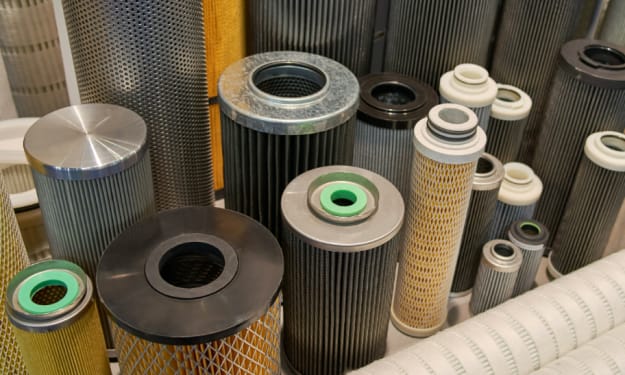
Have you ever thought when you raise a requirement for a particular filter let’s say a 10-micron filter you get a range of prices some being ridiculously low and some being higher than most, and all claim to give the best 10-micron filter? We get tricked at this point and without looking at differences we think that the only differentiator is the profit margin and procure the filter with the least price. For filter check contact - +91 7030901266.
By Minimac_Systems2 years ago in Trader
Cash Drawer Basics: Features, Usage, and Maintenance
Handling cash smoothly is still an important part of daily business operations. Whether it’s a small retail shop, a food counter, or a service desk, a cash drawer plays a quiet but essential role. While it may seem like a simple box, it supports accuracy, security, and speed at the counter.
By Will Smith7 days ago in Journal


Comments
There are no comments for this story
Be the first to respond and start the conversation.