
How to Customize Container Gantry Cranes for Specific Container Yard Layouts
Tailoring Crane Design to Match Yard Configurations
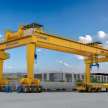

Container gantry cranes are essential pieces of equipment in container terminals, rail yards, and intermodal freight stations. Their primary function is to lift and move shipping containers efficiently across container yards. However, no two container yards are the same. Each has its unique layout, size, operational requirements, and logistical challenges. This means that container gantry cranes must often be customized to meet these site-specific needs.
In this article, we’ll explore how to customize container gantry cranes for different container yard layouts, the factors influencing customization, and best practices to ensure operational efficiency.
Understanding Container Gantry Cranes
Container gantry cranes fall into two main categories:
Rail Mounted Gantry Cranes (RMGs): These are fixed-path cranes running on rails and are commonly used in container yards with defined lanes and high-throughput requirements.
Rubber Tyred Gantry Cranes (RTGs): These are mobile cranes that move on rubber tires, offering flexibility and ease of navigation in yards with more dynamic layouts.
Customizing either type to suit a specific container yard involves modifications in design, dimensions, control systems, power supply, and operational features.

Why Customization Is Necessary
Each container yard has a different physical layout and operational process. Customizing the gantry crane ensures:
Maximized yard utilization
Efficient container stacking and retrieval
Seamless traffic flow for trucks and equipment
Enhanced safety and operator visibility
Energy efficiency and reduced operational costs
Without proper customization, a crane may underperform or even create logistical bottlenecks.
Key Factors in Customizing Container Gantry Cranes
1. Yard Layout and Dimensions
The most fundamental aspect of customization is the physical configuration of the container yard. Consider:
Crane span: This determines how many container rows the crane can straddle. For instance, in a yard with six container rows and two truck lanes, a crane span of 45–50 meters may be needed.
Stacking height: The crane must be able to lift containers to the desired height, usually 1 over 4 or 1 over 5 high.
Clearance and obstructions: Light poles, buildings, or other equipment may affect crane movement. The crane design must include sufficient clearance for safe and smooth operations.
2. Crane Type Selection: RMG vs. RTG
RMG cranes are ideal for yards with high container traffic and a linear or rail-based layout. Their precision and automation capabilities support high stacking density.
RTG cranes are better suited for medium-sized or flexible container yards that require mobility. They can be customized with various steering modes and power options.
Choosing the right type is the first step toward an effective customization strategy.
3. Span and Cantilever Requirements
Many container yards require cranes with cantilevers on one or both sides. These allow for:
Loading/unloading from external truck lanes without moving the crane.
Extending the working area beyond the rail track or wheelbase.
Cantilever length is typically 3 to 6 meters, but it depends on the width of adjacent roads and the size of vehicles in use.
4. Power Supply Customization
Power options include:
Diesel engines: Common for RTGs, especially in areas without fixed power supply infrastructure.
Cable reel systems or conductor bars: Suitable for RMG cranes or hybrid RTGs in yards with consistent layout and power access.
Hybrid or fully electric systems: Reduce emissions and are increasingly adopted in green port initiatives.
The selection depends on operational goals, sustainability targets, and infrastructure.
5. Wheel Base and Steering Systems
For RTG cranes, steering modes such as 90-degree steering, diagonal steering, and carousel steering help navigate tight spaces.
Customizing the wheelbase also helps cranes adapt to yard road widths and turning radii. This is crucial in irregularly shaped yards or when traffic lanes are narrow.
Technological Enhancements for Customized Operations
Incorporating smart technology and automation features can further tailor container gantry cranes for specific layouts:
1. Positioning and Anti-Collision Systems
GPS-based or laser-guided positioning systems improve stacking accuracy in tight spaces.
Anti-collision sensors ensure safe operation near other cranes, buildings, or equipment.
2. Remote Monitoring and Automation
Remote operation cabins or control centers can be used to run cranes in difficult-to-access layouts.
Automation systems allow pre-programmed container handling routes, which reduce errors and increase speed.
3. Load Sway Control
For yards where container placement requires high precision, adding an anti-sway system ensures the load remains stable during movement.
Case Study Examples
Example 1: RMG Customization for a Rail-Connected Inland Yard
A logistics hub near a railway required RMG cranes with:
A 32-meter span to cover four container rows and one rail track.
Dual cantilevers to load/unload directly from both sides.
Conductor bar electric power and PLC automation.
A cabin plus remote control for flexible operation.
This setup enabled synchronized container handling between the rail yard and the stacking area.
Example 2: RTG Customization for an Urban Port Yard
An inner-city port terminal with space constraints used RTG cranes with:
8-wheel steering for maximum maneuverability.
Electric-diesel hybrid system to reduce emissions.
Reduced overall height to meet city zoning restrictions.
Advanced anti-collision and camera systems due to pedestrian activity nearby.
Best Practices for Customization
Conduct a detailed yard layout analysis
Use CAD drawings and site inspections to assess space, obstacles, traffic flow, and container storage plans.
Engage crane experts early
Collaborate with crane manufacturers or engineering consultants during the planning phase to determine optimal specifications.
Design for future scalability
Ensure the crane can handle future increases in container volume or yard expansion.
Focus on operator ergonomics
Customized cabins with better visibility, air conditioning, and intuitive controls improve safety and efficiency.
Consider weather and environmental factors
High wind zones may require wind-resistant designs. Hot or cold climates might need crane components rated for extreme temperatures.
Conclusion
Customizing container gantry cranes for specific container yard layouts is crucial for maximizing operational efficiency, safety, and scalability. By tailoring aspects such as span, height, power source, control systems, and mobility features, terminal operators can ensure their cranes integrate seamlessly into their logistics workflow.
Whether it's a busy seaport, a rail terminal, or a compact urban yard, working with an experienced crane supplier who understands customization is key to success. With careful planning and smart design, container gantry cranes can be transformed into highly effective assets tailored perfectly to the yard’s unique layout and operational demands.
About the Creator
Aicrane01
Welcome to the Aicrane Blog, your practical guide to lifting solutions. Discover articles covering overhead cranes, gantry cranes, winches, steel structures, boat lifts, and more.
Website: https://steelmillcranes.com/
Jobs in Antarctica 2026: Work at British and US Research Stations – Chefs, Carpenters, Electricians Wanted No Science Degree Needed
Britain and the United States are both looking for new employees for their research stations in Antarctica. You don’t have to be a scientist to get a job there, as they also need carpenters, electricians, chefs, and even barbers.
By Real content6 days ago in Journal


Comments
There are no comments for this story
Be the first to respond and start the conversation.