
Smart EOT Cranes: How Automation is Changing Overhead Crane Operations
smarter, safer, and more efficient lifting through automation
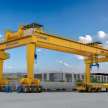

In the age of Industry 4.0, automation is revolutionizing the manufacturing and material handling sectors. One of the most significant transformations is occurring in the field of Electric Overhead Traveling (EOT) cranes. Traditionally known for their role in lifting and transporting heavy loads within industrial facilities, EOT cranes are now becoming smarter, safer, and more efficient through automation. This technological evolution is not just enhancing operational performance but also reshaping the way industries approach crane operations.
What Are Smart EOT Cranes?
Smart EOT cranes are overhead cranes that incorporate advanced technologies such as sensors, programmable logic controllers (PLCs), artificial intelligence (AI), Internet of Things (IoT), and automated control systems. These cranes are designed to operate with minimal human intervention, and in some cases, fully autonomously.
Through intelligent systems and real-time data processing, smart EOT cranes can monitor their own performance, detect anomalies, prevent accidents, optimize lifting paths, and even make decisions to improve workflow efficiency.
Key Features of Smart EOT Cranes
The integration of smart technologies into EOT crane for sale has led to the development of several advanced features:
1. Automated Load Handling
Smart cranes can be programmed to pick up, move, and place loads automatically based on predefined parameters. This significantly reduces the time taken for repetitive tasks and eliminates the need for manual operation, minimizing human error.
2. Anti-Sway Technology
Traditional cranes are prone to load swaying during movement, which can cause accidents and damage to goods. Smart EOT cranes are equipped with anti-sway control systems that use sensors and algorithms to stabilize the load, ensuring precise and safe movement.
3. Real-Time Monitoring and Diagnostics
Using IoT sensors, smart cranes continuously collect and transmit data about load weight, crane speed, hook position, operating temperature, and more. This data is analyzed in real time to monitor crane health, detect potential issues early, and schedule predictive maintenance.
4. Remote Operation and Control
Operators can control smart EOT cranes remotely via wireless devices, mobile apps, or control stations. This improves safety by allowing personnel to operate cranes from a distance, especially in hazardous environments.
5. Integration with Factory Automation Systems
Smart cranes can be seamlessly integrated into a facility’s broader automation system, including conveyor belts, AGVs (Automated Guided Vehicles), robotic arms, and ERP software. This enables synchronized and efficient material handling across the entire production line.
6. Energy Efficiency Features
Modern smart cranes are designed to optimize energy usage through regenerative braking systems, energy monitoring, and intelligent power management. These features contribute to significant cost savings over time.
Benefits of Smart EOT Cranes
The shift to smart EOT overhead crane for sale brings numerous advantages for industrial operations:
Enhanced Safety
Automation reduces the dependency on human operators, which in turn minimizes the risk of human error. Features like anti-collision systems, obstacle detection, and emergency shutdown further contribute to safer operations.
Increased Productivity
Smart cranes can perform repetitive lifting and positioning tasks faster and more accurately than manual cranes. Their ability to operate continuously without fatigue leads to improved throughput and shorter cycle times.
Reduced Operational Costs
Predictive maintenance minimizes downtime by identifying issues before they escalate into costly failures. Automated systems also reduce labor costs, as fewer operators are needed to manage crane operations.
Improved Data Utilization
The vast amount of data collected from crane operations can be used for performance analysis, process optimization, and strategic planning. Companies can gain valuable insights into operational efficiency and identify areas for improvement.
Scalability and Flexibility
Smart EOT cranes can be easily reprogrammed and adapted to handle different types of loads or perform different tasks, making them ideal for facilities with dynamic production requirements.
Applications of Smart EOT Cranes
Smart EOT cranes are now being used in a wide range of industries, including:
Steel and metal fabrication: For lifting and transporting heavy metal sheets, coils, and components with precision.
Automotive: In assembly lines and warehouses for moving engines, chassis, and other automotive parts.
Power plants: For maintenance and handling of turbines, generators, and other heavy equipment.
Logistics and warehousing: To manage inventory, load/unload materials, and organize storage areas.
Shipbuilding and aerospace: For lifting large components and assemblies with exact positioning requirements.
Challenges in Adopting Smart EOT Cranes
While the benefits are substantial, the adoption of smart crane technology does come with some challenges:
High Initial Investment
Upgrading to or purchasing a smart EOT crane requires significant upfront capital. This includes not only the equipment cost but also infrastructure changes and staff training.
Integration Complexity
Integrating smart cranes with existing systems and workflows can be complex and may require customized solutions.
Need for Skilled Personnel
Operating and maintaining smart cranes requires a workforce with knowledge in automation, electronics, and data analytics.
Cybersecurity Risks
With connectivity comes the risk of cyber threats. Ensuring data security and system integrity is critical to protect sensitive operational information.
Future Outlook
The future of EOT crane technology is undeniably smart. As automation becomes more accessible and cost-effective, more companies are expected to invest in smart crane systems. Upcoming innovations may include:
AI-based decision-making systems for fully autonomous crane operation.
Advanced machine learning algorithms for predictive maintenance and operational optimization.
Augmented reality (AR) tools for enhanced operator training and remote troubleshooting.
Cloud-based crane management platforms for centralized control of multiple cranes across different locations.
With advancements in edge computing and 5G connectivity, the responsiveness and capabilities of smart EOT cranes are set to improve even further, making them an integral part of the smart factory ecosystem.
Conclusion
Smart EOT cranes represent a significant leap forward in industrial lifting and material handling. By incorporating automation, intelligent control systems, and real-time data analytics, these cranes offer unparalleled levels of efficiency, safety, and flexibility.
While there are challenges to overcome—particularly around cost, integration, and cybersecurity—the long-term benefits make smart cranes a worthwhile investment for forward-looking businesses. As the technology continues to evolve, smart EOT cranes will play a pivotal role in shaping the future of industrial operations, pushing the boundaries of what's possible in automated material handling.
About the Creator
Aicrane01
Welcome to the Aicrane Blog, your practical guide to lifting solutions. Discover articles covering overhead cranes, gantry cranes, winches, steel structures, boat lifts, and more.
Website: https://steelmillcranes.com/




Comments
There are no comments for this story
Be the first to respond and start the conversation.