
How the Data Conversion Process Works: Key Steps
Simplify the data conversion process with clear steps and expert services providers insights. Ensure accuracy, efficiency, and seamless integration with this comprehensive guide.
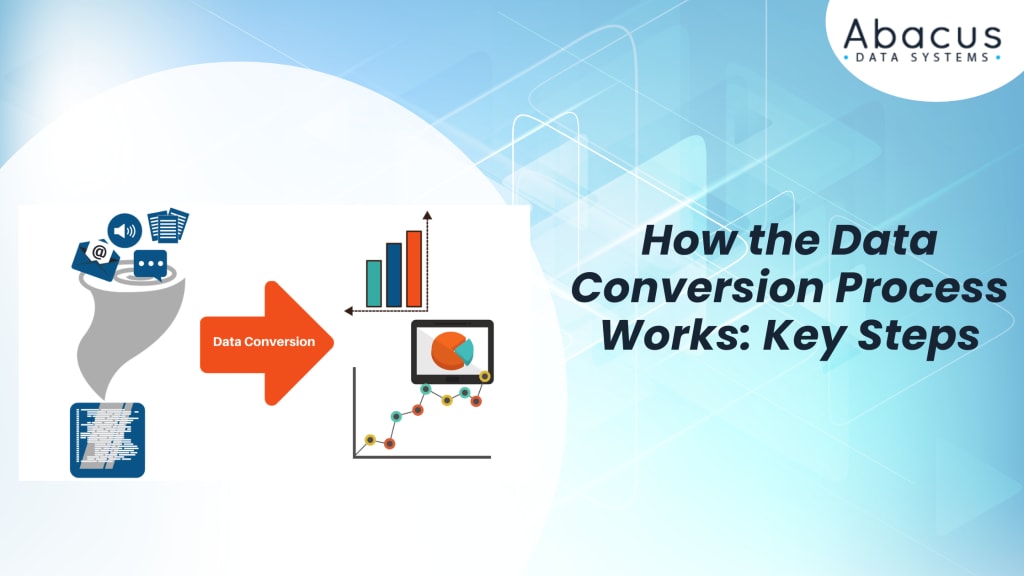
Imagine trying to open a treasure chest with the wrong key, it’s frustrating and time-consuming. That’s what working with incompatible data feels like for businesses.
Data conversion involves transforming information into a new format, ensuring compatibility with different systems and applications.
But how does the data conversion process work, and why is it so important?
This blog will walk you through the key steps in the data conversion process, highlight its benefits, and discuss challenges you might face. By the end, you’ll see why data conversion services can save time, improve accuracy, and reduce costs.
Understanding Data Conversion
Data conversion means changing data from one format to another to ensure it works with the target system. The process includes steps like data extraction, cleaning, mapping, and loading into the new system. Proper data conversion ensures your information is accurate, consistent, and ready for use in modern platforms.
This process improves data quality, reduces errors, and enhances efficiency.
For complex projects, outsourcing data conversion services to experts ensures you get professional results without unnecessary delays. They bring the right tools and expertise to handle even the most challenging tasks, giving businesses peace of mind and reliable outcomes.
Breaking Down the Data Conversion Process Step by Step
Assessing the Data
Every data conversion process begins with assessing the existing data. This involves identifying the data’s current format, checking for duplicates, and determining its quality. Evaluating what data is necessary for the new system helps reduce clutter and ensures only relevant, high-quality information is transferred.
Choosing the Right Tools and Methods
The tools and methods used for data conversion play a critical role in its success. Automated software, custom scripts, or manual processes may be used depending on the project’s complexity. The chosen tools must support both the source and target systems to ensure compatibility and accuracy.
Data Extraction
Data extraction is the process of pulling information from its original source, such as databases, spreadsheets, or legacy systems. This step is crucial to ensure that all necessary data is collected without omissions. The success of later steps heavily depends on how well data is extracted.
Data Transformation
Once the data is extracted, it is reformatted to match the target system’s requirements. This includes changing file formats, converting data types, and reorganizing data to align with the new structure. Transformation also involves cleaning the data by removing duplicates and correcting inconsistencies, ensuring only accurate and useful information is carried forward.
Data Mapping
Data mapping establishes how the old system’s data corresponds to the new one. It’s like creating a blueprint to ensure each piece of information is placed correctly in the target system. Proper mapping prevents data from being misplaced or misinterpreted during conversion.
Data Validation and Quality Check
Validation ensures the converted data is accurate, complete, and error-free. This step involves cross-checking the new data against the original, running tests to detect issues, and verifying that everything meets the required standards. Quality checks at this stage prevent costly errors later.
Data Loading
In this step, the validated and cleaned data is transferred to the target system. Whether it’s uploading to a cloud platform or importing into a new database, data loading needs to be precise to avoid disruptions.
Pilot Testing
Before rolling out the converted data on a large scale, a pilot test is conducted. This involves using a small sample of data to check for issues, identify potential improvements, and fine-tune the process. Pilot testing reduces risks and ensures a smoother transition.
Post-Conversion Testing
Once the data is loaded, it’s essential to test its functionality in the new system. This includes running reports, checking performance, and ensuring that the data works as expected. Post-conversion testing is the final step to confirm everything is in place and ready to use.
Monitoring and Feedback During Implementation
As the converted data is integrated into daily operations, continuous monitoring ensures everything runs smoothly. Gathering feedback from users can help identify minor issues and resolve them promptly.
Documentation
Thorough documentation throughout the process is critical. This includes recording steps, methodologies, mapping plans, and any issues encountered. Documentation provides a reference for future conversions and helps teams troubleshoot problems efficiently.
Establishing a Rollback Plan
Having a rollback plan is essential in case unexpected issues arise. This plan allows you to revert to the previous system without losing important data. It’s a vital safety net, especially for high-stakes projects.
Training End Users
Finally, it’s important to train your team to use the new system effectively. Familiarizing employees with the updated data structure ensures smooth operations and maximizes the benefits of the converted data.
Streamline Your Transition with Expert Data Conversion Services
Data conversion is a critical step for businesses looking to upgrade systems or manage complex data effectively. Avoid unnecessary setbacks by relying on professional data conversion services to ensure a smooth and error-free process.
With the right expertise, you can enhance data accuracy, save time, and focus on what matters most, growing your business.
Don’t leave your data to chance, Reach out to experts and simplify your data conversion journey, to streamline your transition and secure your business’s future success!
About the Creator
Keep reading
More stories from abacusdatasystems and writers in Journal and other communities.
A Powerful Guide to Data Conversion: Everything Explained
In the data-driven landscape, businesses are involved with large volumes of datasets generated from various digital systems. In addition, firms collect and apply information to transform it into a usable and structured format.
By abacusdatasystemsabout a year ago in Journal
The goals I did not achieve
Every writing goal I made for the year is a wash. It has been this way for a while, but I think it's important to be open about my failures and the reality of how life can get in the way. This is especially true considering the several times I have posted on Vocal about my writing goals, how I was changing my approach, and where I was hoping to be for the upcoming year. I will probably do that again in a couple months, but for now, it is time to acknowledge where I am today.
By Kay Husnick23 days ago in Journal
Finding Your Tribe: How to Spot Kindred Spirits and Create Meaningful Connections
In a world increasingly dominated by fleeting digital interactions, the longing for genuine connection and belonging resonates deeply. We yearn to find those individuals who "get" us, who share our values, passions, and perspectives – our kindred spirits. Identifying these individuals and forging meaningful connections with them can enrich our lives immeasurably, fostering a sense of purpose, belonging, and shared joy. But how do we navigate the crowded social landscape and successfully spot these kindred spirits amidst the noise? And, more importantly, how do we cultivate those initial sparks into lasting, fulfilling relationships?
By Wilson Igbasi2 days ago in Journal



Comments
There are no comments for this story
Be the first to respond and start the conversation.