
A Powerful Guide to Data Conversion: Everything Explained
Gain insights into methods for converting data for better accuracy. Know the factors when selecting an external vendor as an outsourcing partner.
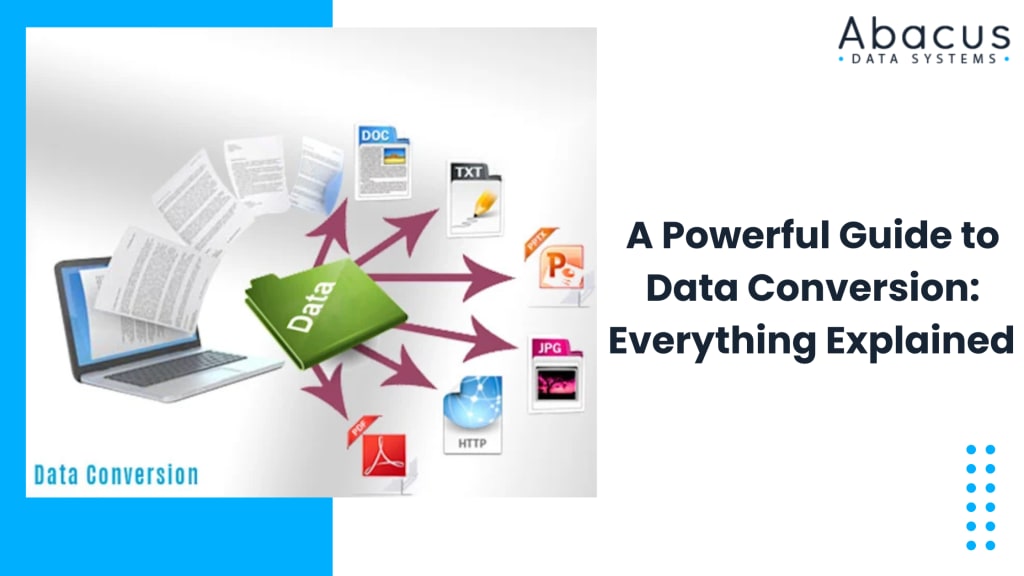
In the data-driven landscape, businesses are involved with large volumes of datasets generated from various digital systems. In addition, firms collect and apply information to transform it into a usable and structured format.
Converting data involving complex integration processes from different systems can be challenging for businesses. However, data conversion is essential for ensuring that records are accessible, accurate, and practical, whether for analyzing information or other purposes.
In addition, data conversion outsourcing will allow firms to focus more on priority business operations to achieve higher growth. This comprehensive guide discusses the basics of converting records, the operations involved, and how outsourcing this task to a specialized company can align your operations.
The Concise Overview Related To The Data Conversion Technique
Data conversion is the entire operation of transforming information from one unstructured format to another. The process involves converting structured or unstructured information from one system into a different system format, such as shifting entries from paper-based records to digital files or converting outdated legacy software records to newer platforms.
Specific services related to converting records are essential to improving their usability, ensuring compatibility with various complex software systems, and increasing information retrieval efficiency.
During this process, businesses experience the challenges of managing large volumes of information stored in outdated legacy formats and incompatible systems.
The records must be organized to extract meaningful insights and make informed decisions. For this purpose, professional conversion services have become crucial for businesses of all sizes.
Why Is Data Conversion Essential For Businesses?
Companies use information for decision-making, performance analysis, and customer insights. With that being said, raw information in its original form may sometimes be usable. Without proper conversion, this information can remain inaccessible, fragmented, and inefficient for higher processing.
Businesses require services to convert this information for various reasons, including the details below.
- Cost Efficiency: The converting process streamlines business operations by making information more usable, saving time and resources.
- Compliance And Security: Proper transformation can also ensure that details meet regulatory standards and are stored securely.
- Improved Accessibility: Converting records into a uniform, unified, and standardized format makes it easier to analyze and access.
- Business Continuity: Transforming information stored on outdated legacy systems ensures that businesses can maintain continuity even when technology evolves faster.
Standard Techniques For Converting Data
The conversion process is not only essential for one records-related task. Different methods are used primarily for converting information depending on its type, industry, and guaranteed needs of a business, including:
- Optical Character Recognition (OCR): Advanced OCR technology converts and scans handwritten or printed text into digital records, making it useful for converting paper documents into editable scanned files.
- Manual Data Entry: This transformation method is less popular due to its cost and potential for finding errors with solutions. It involves converting information manually from physical or digital records into a structured format.
- Automated Process for Converting Records: Various advanced software solutions automatically convert records from one format into another. These tools are faster, modern, and more efficient, especially for large datasets.
- Data Mapping And Transformation: This advanced technique involves mapping entries from one format into another by defining a unique set of rules. It is helpful for complex databases or enterprise resource planning (ERP) systems and solutions.
- Data Extraction: It involves obtaining information from variable sources, including unstructured files, PDFs, or web pages, and converting it into usable formats.
- Optimizing Date and Time Format: This process involves restructuring and reformatting the date and time format to remain consistent when presented everywhere.
- Converting Units Of Measurement: Various precise information is used as a measuring entity in different examples, including miles, pounds, meters, kilograms, and kilometers. For example, converting grams into kilograms and vice versa.
- Data Types Conversion: Different types of information, including alphanumeric data, numbers, and strings, need transformation to ensure compatibility with different software needs. This unique step is essential to maintain operational effectiveness for information.
Each conversion method has advantages and disadvantages based on various factors, including volume of information, complexity, and accuracy needs.
A Stepwise Working Of The Data Conversion Process
This converting method involves several steps to ensure the information is precisely transformed and usable. The standard method outlined is as follows.
- Data Evaluation and Assessment: The first step in the data conversion process is understanding its nature. The final scope, volume, and data format are evaluated for the most suitable conversion technique.
- Data Cleansing: Before starting the entire converting process, it’s essential to clean it by removing errors, duplicates, or irrelevant details. This critical step ensures that the converted information is high-quality and accurate.
- Conversion Strategy Development: A dedicated strategy is developed based on the records and target formats. The primary data conversion team decides whether to use manual conversion, automated tools, or both.
- Data Conversion: This step involves using tools and techniques to convert records into the desired format.
- Verification And Validation: After completing the converting process, the records are examined and checked for consistency, accuracy, and integrity. This step is essential to ensure the converted records align with their original meaning.
- Delivery and Integration: Once the information is validated, it is delivered in the desired format and integrated into the business’s existing workflows and systems.
What Are The Crucial Role Of Data Conversion Companies?
Hiring an outsourcing company to convert information for businesses and firms dealing with large datasets or complex formats becomes essential to achieve the necessary results. These companies specialize in information transformation, management, and migration and offer expertise that in-house teams may need to acquire.
A reliable conversion company offers the following functions:
- Cost Effectiveness: Transformation companies have the technical knowledge and dedicated tools to handle various formats, ensuring high-quality results.
- Specialized Expertise: Outsourcing data transformation processes can save businesses money and time by reducing the need for additional expert staff and expensive equipment.
- Time Efficiency: Outsourcing services to professionals can ensure that converted information is entirely accurate and faster, allowing your business to focus on primary business processes.
- Advanced Scalability: When businesses evolve, data management also increases faster. For this reason, these conversion companies can scale services to meet changing needs.
The Benefits And Considerations Of Outsourcing Converting Data Techniques
Outsourcing converting services provides various benefits, but it’s crucial to consider your options carefully before selecting a relevant provider.
Factors For Outsourcing Conversion Services
- Data Security: When outsourcing data conversion services, you can ensure that the reliable conversion company follows strict information protection measures to avoid unauthorized access to sensitive information.
- Compatibility: You can ensure the company can deliver information in a format compatible with your business systems.
- Vendor Reputation: The firms should work with a reputable company that offers relevant, proven conversion services and has positive client reviews.
Benefits Of Outsourcing Data Conversion Technique
- Expertise And Experience: Professional service providers have relevant experience working with various conversion techniques and challenges.
- Faster Project Turnaround Times: A reputable high-end conversion company can complete projects faster than in-house teams, with instant access to dedicated tools, resources, and services.
- Cost Effectiveness: Outsourcing these services is more affordable and cost-effective than hiring in-house staff and correctly investing in specialized technology and tools for complex operations such as converting records.
Get Accurate Data For Making Better Informed Business Decisions With Data Conversion
Data conversion is crucial for data management decision-making for businesses of all sizes. By converting outdated or raw information into a usable format, companies can improve their accessibility, streamline workflows, and improve decision-making processes.
Whether you manage the entire transformation process in-house or outsource those services to a specialized company, understanding the techniques will ensure a smooth, effective transition.
Outsourcing data conversion services allows businesses access to specialized technology and expertise, resulting in faster and more accurate entry transformations and helping companies remain competitive.
By collaborating with the right external conversion services provider, businesses can unlock the entire potential of their records and make more informed decisions that can result in higher business growth.
By following these tips, your firms can approach converting data with greater confidence, ensuring that they can efficiently use the power of their information.
About the Creator
Keep reading
More stories from abacusdatasystems and writers in Journal and other communities.
Choosing IT Outsourcing Services For Your Company
While adopting digital transformation, IT leaders in various businesses find different ways to manage higher business economic growth, rely on modern technology to reduce costs, streamline operations, and increase efficiency and productivity. Whether your company is a medium, minor, or large-scale enterprise, it needs IT services to align business operations.
By abacusdatasystemsabout a year ago in Journal
Why Robust Connectors Are Essential for Aircraft Safety
In aviation, the stakes are always high. Every component that makes up an aircraft, from its wings to its electronic systems, plays a pivotal role in ensuring the safety and efficiency of flight operations. Among these, connectors often go unnoticed, but they are one of the most crucial elements in keeping everything running smoothly. In this blog, we’ll explore why robust connectors are essential for aircraft safety, how they perform under extreme conditions, and why the right choice of connectors can make all the difference between safe flights and potentially dangerous situations.
By Beckett Dowhan5 days ago in Journal
Center Stage with Paul Stewart
*** I'm keen to republish the interviews I did for my series with Vocal creators. It's been a few years and I thought it might be nice to revisit these wonderful conversations. I'll be releasing them one at a time for a few weeks/months.
By Heather Hubler3 days ago in Interview



Comments
There are no comments for this story
Be the first to respond and start the conversation.