
How AI Is Transforming Medical Education
The Dawn of a Smarter Future in Medicine

Introduction: A New Chapter in Learning
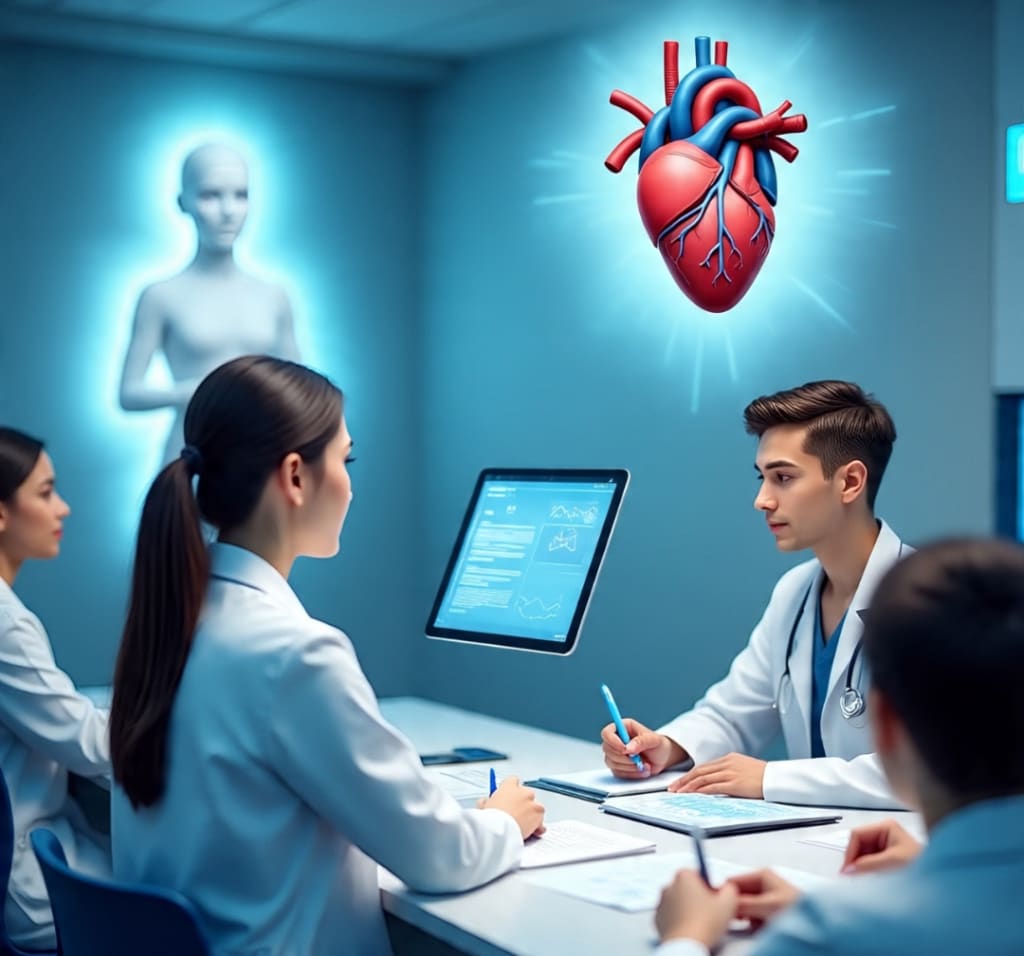
Medical education has always been one of the toughest journeys — filled with complex anatomy, endless memorization, and pressure to master life-saving skills. But now, Artificial Intelligence (AI) is changing the way future doctors learn, study, and practice.
AI is not replacing doctors; it’s helping them learn smarter. From personalized study assistants to virtual patients, this new technology is creating more confident and capable medical professionals.
AI as a Personal Study Partner
Every student studies differently, and AI understands that.
With tools like ChatGPT, Osmosis AI, and MedGPT, students can now get instant explanations, topic summaries, and customized quizzes. These AI systems track progress, analyze weaknesses, and design lessons based on individual learning speed.
Instead of spending hours flipping through textbooks, a student can ask, “Explain the cardiac cycle simply,” and receive an answer that fits their level. AI becomes a 24-hour tutor — patient, precise, and personal.
Virtual Patients and Realistic Practice
Experience has always been the key to medical training, but not every student can practice with real patients — especially in rare or risky cases. AI-powered virtual simulations now make it possible.
Through Virtual Reality (VR) and AI avatars, students can diagnose and treat lifelike digital patients who talk, react, and even show emotional distress. Platforms like Body Interact and SimX simulate real emergency cases — allowing students to make decisions, see the consequences, and learn from mistakes in a completely safe environment.
This is not just theory; it’s practice without risk — the next best thing to real hospital experience.
Reinventing Anatomy and Surgery Training
Anatomy used to rely on cadavers and 2D images. Now, AI brings the human body to life with interactive 3D models that can be rotated, dissected, and studied in microscopic detail. Apps like Complete Anatomy let students visualize muscles, organs, and nerves in motion.
For surgical students, AI-powered simulators replicate real operations. The system monitors their performance, tracks precision, and provides immediate feedback. Mistakes become lessons, not failures.
AI in Research and Diagnostics Education
Beyond textbooks, AI is teaching students how to think like researchers. With huge medical datasets available, AI helps analyze trends, detect diseases early, and predict patient outcomes.
For example, learning how AI can recognize early cancer patterns in X-rays or predict heart disease teaches students how data and medicine now work together. This fusion of technology and science prepares them for a future where doctors and data collaborate daily.
Breaking Barriers of Access and Language
AI is also democratizing medical education. Students in developing countries or remote areas can now access world-class lessons online. AI translation tools and voice tutors explain difficult terms in simple, local languages, making learning global and inclusive.
Medical knowledge is no longer limited to elite universities — it’s available to anyone with an internet connection.
Balancing Technology and Humanity
While AI offers endless possibilities, medicine still needs the human touch — empathy, ethics, and compassion. That’s why modern programs combine AI training with emotional intelligence education. Students practice not only diagnosing but also comforting and communicating with patients.
AI enhances knowledge; empathy gives it purpose.
Challenges and the Road Ahead
Adopting AI in education brings challenges: data privacy, high costs, and the risk of over-dependence on technology. Teachers also need new training to use AI effectively.
However, most experts believe these challenges will fade as technology becomes more affordable and accessible.
Conclusion: The Smart Doctor Generation
AI is shaping a new kind of doctor — one who learns faster, makes fewer mistakes, and combines human wisdom with digital intelligence.
Just as the stethoscope once revolutionized medicine, AI is the new symbol of progress. It represents not a replacement for doctors but a powerful ally — guiding them toward a smarter, safer, and more compassionate future in healthcare.
About the Creator
Gohar Ali
Welcome 🤗. A soul who turns emotions into words—writing stories and poetry that touch the heart, awaken dreams, and inspire hope. Every piece is crafted to pull you in, feel deeply, and see the beauty hidden in life’s moments.
I Found a Forgotten Star on an Old Vinyl — and It Changed How I See Fame Forever
It was one of those narrow places that smell like dust, cardboard, and time. The kind where the shelves lean slightly, as if even they are tired of standing. I was flipping through old vinyls absentmindedly, not expecting anything more than background noise for a lazy afternoon.
By Reiner Knapp2 days ago in Journal


Comments
There are no comments for this story
Be the first to respond and start the conversation.