
Help Each Other
Why Great Kitchen Are Built on Teamwork,Not Ego

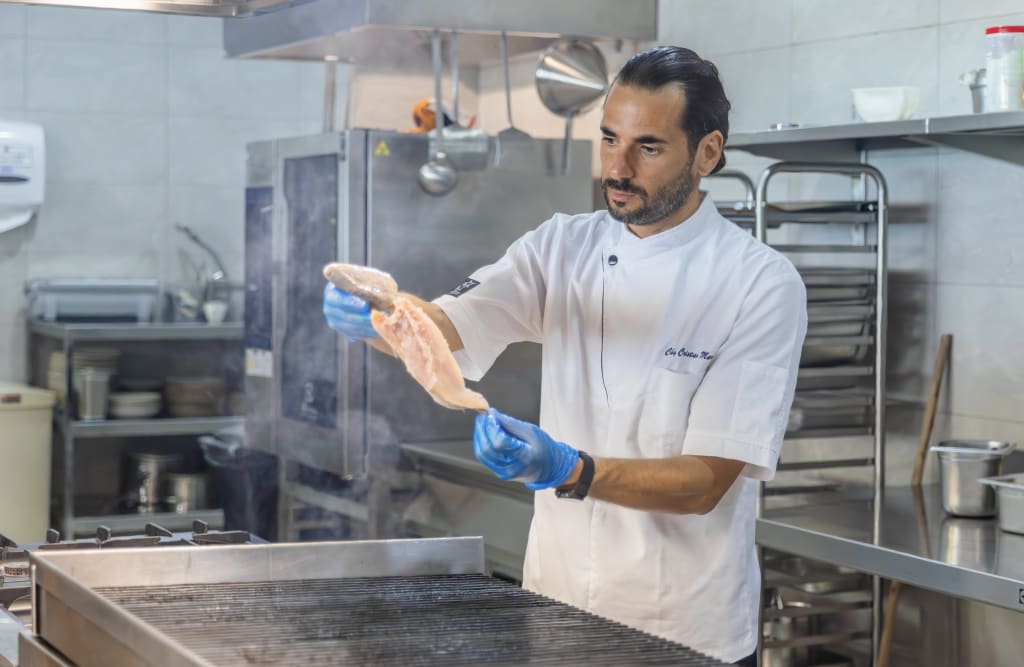
There’s a saying in kitchens around the world: “If one of us fails, we all fail.”
But I didn’t truly understand it until the day everything went wrong — and we came together anyway.
It happened during the opening of a new hotel in Indonesia. Normally, we didn’t serve lunch buffet unless it had been pre-booked for a special event. That day, however, the General Manager accepted a last-minute group booking for around 80 guests. With little time to react, we all had one choice: make it happen.
There was no time for pointing fingers or discussing roles. Everyone moved. Sous chefs jumped on prep. The stewarding team helped organize the service pass. I rolled up my sleeves and got on the line with the others — preparing, plating, and even helping with grilled fish.
We didn’t just serve lunch that day.
We delivered an experience.
And no one in the dining room ever saw the chaos behind the scenes.
That’s Rule #5 of my book The 10 Rules of the Chef in the Modern Era: Help Each Other. It’s simple to say — but in practice, it defines the soul of every great kitchen.
Teamwork Isn’t a Strategy — It’s a Culture
In kitchens that thrive, helping each other isn’t just something you do when there’s a problem. It’s a reflex. It’s the invisible thread between stations.
Teamwork means that when the pasta station is buried, the grill chef checks in. When the dishwasher is overwhelmed, someone else resets the racks. Not because it’s their job — but because it’s our job.
When the team acts like one organism — not a collection of individuals — pressure becomes a rhythm instead of a threat.
The Day I Became the Help, Not Just the Chef
It’s easy to forget, especially in leadership roles, that the kitchen doesn’t need a commander — it needs a contributor.
On that day in Indonesia, I could’ve delegated. I could’ve stayed in the pass and barked orders.
But kitchens don’t remember who gave the speech.
They remember who grabbed a pan.
When my team saw me jump in — not because I had to, but because I wanted to — the energy shifted. Morale lifted. Pace improved. The service became smoother, not harder.
That’s the essence of leadership through collaboration: showing, not telling.
A Legacy Built on Hands, Not Just Words
Throughout my career — in over ten countries, in cruise ships, fine-dining restaurants, and luxury resorts — I’ve seen the same truth repeat:
The kitchens with the best food weren’t always the ones with the biggest names.
But they were always the ones where cooks helped each other without being asked.
A kitchen built on ego crumbles under stress.
A kitchen built on support grows stronger after every service.
From the Sea to the Pass: Real Lessons from Real Kitchens
I learned this early, especially during my formative years as a Chef de Partie aboard Silversea Cruises, traveling to more than 30 countries — from the far north of Europe (Sweden, Estonia, Finland) all the way to Hong Kong. On board, the environment was unique: small teams, long hours, zero room for ego. You helped each other, or you failed together.
Later, as an Executive Chef for brands like Radisson Blu, InterContinental, Marriott, and Crown & Champa Resorts, I made that value central to every kitchen I led.
Because the greatest compliment a chef can earn isn’t “brilliant.”
It’s “trustworthy.”
Final Thought: Who Did You Help Today?
If you’re a chef — or a leader in any industry — I challenge you to ask yourself one question at the end of your day:
Who did I help today?
If you can answer that with honesty, you’re already building a culture where excellence doesn’t rely on pressure, but on people.
And that’s the kind of kitchen worth leading
About the Author
Cristian Marino is an Italian Executive Chef and Culinary Consultant with over 25 years of international experience. He has led kitchens in more than ten countries and sailed through over 30 others during his formative years aboard Silversea Cruises—from Sweden and Estonia to Hong Kong.
Cristian has served as Executive Chef for world-class hospitality brands such as Radisson Blu, InterContinental, Marriott, and Crown & Champa Resorts, where he recently led the culinary vision for the reopening of a luxury island resort in the Maldives.
He is the author of 10 Rules of the Chef in the Modern Era, a leadership guide rooted in real-world experience, teamwork, and the human side of hospitality.
About the Creator
Cristian Marino
Italian Executive Chef & author with 25+ years in 10+ countries. Sharing stories on kitchen leadership, pressure, and the human side of food.
Keep reading
More stories from Cristian Marino and writers in Journal and other communities.
Valentine’s Day Beach Celebration in the Maldives Highlights the Meaning of Love Beyond Romance
A Night by the Ocean By the time the first guests arrived on the beach on February 14, the lights were already glowing softly against the sand. The ocean was calm, and the atmosphere had that quiet energy that only comes just before an event begins.
By Cristian Marino26 days ago in Journal
Russian ‘Shadow Fleet’ LNG Tankers Reroute After Blast Sinks ‘Arctic Metagaz’ in Mediterranean
One of Russia’s sanctioned liquefied natural gas (LNG) carriers has sunk in the Mediterranean Sea, prompting remaining vessels tied to the Kremlin’s so‑called “shadow fleet” to halt, delay, or change routing as fears grow about the safety of key shipping corridors. The incident — which Moscow says was caused by a Ukrainian naval drone attack — highlights escalating risks to maritime energy transport as Russia’s energy exports face mounting pressure from conflict and sanctions. The Arctic Metagaz, an LNG tanker linked to Russia’s Arctic LNG 2 export project, was destroyed off the coast of Libya — roughly 150 nautical miles north of Malta — after experiencing powerful explosions and catching fire in early March. Italian and Libyan maritime authorities confirmed the vessel sank following a major blaze that engulfed it late on March 3, though all 30 crew members were safely evacuated by rescue teams. Russia Blames Ukrainian Drones In statements released after the sinking, the Russian Ministry of Transport accused Ukraine of directing a drone attack from the Libyan coast using naval unmanned boats, marking what Moscow described as an act of “international terrorism and maritime piracy.” Ukrainian officials have not publicly commented on the accusation. While state media narratives frame the incident as a deliberate strike on Russian energy infrastructure, independent verification of the attack’s cause remains limited. Some analysts note that Moscow’s sanctioned vessels, often operating outside Western restrictions, have become symbolic targets because of their role in bypassing sanctions aimed at cutting Russia’s energy revenue. A Blow to Russia’s Shadow Fleet Logistics The sinking of Arctic Metagaz has had an immediate impact on the operations of Russia’s “shadow fleet” — a collection of older tankers that transport hydrocarbons for sanctioned energy projects, such as Arctic LNG 2, around the world. The fleet has already been constrained by Western sanctions that limit access to insurance, financing, and port services, leaving only a small number of vessels able to carry cargo. Tracking data shows that several other Russian LNG carriers altered their movements in response to the blast. The Arctic Pioneer, which was transiting north through the Suez Canal at the time of the explosion, appears to have held offshore near Port Said for over 48 hours. Meanwhile, the Arctic Vostok, originally sailing westward across the eastern Indian Ocean, changed course and began heading south, possibly preparing to circumvent the Suez Canal by way of the Cape of Good Hope at Africa’s southern tip. Such deviations represent a rare and costly departure from established Arctic LNG‑to‑Asia routes. Circumnavigating Africa adds thousands of nautical miles — and weeks — to voyages, significantly increasing fuel costs, crew time, and delivery schedules. For a fleet already stretched thin, these disruptions could weaken Russia’s ability to sustain consistent LNG exports. Broader Energy Market Ripples The Arctic LNG 2 project was already running at a fraction of its full capacity due to logistical limitations and sanctions. This latest incident underscores how fragile those supply chains have become and how geopolitics can impact global energy flows far from conflict zones. Analysts warn that if other vessels begin to avoid the Mediterranean entirely, the additional transit time will reduce the number of voyages each tanker can complete in a year, tightening shipments to buyers — especially in East Asia — and potentially driving up LNG prices. Some industry observers say that Russia may have to rely increasingly on direct Arctic routes in summer months or seek alternative buyers closer to its production hubs. However, these options remain limited given fleet size and sanctions constraints. Risks to Shipping and Regional Security The incident also highlights the increasing vulnerability of energy tankers in contested waters. As global geopolitical tensions intersect — from the Ukraine war to Middle Eastern instability — commercial vessels are frequently caught between military actions and international sanctions regimes. Cruise ships, cargo carriers, and LNG tankers alike face heightened risk of unexpected attacks or collateral damage when navigating strategic chokepoints such as the Mediterranean and Suez transit route. Environmental concerns also linger following the sinking. Although LNG tankers carry less oil than typical crude carriers, authorities in the region continue to monitor the site for potential gas release or secondary impacts on marine ecosystems. Meanwhile, shipping insurers and charterers are reassessing risk models for vessels traveling near conflict zones. Looking Ahead For Moscow, the loss of Arctic Metagaz complicates an already strained export strategy and could prompt broader changes in how Russia moves LNG to global markets. Whether remaining tankers will continue to transit high‑risk corridors or adopt longer, safer routes around Africa remains an open question. The decision will hinge on geopolitical developments, insurance availability, and how both Russian and Western authorities respond to this high‑profile maritime incident.
By Fiaz Ahmed 7 days ago in Journal
My First Time Skiing and I Got Lost, Alone, in the French Alps
Looking back, I can trace some of my life’s biggest adventures to a simple action from my sister. She’d introduced me to Tommy (a very long time ago), a colleague of hers, who had overshared his penchant for Italian-looking women, and I ticked that box.
By Chantal Christie Weissabout 2 hours ago in Humans



Comments
There are no comments for this story
Be the first to respond and start the conversation.