
Helicopters Dump 6,000 Logs Into Rivers in the Pacific Northwest, Fixing a Decades-Old Mistake
Innovative restoration project aims to rebuild salmon habitats by reversing past logging damages in Pacific Northwest rivers

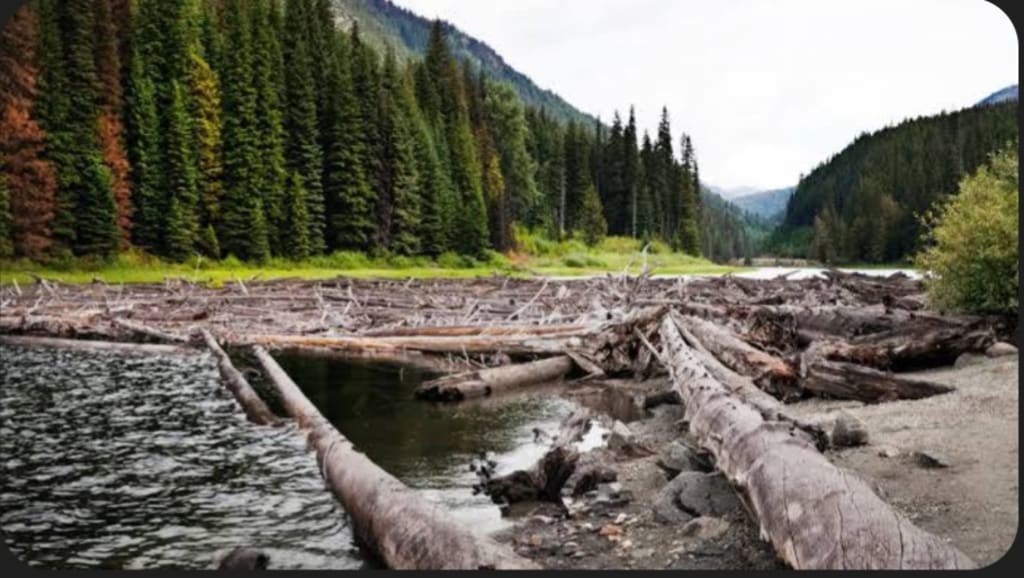
In an unusual but carefully planned environmental intervention, helicopters have been used to dump 6,000 large logs into rivers across the Pacific Northwest. The ambitious project aims to restore river ecosystems, particularly salmon habitats, which have suffered for decades due to past logging and river engineering practices.
What might seem like a dramatic, almost cinematic intervention is actually a science-driven effort to repair ecological mistakes made in the 20th century, when logging practices and river modifications severely disrupted natural flows, blocked fish passage, and degraded critical aquatic habitats.
---
The Legacy of Logging and River Modification
During the 1900s, logging was a major industry in the Pacific Northwest, providing timber for booming cities and industries. To facilitate timber transport and protect human settlements, rivers were straightened, leveed, and stripped of fallen trees. While these measures supported economic growth, they also inadvertently destroyed the natural complexity of river ecosystems.
Large woody debris — fallen trees and branches — is crucial for river health. It provides shelter for fish, creates deep pools, slows water flow, and supports nutrient cycling. By removing these materials, past interventions reduced salmon spawning grounds, increased erosion, and destabilized river banks, leaving long-term ecological scars.
Environmental scientists describe these historical decisions as a “decades-old mistake” — one that the new helicopter project aims to correct.
---
Helicopters as an Unconventional Solution
Deploying helicopters to place logs may sound unusual, but it is both practical and ecologically effective. Many of the targeted river sites are remote and difficult to access by road, making traditional logging equipment impractical. Helicopters allow crews to carefully position logs in precise locations, mimicking natural patterns of large woody debris accumulation.
Each log is selected for size, shape, and orientation to maximize ecological benefits. Once in place, these logs create pools and riffles, slow water during high flows, and provide shelter for juvenile salmon and other aquatic species. The careful placement is crucial — incorrect positioning could exacerbate flooding or fail to produce the intended habitat improvements.
---
Restoring Salmon Habitats
Salmon, a keystone species in the Pacific Northwest, are at the heart of this restoration effort. Decades of habitat loss, combined with climate change and overfishing, have led to dramatic declines in salmon populations.
The newly installed logs create microhabitats where salmon can rest, feed, and evade predators, particularly during their critical early life stages. Deep pools formed by logs also serve as thermal refuges during hot summer months, helping fish survive rising river temperatures caused by climate change.
Experts emphasize that these interventions not only help salmon but also benefit entire river ecosystems, including insects, amphibians, and other fish species, creating cascading ecological benefits.
---
Science and Community Collaboration
The helicopter log placement project is not just a government initiative; it involves collaboration between scientists, tribal nations, conservation groups, and local communities. Tribes in the Pacific Northwest have been vocal advocates for salmon restoration, given the species’ cultural and economic significance.
Researchers are monitoring the rivers before and after log placement to track improvements in salmon populations, water flow, and sediment deposition. The data collected will help refine future restoration efforts and demonstrate the ecological effectiveness of this approach.
This kind of adaptive management — where science informs each step — ensures that interventions are targeted and evidence-based rather than arbitrary.
---
Addressing Decades-Old Mistakes
The helicopter log project is part of a broader trend of restorative river management. It acknowledges that past river engineering and logging decisions prioritized short-term economic gains at the expense of long-term ecological health.
By returning large woody debris to rivers, scientists hope to reverse habitat simplification and restore the natural dynamism that rivers historically supported. In effect, the project is a symbolic and practical recognition that humans must repair ecosystems they once degraded.
---
Broader Implications for River Restoration
While the Pacific Northwest project is notable for its scale and use of helicopters, it reflects a growing recognition worldwide that rivers cannot thrive without structural complexity. Many river restoration projects now focus on reintroducing features such as fallen trees, boulders, and natural meanders to recreate resilient habitats.
As climate change intensifies, such interventions are increasingly urgent. Healthy rivers with diverse habitats are more resistant to floods, droughts, and temperature fluctuations — and they support species that are vital for both ecosystems and human communities.
---
Challenges and Future Outlook
Despite its promise, the project faces challenges. Log placement must avoid unintended consequences, such as excessive blockage during flood events or interference with human infrastructure. Continuous monitoring and adaptive management are essential.
Funding and resources are also limiting factors. Helicopter operations are expensive, and scaling such interventions across all impacted rivers will require sustained commitment from government agencies, nonprofits, and local stakeholders.
Nevertheless, early observations are encouraging. Scientists have noted improvements in salmon usage of restored pools and increased riverbank stability in pilot sites.
---
A Step Toward Ecological Reconciliation
By using helicopters to return logs to rivers, conservationists are correcting mistakes that have persisted for decades, bridging the gap between human industry and ecological health. The project highlights how creative, science-based approaches can restore natural habitats even in heavily modified landscapes.
For the Pacific Northwest, this initiative offers hope not only for endangered salmon populations but also for the broader resilience of river ecosystems. It is a reminder that while human activities have historically caused harm, thoughtful intervention can help repair the damage and safeguard biodiversity for future generations.
About the Creator
Keep reading
More stories from Salaar Jamali and writers in Journal and other communities.
World’s Largest Sovereign Wealth Fund Made $247 Billion in 2025, Driven by Tech and Banking Rally
The world’s largest sovereign wealth fund delivered a blockbuster performance in 2025, posting profits of $247 billion as a powerful rally in technology and banking stocks lifted global equity markets. The record gain underscored the growing influence of large state-backed investors in global finance and highlighted how a concentrated rebound in key sectors can reshape national wealth outcomes.
By Salaar Jamaliabout 7 hours ago in Journal


Comments
There are no comments for this story
Be the first to respond and start the conversation.