
Google Unveils A.I. Chatbot, Signaling a New Era for Search
With AI Mode in Search, Google Reimagines How We Find, Learn, and Interact Online — Ushering in a New Digital Era


Introduction: A Paradigm Shift in Search
In a landmark announcement at its annual I/O conference, Google unveiled "AI Mode," a transformative feature that integrates an AI-powered chatbot directly into its search engine. This development marks a significant departure from traditional search methods, introducing a conversational interface that allows users to interact with Google's search engine in a more intuitive and dynamic manner. CEO Sundar Pichai described this as a "total reimagining of search," emphasizing the company's commitment to evolving alongside user needs and technological advancements.
The Evolution of Google's AI Endeavors
Google's journey into AI-powered search began with the introduction of Bard, a conversational AI service powered by LaMDA. Over time, Bard evolved into what is now known as Gemini, a family of multimodal large language models developed by Google DeepMind. These models, including Gemini Ultra, Pro, Flash, and Nano, have been instrumental in enhancing Google's AI capabilities, enabling more nuanced and context-aware interactions.
The latest iteration, Gemini 2.5 Pro, boasts advanced reasoning abilities, allowing it to "think" before responding, thereby providing more accurate and contextually relevant answers. This progression underscores Google's commitment to refining its AI models to better serve user needs.
Business Insider
AI Mode: Redefining User Interaction
AI Mode represents a significant leap forward in how users interact with Google's search engine. Instead of presenting a list of links, AI Mode offers direct, conversational responses to user queries, enabling follow-up questions and deeper engagement. This shift transforms the search experience into a more interactive dialogue, akin to conversing with a knowledgeable assistant.
Key features of AI Mode include:
Conversational Interface: Users can engage in back-and-forth dialogues, refining their queries and receiving more tailored responses.
Deep Search: This feature allows the AI to conduct in-depth research, synthesizing information from multiple sources to provide comprehensive answers.
Personalized Responses: With user permission, AI Mode can access personal data, such as emails and calendar events, to offer more customized assistance.
Multimodal Capabilities: AI Mode can process and respond to various input types, including text, images, and voice, enhancing its versatility.
These enhancements aim to make search more intuitive, efficient, and aligned with individual user preferences.
Integration with Existing Features
AI Mode builds upon Google's existing AI Overviews feature, which provides summarized responses to search queries. With over 1.5 billion monthly users, AI Overviews have already demonstrated the value of integrating AI into search. AI Mode takes this a step further by offering a more interactive and personalized experience.
Additionally, Google is exploring the integration of AI Mode with other services, such as Google Maps and Google Lens, to provide a more cohesive and comprehensive user experience.
Addressing Challenges and Concerns
While AI Mode offers numerous benefits, it also raises important considerations:
Accuracy: Ensuring the AI provides accurate and reliable information is paramount. Google acknowledges that, like other AI tools, AI Mode may occasionally produce incorrect or outdated information.
The Washington Post
Privacy: The use of personal data to enhance responses necessitates robust privacy safeguards. Google emphasizes that access to personal information is strictly permission-based and aims to maintain user trust through transparency and control.
Impact on Web Traffic: As AI Mode provides direct answers, there is concern about reduced traffic to external websites. Google is working to balance the convenience of AI-generated responses with the need to support content creators and publishers.
Top AI Tools List - OpenTools
Competitive Landscape and Future Outlook
Google's introduction of AI Mode comes amid increasing competition from other AI-driven platforms, such as OpenAI's ChatGPT and Microsoft's integration of AI into Bing. By enhancing its search capabilities with AI, Google aims to maintain its dominance in the search market and meet evolving user expectations.
Looking ahead, Google plans to continue refining AI Mode, expanding its capabilities, and integrating it more deeply into the user experience. This includes potential partnerships, such as integrating Gemini with Apple's Siri, to broaden the reach and utility of its AI offerings.
Conclusion: Embracing the Future of Search
Google's unveiling of AI Mode signifies a pivotal moment in the evolution of search technology. By transforming the search experience into a more conversational and personalized interaction, Google is setting a new standard for how users access and engage with information. As AI continues to advance, features like AI Mode will likely become integral to our daily digital interactions, reshaping our relationship with information and technology.
The Rise of Conversational AI: What It Means for Everyday Users
The rollout of Google’s AI chatbot into search isn't just a technological milestone—it’s a societal shift. For decades, people have learned to “Google” things using keywords. That method often required users to mentally reverse-engineer how a machine might interpret their query.
Now, Google is telling users: “Speak naturally. We’ll handle the rest.”
This advancement lowers the barrier to entry for users of all ages and backgrounds. Whether it’s a child asking a homework question, a senior looking up medical advice, or a non-native English speaker seeking travel tips, conversational AI promises a smoother, more human experience.
Moreover, users will no longer have to click through multiple websites or forums to piece together an answer. AI Mode will compile, synthesize, and present coherent summaries—almost like having a personal research assistant at your fingertips.
Real-World Use Cases: AI Search in Action
Let’s explore some practical scenarios where Google’s AI-powered search could transform everyday life:
1. Trip Planning
Imagine asking: “Plan a three-day vacation to Kyoto on a budget of $500. I love nature and historical sites.”
AI Mode could return a detailed itinerary including:
Recommended flights and accommodations
A breakdown of costs
Opening hours for temples and shrines
Even public transportation suggestions
All without opening a single travel blog or booking site.
2. Healthcare and Wellness Questions
While Google cautions users not to treat AI as a doctor, AI Mode can still be helpful for general wellness inquiries. A question like:
“What are the symptoms of low vitamin D, and what foods help improve it?”
...would return a clear, friendly response with links to credible sources—offering more depth than a typical list of blue links.
3. Learning New Skills
Users can ask AI Mode:
“Teach me how to create a podcast, and recommend tools to edit audio.”
Instead of skimming ten blogs and watching multiple YouTube videos, users receive a structured overview, tool suggestions, and even a to-do list.
Ethical and Societal Implications
With powerful tools come important ethical questions. As Google’s AI becomes more embedded in how we learn, work, and live, a few pressing concerns arise:
1. Who Controls the Narrative?
When AI synthesizes information, it also chooses what to include—and what to leave out. This raises concerns about:
Bias in how topics are framed
Source selection — will independent creators get the same visibility as large publishers?
Echo chambers — if AI tailors responses to a user’s beliefs, does that reinforce confirmation bias?
Google claims its AI training uses high-quality, diverse data. Still, watchdogs and advocacy groups are closely monitoring how information is presented—and who benefits.
2. Job Displacement in Content Creation
If users no longer click through to websites, publishers lose ad revenue. Journalists, bloggers, and educators fear their traffic—and thus income—will decline.
To address this, Google has pledged to:
Include visible citations in AI responses
Work on partnerships that share revenue with content creators
Allow publishers to opt out of AI training via metadata
Still, this transition may reshape the economics of the internet, especially for independent writers and small businesses.
3. Data Privacy and Trust
As AI Mode begins handling personal information (like reading your Gmail or checking your calendar), trust becomes critical.
Google asserts it uses strict “on-device AI” for personal data—meaning your private information isn’t sent to the cloud or used for ads. Users are also required to explicitly opt-in for personal integrations.
Nonetheless, skeptics remain cautious. The future of AI search hinges on users feeling secure that their data won’t be misused.
Comparing Google’s AI to Other Tools
ChatGPT (OpenAI):
Strength: More general-purpose conversational abilities, especially useful for creative writing, coding help, and problem-solving.
Weakness: Not inherently connected to real-time web results or personal data (unless integrated into a service).
Bing AI (Microsoft + OpenAI):
Strength: Combines GPT with up-to-date search capabilities; already integrates AI chat into browser experience.
Weakness: Still lags behind Google in mobile app usage and market share.
Google Gemini in AI Mode:
Strength: Directly built into the world’s most used search engine; powerful with access to personalized data (li
About the Creator
Shakil Sorkar
Welcome to my Vocal Media journal💖
If my content inspires, educates, or helps you in any way —
💖 Please consider leaving a tip to support my writing.
Every tip motivates me to keep researching, writing, sharing, valuable insights with you.
Keep reading
More stories from Shakil Sorkar and writers in Journal and other communities.
Trump, visiting Capitol Hill, warns House Republicans against opposing his bill
Trump Presses House Republicans to Unite Behind Sweeping Tax and Spending Bill May 21, 2025 On May 20, 2025, former President Donald Trump made a significant appearance on Capitol Hill, urging House Republicans to rally behind his comprehensive tax and spending legislation, dubbed the "One Big Beautiful Bill Act." This 1,116-page proposal aims to extend and expand the 2017 tax cuts, eliminate taxes on tips and auto loan interest, increase the standard deduction, and expand the child tax credit. However, it also includes substantial cuts to programs like Medicaid, food stamps, and green energy initiatives, leading to divisions within the Republican Party.
By Shakil Sorkar10 months ago in Journal
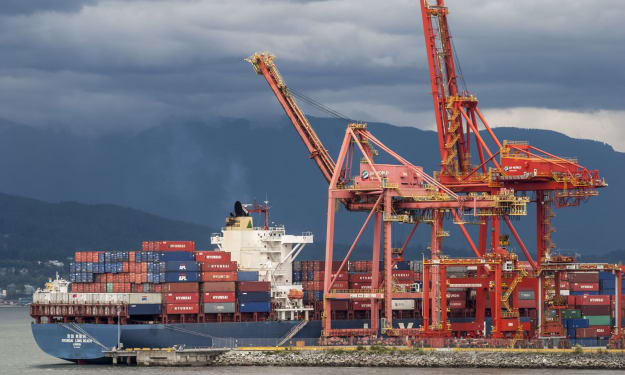
Global trade’s lifelines: 6 shipping lanes that keep the world economy moving
Maritime shipping lanes are the unsung lifelines of global trade. Roughly 90% of the world’s goods—from electronics and oil to food and raw materials—travel by sea, navigating a network of strategic shipping corridors that connect producers to consumers across continents. Disruptions along these routes can ripple across the global economy, impacting supply chains, energy prices, and trade flows. Here are six critical shipping lanes that underpin international commerce: 1. The Strait of Hormuz Located between Oman and Iran, the Strait of Hormuz is a narrow passage through which roughly 20% of the world’s oil supply passes. Tankers from Gulf nations rely on this corridor to transport crude to Europe, Asia, and the Americas. Heightened regional tensions can quickly drive up oil prices, as recent conflicts and military posturing have shown. 2. The Suez Canal The Suez Canal connects the Mediterranean Sea to the Red Sea, allowing ships to bypass the lengthy voyage around Africa’s Cape of Good Hope. The canal handles approximately 12% of global trade, making it one of the most strategically important maritime routes. The 2021 blockage by the container ship Ever Given demonstrated how a single incident can stall billions of dollars in goods. 3. The Strait of Malacca Between Malaysia and Indonesia, the Strait of Malacca serves as the main artery for ships traveling between the Indian Ocean and the Pacific. Around 25% of all traded goods pass through this narrow channel, including oil, electronics, and commodities. Its vulnerability to congestion or piracy has prompted constant monitoring and security initiatives. 4. The Panama Canal Connecting the Atlantic and Pacific Oceans, the Panama Canal facilitates the rapid movement of goods between Asia and the Americas. For decades, the canal has shortened transit times and reduced fuel costs for shipping companies. Recent expansions allow larger vessels to pass through, accommodating the growth of global containerized trade. 5. The English Channel One of the busiest shipping lanes in the world, the English Channel links the United Kingdom to continental Europe. Nearly 500 ships pass daily, carrying everything from raw materials to finished products. Its strategic position near Europe’s industrial and financial hubs makes it crucial for European commerce, especially during Brexit-related logistical shifts. 6. The Bab el-Mandeb Strait Connecting the Red Sea to the Gulf of Aden, the Bab el-Mandeb Strait sits between Djibouti and Yemen. About 4.8 million barrels of oil daily flow through this route, alongside other key commodities. Regional instability, piracy, and conflict in nearby areas have raised concerns over potential disruptions. Why These Routes Matter Global shipping lanes are not just pathways for goods—they are economic arteries that sustain industry, employment, and geopolitical influence. Even minor blockages can trigger cascading effects, delaying shipments, inflating prices, and disrupting production cycles. For instance, disruptions in the Suez Canal or Strait of Hormuz often lead to surging oil prices and logistical bottlenecks worldwide. Shipping companies, governments, and international organizations invest heavily in monitoring, securing, and maintaining these corridors. Advances in maritime technology, satellite navigation, and coordinated international patrols help mitigate risks such as piracy, geopolitical tensions, and accidents. Challenges Ahead Despite these safeguards, global shipping remains vulnerable. Rising geopolitical tensions, climate change, and evolving security threats could jeopardize these vital routes. Analysts warn that the reliance on a handful of narrow corridors makes the global economy susceptible to unforeseen shocks. Diversifying routes and improving maritime infrastructure are considered key strategies for resilience. The lifelines of global trade are more than just shipping lanes—they are critical components of the modern economy, linking markets, nations, and people. Protecting them ensures not only the smooth flow of goods but also global economic stability, energy security, and international cooperation. As trade volumes continue to grow and international tensions rise, these six corridors will remain under scrutiny, reminding the world just how interconnected and fragile the modern global supply chain truly is.
By Fiaz Ahmed 6 days ago in Journal



Comments
There are no comments for this story
Be the first to respond and start the conversation.