
Global Logistics Market to Reach $8.07 Trillion by 2033: Key Trends and Growth Forecast
Logistics Market: Projected to reach over $8.07 Trillion by 2033, fueled by e-commerce, automation trends, and global supply chain growth.

Market Size & Growth
- Market Size (2024): USD 5.65 Trillion
- Projected Market Size (2033): USD 8.07 Trillion
- Compound Annual Growth Rate (CAGR) (2025-2033): 4.02%
Key Market Drivers:
- Increasing Demand for Online Retail and E-Commerce
- Technology and Automation Progress
- Government-Led Infrastructure Investments
Emerging Trends
- Advancements in Last-Mile Delivery Innovations
- Integration of Sustainable Logistics Practices
- Advancement of Automation and Logistics Robots
Segmentation Highlights
- Analysis by Model Type
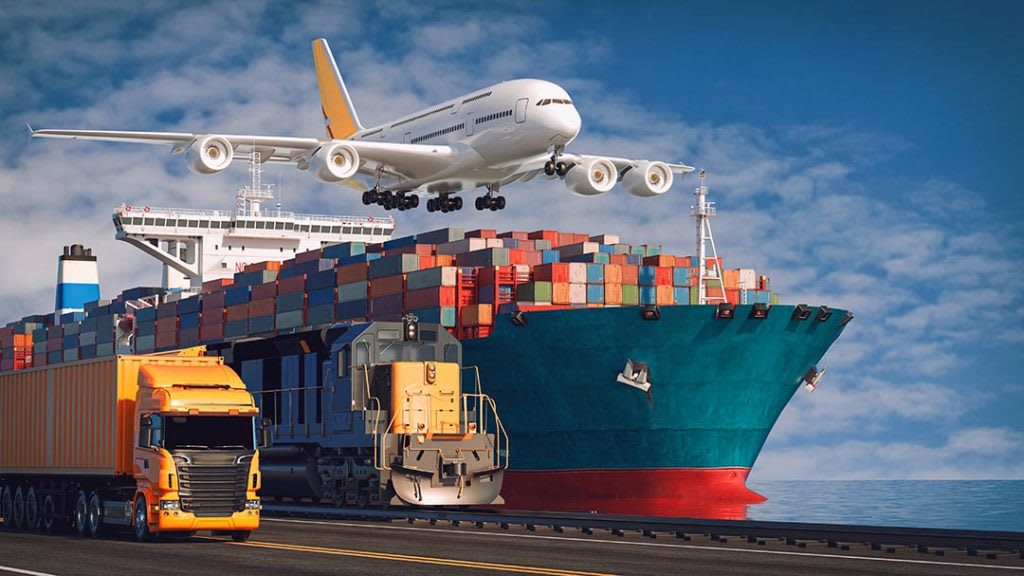
- Analysis by Transportation Mode
- Analysis by End Use
- Regional Analysis
Market Overview:
According to IMARC Group's latest research publication, the global logistics market size was valued at USD 5.65 Trillion in 2024. Looking forward, the industry is projected to reach USD 8.07 Trillion by 2033, exhibiting a CAGR of 4.02% during 2025-2033.
This detailed analysis primarily encompasses industry size, business trends, market share, key growth factors, and regional forecasts. The report offers a comprehensive overview and integrates research findings, market assessments, and data from different sources. It also includes pivotal market dynamics like drivers and challenges, while also highlighting growth opportunities, financial insights, technological improvements, emerging trends, and innovations. Besides this, the report provides regional market evaluation, along with a competitive landscape analysis.
Grab a sample PDF of this report: https://www.imarcgroup.com/logistics-market/requestsample
Our report includes:
- Market Dynamics
- Market Trends and Market Outlook
- Competitive Analysis
- Industry Segmentation
- Strategic Recommendations
Growth Factors in the Logistics Market
- Increasing Demand for Online Retail and E-Commerce
The increase in online retail and e-commerce shopping significantly boosts the global logistics industry. This is because shoppers now want their goods shipped to them in a timely and reliable manner. To fulfill these expectations, businesses are optimizing their supply chains and investing in effective last-mile delivery solutions. A good example is the significant surge in parcel volume which has resulted in millions of packages being shipped around the world each day. There are also now companies like Amazon, which are expanding their logistics networks by adding new fulfillment centers so they can provide faster service for the increasing number of orders. Meeting customer demand for next-day or even same-day deliveries requires sophisticated transportation and warehousing systems. Some government initiatives, such as India’s National Logistics Policy, are also aimed at supporting logistics in a way that reduces delivery costs and improves infrastructure, enabling logistics companies to keep pace with e-commerce growth.
- Technology and Automation Progress
The logistics sector has greatly improved due to technological changes, resulting in definite time, labor, and cost savings. Advanced technologies such as Artificial Intelligence (AI), the Internet of Things (IoT), and modern tracking systems are enhancing the efficiency of warehousing and transportation. As an example, DHL has automated their warehouse systems, which allows them to process orders at high speed while minimize human mistake. With IoT devices, shipments can be monitored in real time which increases transparency for businesses and customers. In recent news, XPO Logistics is reported to be using more robotics for better supply chain optimization. These technologies are reducing operational costs and increasing the speed of delivery, which in turn helps grow these markets. Governments are actively promoting these trends, for example, the U.S. global supply chain security strategy supports the use of logistics technologies for economic development, stability, and dependability.
- Government-Led Infrastructure Investments
Governments around the world are investing in logistics infrastructure and are reaping the benefits. Advanced road and port infrastructure, as well as digital freight corridors, facilitate moves of goods and services. For example, in India the PM Gati Shakti plan integrates services for improved supply chain connectivity and has been designed to manage millions of tons of cargo. In South Africa, the Tambo Springs Logistics Gateway and other similar projects are modernizing and improving warehousing facilities to enhance the movement of goods. These projects reduce the bottleneck logistics companies face and lower their operational costs. Recent news indicates Kotak Mahindra has started a Transportation & Logistics Fund which shows faith in infrastructure-led growth. By improving integration and supporting green initiatives, governments are investing in building a strong logistics infrastructure that will allow businesses ease in scaling operations to meet increasing demand.
Key Trends in the Logistics Market
- Advancements in Last-Mile Delivery Innovations
E-commerce is driving newer demands that are more efficient and are ever evolving resulting in change in last-mile deliveries. To minimize delivery time, companies are already testing new technologies including drones and self-driving cars. For example, Amazon is currently testing drone deliveries which are aimed at delivering parcels in under 30 minutes. Dense metropolitan areas are already seeing hundreds of millions of parcels being delivered each day which forces logistics companies to optimize routes using AI based software. Exemplar partnerships, like FedEx’s local retailer same-day delivery options, illustrate how companies are innovating. In many cases, consumers show readiness to pay extra for shipping fees making the emerging shipping market more lucrative. In shaping the future of logistics, persistent innovations are inevitable as cities expand.
- Integration of Sustainable Logistics Practices
In logistics, sustainability marks a shift in thinking due to consumer and regulatory demand. Companies are implementing green technologies, such as electric delivery vans and solar-powered warehouses. For instance, in South Africa, 30% of new warehouses utilize solar energy, reducing both operational costs and emissions. DHL plans to achieve net-zero emissions by 2050, which includes a commitment to purchase thousands of electric vehicles. Some government programs, such as the green initiatives under the National Logistics Policy in India, provide low-carbon transport incentives and therefore, motivate green practices through subsidies. Sustained momentum is being observed as businesses target international sustainability objectives alongside cost-effective measures. Enhanced adoption of eco-friendly logistics by consumers fosters innovation and further business expansion, thereby making it a significant industry driver.
- Advancement of Automation and Logistics Robots
The innovations in robotics and automation are fundamentally changing logistics, particularly in warehousing and distribution. Fulfillment centers utilize thousands of robots that move goods and handle millions of items daily with great precision, as is the case with Amazon Robotics. Leading players KUKA and Swisslog offer robots that sort and palletize order fulfillment which require less human supervision. These systems have automated processes and enhanced efficiency so that compared to other forms of labor, orders are processed 50% faster. In real world scenarios, CEVA Logistics is integrating autonomous mobile robots to control inventory in sectors like e-commerce with high demand. This shift has decreased errors and costs while ensuring reliability and speed. Robotics are being integrated as companies grow, fundamentally changing the storage, sorting, and shipping of goods.
Buy Full Report: https://www.imarcgroup.com/checkout?id=984&method=1670
Leading Companies Operating in the Global Logistics Market Industry:
- J.B. Hunt Transport Services
- C.H. Robinson Worldwide, Inc.
- Ceva Holdings LLC
- FedEx Corp.
- United Parcel Service, Inc.
- Expeditors International of Washington Inc.
- XPO Logistics Inc.
- Kenco Group
- Deutsche Post DHL Group
- Americold Logistics, LLC
- DSV Air & Sea Inc.
Logistics Market Report Segmentation:
Analysis by Model Type:
- 2 PL
- 3 PL
- 4 PL
Analysis by Transportation Mode:
- Roadways
- Seaways
- Railways
- Airways
Analysis by End Use:
- Manufacturing
- Consumer Goods
- Retail
- Food and Beverages
- IT Hardware
- Healthcare
- Chemicals
- Construction
- Automotive
- Telecom
- Oil and Gas
- Others
Regional Insights:
- North America (United States, Canada)
- Asia Pacific (China, Japan, India, South Korea, Australia, Indonesia, Others)
- Europe (Germany, France, United Kingdom, Italy, Spain, Russia, Others)
- Latin America (Brazil, Mexico, Others)
- Middle East and Africa
Research Methodology:
The report employs a comprehensive research methodology, combining primary and secondary data sources to validate findings. It includes market assessments, surveys, expert opinions, and data triangulation techniques to ensure accuracy and reliability.
Note: If you require specific details, data, or insights that are not currently included in the scope of this report, we are happy to accommodate your request. As part of our customization service, we will gather and provide the additional information you need, tailored to your specific requirements. Please let us know your exact needs, and we will ensure the report is updated accordingly to meet your expectations.
About Us:
IMARC Group is a global management consulting firm that helps the world’s most ambitious changemakers to create a lasting impact. The company provide a comprehensive suite of market entry and expansion services. IMARC offerings include thorough market assessment, feasibility studies, company incorporation assistance, factory setup support, regulatory approvals and licensing navigation, branding, marketing and sales strategies, competitive landscape and benchmarking analyses, pricing and cost research, and procurement research.
Contact Us:
IMARC Group
134 N 4th St. Brooklyn, NY 11249, USA
Email: [email protected]
Tel No:(D) +91 120 433 0800
United States: +1-631-791-1145
About the Creator
Andrew Sullivan
Hello, I’m Andrew Sullivan. I have over 9+ years of experience as a market research specialist.
Keep reading
More stories from Andrew Sullivan and writers in Journal and other communities.
The goals I did not achieve
Every writing goal I made for the year is a wash. It has been this way for a while, but I think it's important to be open about my failures and the reality of how life can get in the way. This is especially true considering the several times I have posted on Vocal about my writing goals, how I was changing my approach, and where I was hoping to be for the upcoming year. I will probably do that again in a couple months, but for now, it is time to acknowledge where I am today.
By Kay Husnick24 days ago in Journal
The Silent Reason You Quit Goals You Care About: Unveiling the Shadow of "Unrealistic Expectations
We all have them – those goals shimmering in the distance, beckoning us with the promise of a better, more fulfilling life. Losing weight, writing a novel, starting a business, mastering a new skill – the possibilities are endless. We start with enthusiasm, fueled by inspiration and a burning desire to achieve our dreams. Yet, all too often, that initial spark flickers and fades. We find ourselves derailed, abandoning our aspirations, and whispering excuses about lack of time, motivation, or talent.
By Wilson Igbasiabout 11 hours ago in Journal



Comments
There are no comments for this story
Be the first to respond and start the conversation.