
Ghosts of the Guanches
Remembering some queer ghosts from the past in Gran Canaria.

Ghosts of the Guanches
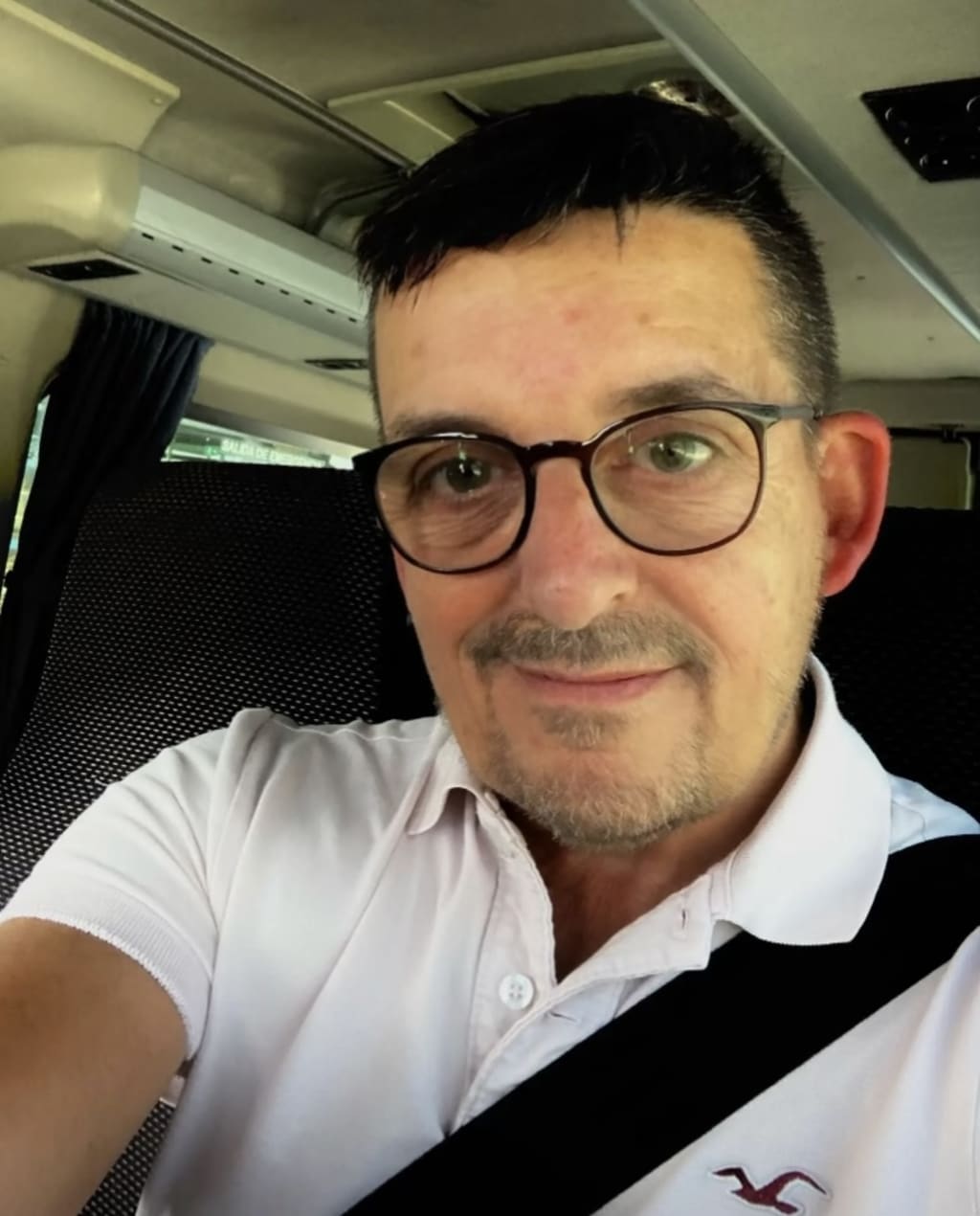
You might well wonder what an older guy is doing on a holiday flight to Gran Canaria, the gay Mecca of Europe.
I needed a break.
The Saturday morning flight from grey, wet Bristol in November 2022 seemed endless. Attempting to plough through Matthew Lewis’s debauched Gothic horror novel, The Monk, I was continually distracted by the blazing sunshine illuminating the fluffy floor of grey that blanketed the Bay of Biscay. A very large lady in the seat next to me provided other distractions; my desperate attempts to find some personal space became a very sore trial. As she sourly stared vacantly at the ceiling during those long four hours, the air became increasingly pungent with the whiff of incontinence.
I love Gran Canaria and could think of no better place to spend my university reading week. There you are; Jonny is also an older student. The textbooks, ageing laptop, my favourite underpants, socks, and t-shirts, along with three of my most fashionable ‘going out’ vests, were all packed in my little pull-on case, ready for a week of study and sensation, not necessarily in that order.
Putting aside Lewis’s The Monk for a moment, his rambling talk of spectres, phantoms and ghouls had me thinking about my own emotional ghosts. I've visited Gran Canaria many times in the past. The first trip was over twenty years ago with my former husband, Steve. He loathed it. Despite my foolish and, looking back, ridiculous protestations that he would love it, the brash, in-your-face gay culture of the place just wasn’t for him. Heading out for the evening, I would revel in the sparkle, soak up the sexual vibe that you could almost taste on the air, and glory in the gaudy spectacle of rammed bars, hilarious drag shows and the wonder of performing tumblers and fire dancers. Steve, however, repeatedly retreated into his shell, observing the spectacle with a blank expression and doing his best to look as if he was enjoying himself. Disastrously, I’d managed to persuade him to give Gran Canaria another try about ten years later. The cracks, that even then foreshadowed the ending of our marriage, became chasms. With one Spanish beer too many on board, I drunkenly embarrassed Steve in front of our friends. Whether it was the slurred, goggle-eyed speech or the lascivious carryings-on, I was ignored for three days. Some lessons need to be learned the hard way I suppose. It was to these shadowed memories, of all the love that had been lost, indeed, to my own ghosts, that my thoughts wandered as we descended through cotton wool clouds towards the island.
If you haven’t visited Gran Canaria yet, you simply must. The grand, stark volcanic landscape with its whitewashed, Canarian villages dotting the interior, explodes into a veritable touristic queer Mecca along the south coast. Miles of desert dunes and the pristine aqua sea is temporarily inhabited by the ever-revolving gangs of revellers from across the globe sampling the island's varied delights.
All very different, of course, from the past. Gran Canaria has plenty of its own ghosts. Like so many conquered places, indigenous peoples had inhabited the Macaronesian Archipelago that forms the Canary Islands, long before the Spanish ever arrived. The North African Canarii people – locally remembered as the ‘Guanches’ - have left little evidence that this was ever their home. Almost completely exterminated or assimilated by the marauding Spanish following a five-year campaign in 1493, the Guanches have vanished, leaving merely a whisper of their language and culture, leaving only a fleeting scent of their ghosts. The Encyclopaedia Britannica helps fill a few of the gaps as it tells us that, ‘when discovered by the Spaniards, the aborigines belonged to a Neolithic culture, though they were advanced enough to have pottery. Their food staples consisted mainly of milk, butter, goat flesh, pork, and some fruits.’
Rummaging through my blue Barclays backpack under the seat in front – it was at this point that the large lady next to me loudly broke wind – I began leafing through Jose Luis Concepcion’s The Guanches Survivors and Their Descendants. In all the years of queer carousing and sexual exploration that I’d spent in this place, I’d never seriously investigated the history of Gran Canaria. Jose describes, in matter of fact, historically accurate detail – almost shopping lists of despair - the lives of the Guanches before and after their subjugation by the Spanish conquerors.
"The indigenous peoples did not adapt easily to urban life […] no male or female Guanche could be free without first giving sixteen years’ service to their overlord. […] Punishments were most severe in certain cases. Any slave who flees from today on shall die […] and if the slave is female, she shall be given one hundred lashes and cast out from the land.”
No doubt, the Castilian Crown under Queen Isabella would have had few scruples about the maiming and destruction of an entire culture, riding as they did the euphoria of conquest on their God-given steeds. Many times, I’ve strolled the Saharan dunes of Maspalomas, or the crowded avenues and beaches of Playa Del Ingles and, squinting through the blaze of the sun, pictured the ghosts of the Guanches pulling in their nets on the shoreline or hazily floating through the dunes in a mirage of desert heat.
With the slow popping of eardrums as we swooped down towards Gran Canaria, the plane banked steeply, affording me a brief, yet stupendous view of Las Palmas, the capital of the Canaries, sprawling out below. Laid out like an American grid, the city streets smoked in the afternoon heat as tiny cars and buses beetled their way through the canyons at the city’s centre. I wondered what Christopher Columbus would have made of it in 1492 when he moored in the harbour on his way to discover the America’s. Poor Christopher hadn’t intended to stop here at all; his crew, reflecting that sailing west into the unknown - perhaps even falling off the edge of the world - might not be such a good idea, they had sabotaged the ship three days after sailing from Spain. Columbus was forced to lay up in Gran Canaria for repairs.
Finding myself standing in the heaving arrivals hall looking for Miguel, it was packed with expectant holiday reps stoically holding aloft their company signs. Taxi drivers waited patiently for arriving travellers and the hall swarmed with bemused, tired-looking tourists, staring about whilst trying to find their connection. Miguel, my regular taxi man from Tropical La Zona, had conveyed me from the airport to the resort and back many times. There he was! Hiding behind the Jet 2 sign, rolling the obligatory fag and chattering in Spanish through his phone. My heart lifted as I saw him; we all need these little constants in life. Miguel eventually spotted me as I eased through the crowd towards him.
‘Jonny! Hola, Jonny! There you are!’, Miguel shouted as I approached.
‘Hola, Miguel’, I replied, waving madly at him through the crowd. ‘Como estas mi amigo?’
‘I am good! It’s good seeing you again, Jonny! Come! Come to taxi!’, he shouted back, bellowing through the sagging roll-up drooping from his bottom lip as he grabbed my case and led me out into the blasting Canarian sunshine.
I was so pleased to see him with his swarthy fat face, the sweaty balding head, the laughing glint in his eye and that adorable toothy grin. Responding with a shy smile and a wave, accompanied by my embarrassing pidgin Spanish, we trooped to the minibus, loaded the bag into the back, and headed out of the Aeropuerto into the afternoon heat.
Hauling his bulk into the driver’s seat and twinkling back at me through the rear-view mirror, Miguel asked, ‘You friend no here with you this time, Jonny?’
‘Not this time, Miguel’, I replied. The raised question in his eyebrows was left unanswered; to offer even a brief sentence detailing my ex's absence would require a life-time of explanation. Swooping out of the airport and into the traffic heading south, I wanted to exile that particular ghost; if only for a moment.
So many memories flooded back as we joined the GC1 – the nearest thing in Gran Canaria to a motorway - and headed south towards Playa Del Ingles. As Miguel blasted his favourite raucous flamenco from the radio, humming along while his head bobbed to the beat, I soaked up the sight of hundreds of graceful, stately windmills busily generating their clean power, the pristine sea glinting in the distance and the grandeur of those distant ruddy mountains slumbering in the haze. Curving through this stark landscape and approaching Playa Del Ingles - that bustling, vibrantly gay European Mecca - I found myself glancing at the empty seat next to me and wondering how Steve was.
Where is he now?
What’s he doing?
Is he ok?
Only just over a year ago, I’d woodenly watched him walk through the front door for the last time. His car, vanishing so quickly from the drive of the home we had shared for fifteen years, was as if he’d never existed.
But he had existed.
The love that we’d shared for so long had existed.
As Miguel and I passed the glittering monstrosity that is the Yumbo Centre - the epicentre of all things queer on the island – I hoped fervently that my week in Gran Canaria might see at least a few of my own ghosts laid to rest.
At last, distracting me from these deeper, sadder reflections, Miguel bumped us up onto the pavement on Avenida Sargentos Provisionales in Playa Del Ingles, just outside the door of Tropical La Zona. With its jaunty rainbow flags fluttering in the Canarian breeze, its verdant palm trees swaying languidly in the warm November air and, no doubt, its naked men lazing happily by the pool eyeing up the next opportunity, I knew that if anywhere could, this place might help ease the memory of my own ghosts.
Stepping out of the car to thank Miguel with a smile and a shake of the hand, I headed to the familiar door, wondering what the ghosts of the Guanches might make of it.
About the Creator
Jonny Evans
I quit the job, sold the house, and am now at university studying to be a writer. I have things to express and hope that the words might have meaning for others. I'm single, queer and a cancer survivor. Feedback welcome.
Keep reading
More stories from Jonny Evans and writers in Journal and other communities.


Comments
There are no comments for this story
Be the first to respond and start the conversation.