
Cảm ơn Việt Nam
Welcome to my five-week Vietnamese adventure on a university internship in the summer of 2023. This story is about exploration, lessons learnt and re-learnt, and hope.

Cảm ơn Việt Nam
1. Memories
Our council estate was the nicest one in Weston.
We had a big back yard and even a cherry tree in the front garden. Staring out of the front bedroom window every childhood spring, I’d wonder, longingly, when the beautiful white blossom would come.
Teatime during the early 1970s was always a ritual in Westbury Crescent. Mum would be spooning onto plates the steaming stew, tons of vegetables and whatever meat she could afford, while my three brothers and I crowded around the black and white Radio Rentals TV, the one with the 50p meter. The BBC Six O’clock News would come on. Eating our tea, eyes glued to the flickering monochrome images, we’d wait for the news to finish and for Crossroads to start.
Where was Vietnam? Nobody knew. It wasn’t in Westbury Crescent, so we didn’t need to worry. Bombs dropped on the evil Communists and American soldiers patrolled the jungle with guns firing into the trees. Who were those people running, hiding in tunnels, being blown up and dying? Why were there kids on dirt roads with skin hanging off their backs? Who was Napalm? It was something on the telly, like cowboys and Indians in The Cinema on Saturday mornings. Gobbling stew under Mum’s beady eye, these were the grainy, distant images I had of the Vietnam War as a ten-year-old. It was somewhere else. Somewhere distant. I remember dreaming about it. Not nightmares. Just dreams.
Exiting the museum on that hot, sultry afternoon in August of 2023 in Ho Chi Minh City (the locals call it Saigon still, or HCMC), the last thing I’d expected was tears. Formerly known as The Museum of Chinese and American War Crimes, in 1990 it was renamed The War Remnants Museum following improved relations with the USA. Having taught history for years in southern England, I hadn’t considered that there would be any surprises waiting for me as I’d moved into the cool, quiet calm of the museum. Surprisingly, Ian didn’t want to come in. He’d been there before, had found it all a bit harrowing and would wait outside. Having taught about the Vietnam War, I couldn’t imagine seeing anything that might catch me off-guard.
I was wrong. The sanitised, edited texts and sources I’d used in the classroom, the photos, timelines, and first-hand accounts hadn’t prepared me for what I saw. These graphic, uncensored images and artefacts had never made it to my classroom. American GIs jeered and laughed as they held up for the camera the dismembered torso of a Vietnamese child - legs and arms missing - jubilantly savouring their trophy. A reconstructed stone-lipped well had been taken from the village of Mai Lai. Its rough-hewn grey and brown blocks had been painstakingly rebuilt within the ultra-modern steel, glass, and marble modernity of the museum. The stone felt warm and solid to the touch. The explanation left me frozen and empty. Soldiers had dumped the bodies of women, old people, and children into the well after massacring the village.
My hand resting gently on the warm stone, the remembered the words of Vo Cao Loi, a former Vietcong soldier, only sixteen years old at the time, sounded clearly in my mind, as clearly as the day I first told my British students about him. I’ve been looking at his words again. As American soldiers approached, Vo had been sent from the village by his mother to hide. "When I returned…I counted 97 dead in all — including my mother. When I lifted up the blanket…I saw she'd been shot in the head. And inside the shelter, I saw my sister-in-law, with her baby still in her arms. And they were dead, too."
Intellectually, I knew there had been massacres and had a deep knowledge of the events, dates, motivations, and geo-political nuances relating to the Vietnam War. Susan Sontag’s Trip to Hanoi, written following a journey to war torn Vietnam in 1968 had filled me with curiosity. However, nothing I had learned or taught in that previous life had prepared me for the heart-rending pain of the Museum’s images and artefacts. I needed air. There was no lingering within these atrocities. I had to move. My vision blurred with tears struggling for release as I moved towards the exit.
How had I come to be standing tearfully outside The War Remnants Museum in Saigon? There has been so much change for me over the past few years. Retiring after 28 years of teaching in 2021 following a hideous brush with cancer and the traumatic ending of my marriage, I was desperate for a new start. As the Japanese avow, a new ikigai - a new purpose - was needed. Dreaming of becoming a writer, in September of 2021, at the age of 59, I enrolled on a BA degree in English Literature and Creative Writing at Cardiff University. A new city, a new purpose, my new life. This was the path that led me to The War Remnants Museum in August of 2023.
For many years I had taught teenagers about the causes, impact, and events of the Vietnam War. I loved being a teacher. The satisfaction that came from seeing young minds go ‘bang’ was joyous. My own schooldays were never like that. Very working class, unable to even write properly (my terrible eyesight wasn’t diagnosed until I was fifteen), I left school at 16, taking up a job with Tesco’s. When I did return to education in my late 20’s, I wanted to be a teacher. Never again, as I had, would a working-class kid sit silently and distraught at the back of my classroom learning nothing.
Taking up an internship in Vietnam in the Spring of 2022, I was nervous yet excited. I could walk the streets of Saigon, explore the Mekong Delta, and experience the sites of the dreadful conflict that had consumed me, distantly, for years. Would it be as I imagined? How might the people be and how would they react to Westerners? Would they want to talk about the war or have sealed it off, a shunned memory of horror with no place in the new, energised Vietnam. Would I get lost? I wanted to know.
2. Ho Chi Minh City (Saigon)
I would teach again working for The Pacific Links Foundation, set up in California by a handful of the eight hundred thousand Vietnamese ex-pats who barely escaped in boats between 1975 and 1995. They rescue young, extremely poor Vietnamese women from the horrors of forced labour, debt bondage, trafficking and forced marriage. By making them safe and paying for educational chances, they break the cycle of exploitation to give some of the poorest kids a real chance. I relished the prospect of seeing Vietnam for myself and nervously contemplated teaching English to disadvantaged Vietnamese children.
Ian was my internship partner in crime. The odd couple. Here was me, significantly older (told I can get away with fifty though), an ex-teacher and Deputy Head in that other life, and a very mature, gay student in this one. Here was Ian, twenty-one, mixed race, straight (they all say that), fizzing with a confident energy, yet often so charmingly vulnerable, with a deep, irrationally verbalised loathing for all backpackers. I liked Ian. We met over copious Cardiff beers in the Ernest Willows on City Road with Ian and his mate Tom, fuelling the excitement of our coming Vietnamese adventure. By 4.00 pm Ian and I were drunkenly laughing and plotting, while Tom threw his innards up in the toilets. They’d been on a two-day bender apparently. Ian’s enthusiasm and passion for the trip inspired me. He's one of a kind. As I turned on the phone just after arriving in Saigon, his WhatsApp pinged, making me laugh out loud. It was a classic Ian rant; the chaos of Charles de Gaulle airport, his horror at having to share a space with American backpackers, and his prospects with the many speculative Tinder dates that he’d lined up.
Ian is such a ‘lad’ - typical of so many young men in their early twenties. They struggle to find themselves, their place in the world and what they want. Old enough to do as they please, they’re not yet jaded by the obstacles and disappointments that experience can bring. Over numerous beers and evenings, we discussed his struggles with growing up mixed-race. It brought us closer. Talking to him recently, we discussed how I’d been anxious about the trip. How would a gay, much older former Deputy Head, and a very straight, mixed-race 21-year-old get on during a five-week Vietnamese adventure? I’d travelled to the Far East only once before, a momentously miserable experience in Thailand with my former husband. I needn’t have worried. With his jubilance at being in Saigon once again, along with no fear, Ian was the perfect travelling partner, reminding me so much of myself at that age; pushing boundaries, taking risks, and cockily doing those things that sad oldies like me would warn against.
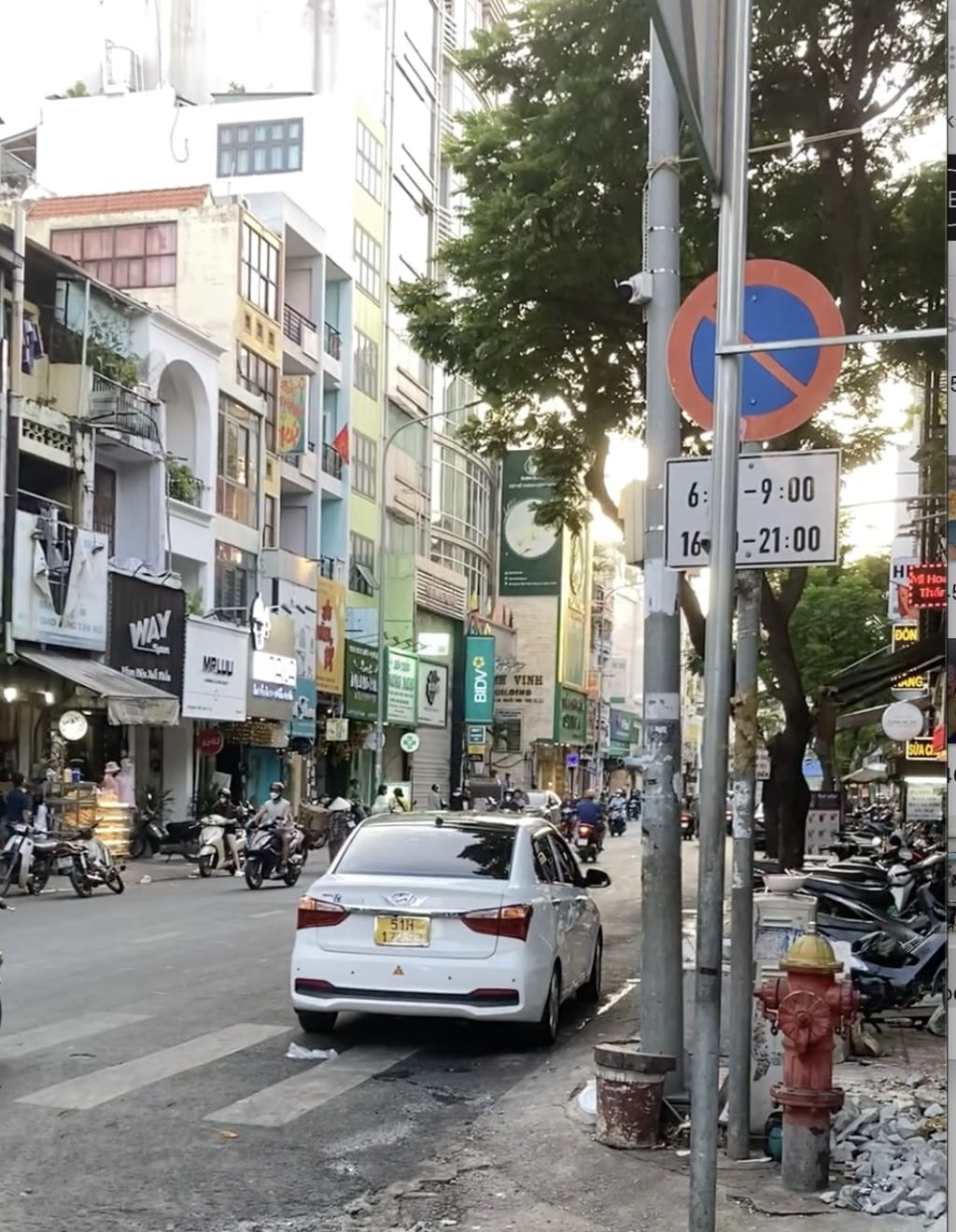
It started on arrival day. By 8.30 pm that evening, I found myself with Ian sipping iced beers and munching on Banh mi, an amazing Vietnamese baguette with sweet and spicy pork belly, crunchy pickles and topped with a gorgeous chilli sauce in The Best Bar in the World. That was Ian’s name for it, of course. He’d painted a glowing picture for me many times in the run-up to our trip. Its real name is In Saigong. Entering through a small door on the packed street below, climbing the narrow, turning staircase, lit with stark light bulbs, we passed a hugely ironic poster of Marilyn Monroe above the door to the toilets, posing with her bleached sexuality astride a smoking Napalm shell. We both laughed.
A huge veranda, verdant with foliage opened on three sides. I found myself gawping at the crowded pavements and roads congealed with a tapestry of scooters four storeys below. Ian ordered a couple of Saigon Beers from the smiling, welcoming Hanh. In high heels, a revealing ochre dress and her blonde tinted bob, Hanh welcomed us royally to In Saigong.
Packed with hundreds of locals, Western ex-pats and tourists, we were entertained by a veritable army of smiling, scantily clad Vietnamese female bar staff. With its cosmopolitan sports-bar vibe, its raucous Europop sounds, its stupendous views over the teeming junction below, and swarming with the female attention that Ian wanted, this was the place he’d immediately headed to on arriving in Saigon. His passion for this city with its mad, vibrant atmosphere and its friendly, polite, welcoming people, were eye-opening. Saigon is like nowhere else.
Seven of its 13 million people navigate the chaos on their endless stream of whining, belching scooters. I’d reluctantly agreed to head to The Best Bar in the World on the back of a Grab scooter, the same process as booking an Uber. My dad had died on a motorbike when I was five years old, and I was also knocked off one in Weston as a teenager. Standing nervously and wary on the kerb of the four-lane highway just outside our hotel, Ian’s enthusiasm, determination, and the recklessness of youth persuaded me to reluctantly approach the bike. The grinning face of my Vietnamese Grab driver then encouraged me to don the offered green helmet and jump onto the back.
Off we zoomed, straight into a maelstrom of heaving traffic. Weaving in and out of taxis, cars, scooters, and the nonchalant pedestrians who simply stepped into it all, I held onto my driver for dear life. The hot, damp Saigon air rushing past me, we mounted pavements, ignored traffic lights and at one point crossed into the opposite carriageway to weave our path through the oncoming traffic. Legs brushed against cars, scooters, and taxis, lungs filled and eyes smarted with the cloying petrol fumes. My heart thundering with an exhilaration and excitement that was an old friend returned, I dismounted outside The Best Bar in the World. Ian was smirking cruelly at the stark terror on my pale face.
Jet lagged and tired, I’d initially balked at going out. Ian was having none of it though and I’m glad. His complete lack of fear and determination led to one of the best evenings of my life. We trawled bars, haggled with vendors and hawkers, and were entertained by gangs of street karaoke singers amidst the swirling mass of humanity that energised the air.
After midnight, Ian and I drunkenly mounted two flights of seedy, rickety, rotten-looking stairs to enter the shining, marble and quartz-filled glitzy palace that is Layla’s Eatery and Bar. Packed with a well-dressed, young, cosmopolitan Vietnamese crowd we laughed and chatted with friendly locals keen to practice their English. Both guzzling copious Beer Saigon’s and smoking cheap cigarettes, Ian revelled in the continual attention of impeccably dressed, poised, and sophisticated young Vietnamese women, all hugely impressed with his cut-glass accent and dark good looks. I, of course, being so much older and not believing that anyone would seriously want to chat me up, was astonished to find myself fending them off as best I could. This was my first experience of what Ian describes as the Asian fascination with all things Western, and particularly all things English. Several times, I remember having to gently let my pursuers know that I was not English but Welsh, old enough to be Dad, and also queer. Despite these let-downs, they were unfailingly polite and friendly. Escaping this somewhat flattering, overwhelming attention, Ian and I headed to the most luxurious smoking area I have ever experienced. Gently lit and beautifully air-conditioned, a foliage engulfed terrace lined with the deepest, softest couches welcomed us to smoke Ian’s cheap cigarettes and laugh about the attention we had both received.
This experience, although personally somewhat flattering, confirmed my suspicions as to why there were so many Western ex-pats and tourists flocking to Saigon and crawling the bars. Many of them are old, somewhat seedy-looking men who would get little attention on a night out in Cardiff. As I started noticing these men more over the following weeks, it left a bad taste in the mouth.
At three thirty that morning, on my hotel bed, I wondered if I’d be up and ready to go by seven. My spartan, yet clean and spacious room in The M Village Hotel was just down a rickety side street off the storming traffic of the four-lane Diem Bien Phu highway into central Saigon. Ian looked decidedly shabby and dishevelled as I found him smoking beside the pool. I was also jaded, despite the shower, smart shirt, and trousers for the first university day.
Heading out of our welcoming side street with its quiet ambience of both rampant foliage and mildew, traffic thundered through the hot petrol-laden Saigon air. A strong Vietnamese coffee courtesy of the smiling street vendor helped; a tiny lady, her wrinkled face beneath the conical hat housing an eternal smile. Waiting for a Grab taxi (a car this time thankfully) for our university induction, we discussed the ex-pat and tourist bar crawlers we’d encountered. I was affronted by this kind of exploitative sex tourism, Ian agreed, commenting, ‘I know, Jonny. It’s shabby.’
3. Lessons in Da Nang
Three days later, on Thursday 27th of July, we were sipping cold Saigon beers, steeped in the warm, moist air, admiring the stupendous view of Da Nang Bay from the roof pool of the Avenis Hotel. A sunlit, misty haze of humidity lent a dreamlike aspect to the grand vista laid before us. The clarity of the sweeping promenade melted softly as the eye was drawn irresistibly towards the horizon. I learned later that the bustling promenade was crammed with a rickety swarm of brightly coloured stalls peddling hot noodles, rice, chicken, fish, candies, drinks, and all sorts of tourist tat.
An immense bay stretched in the glistening air far beyond the narrow, rocky strip of beach. To the south, a peninsular jutted from the vast curve of the bay, reaching its welcome to the South China Sea. Da Nang’s urban sprawl enclosed thrusting, shining towers, all smoking in the afternoon heat, alive with its ant-like scooters weaving through the traffic. Looking north, another huge peninsular pushed its rocky majesty far into the sea, almost closing off the bay. How had I come to this place, to this stupendous view, to somewhere I had never imagined or ever dreamed I might visit. Looking back at this time in Vietnam, my worldview and my place in it is so much more complex and nuanced. I can go anywhere, experience anything, and live a life that I’d never conceived before visiting Vietnam.
Over one hundred and fifty Vietnamese children had been bussed and flown in from all over the country for the Da Nang Summer Camp. Ian had booked the Avenis Hotel. We’d arrived tired and hot the day before after a five-hour delayed morning flight from Saigon on VietJet. Although Ian states that they’re never on time, I had never seen such audaciously dressed air crew! Commenting wryly on this as we sat hunched in the cheap seats, Ian, who had been goggling at the spectacle just said, ‘they’re the only reason I fly VietJet.’
The Pacific Links Foundation team had moved out of their Saigon office and taken up residence in a local orphanage, The Village of Hope, to host their young campers and staff for two weeks. The orphans who normally lived there had, apparently, all left for their annual holiday. We had both spent a month before travelling, working online with small groups of Vietnamese students, holding conversations, teaching them about the UK and coaching their English. It reminded me of those awful days during COVID-19 in 2020 when I was forced to teach online classes for the first time. However, these classes had been a joy. Out of teaching for nearly two years, I was naturally anxious about doing it again. Anyone who’s ever taught for a living will tell you that getting back into it after a long break can often provoke real feelings of anxiety. Sipping cold beers by the pool and soaking in the vast panorama of Da Nang Bay, we were both, somewhat apprehensively, looking forward to teaching the kids for real.
On our first evening, Ian persuaded me to visit the street bar next door to the hotel the previous evening. I was wary of the infamous upset stomach that everyone had warned me about so plumped for a vegetarian Bahn Xeo, delicious crispy pancakes filled with beans, pulses and green veg, rolled in fragrant, tasty green leaves. The problem was the beer. In this heat (a humid 28 degrees in the outside bar at 7.00 pm that evening) Vietnamese beer is always served on ice which is, of course, utterly refreshing and sublimely cooling. Only later did I find out that the ice in street bars is usually made from tap water. By three in the morning, I found myself frantically rushing to the toilet with the most upset of stomachs. It went on all night. By morning, tired and more than a little hungover, I was blearily swallowing Imodium and praying that I could last the day. The notion of having an ‘accident’ whilst teaching creative writing to eager Vietnamese kids was a horror.
Ian and I breakfasted the next morning on large bowls of fragrant, steaming Pho (pronounced Fur), a meaty, aromatic broth with herbs, mild spices and huge, fat noodles. Still struggling to use chopsticks competently, we surveyed the grand vista of Da Nang Bay whilst surrounded by local families and a horde of scampering, babbling children. Scouring Google Maps to locate the orphanage, we discussed our lessons and what the day might bring.
I’d prepared a creative writing activity, students planning a story of their own and imagining that they were visiting London for the first time. I had no idea what to expect. Where would I be teaching? What would the kids be like? Would they understand me? I was about to find out. The laptop was fully charged, the PowerPoint with London landmarks was ready, and I was nervous but looking forward to it. Strolling from the hotel, toting our laptop bags, teaching resources and cagouls for the inevitable afternoon downpour, we headed towards the Village of Hope. Passing street vendors, restaurants, shops selling snacks and bottled water, along with scooters all over the roads, we entered the orphanage through its huge, yellow-painted archway.
A long, rough path led us to a cluster of brightly coloured tents set amidst the shabby, mildew-stained yellow buildings of the orphanage. Children were everywhere, rushing about in their bright yellow Pacific Links t-shirts, laughing, and chatting. Ian and I were spotted and immediately surrounded by a mass of excited, smiling, welcoming young people. They were so pleased to see us. Some that we had taught online a month before enthusiastically reminded us of who they were and how they had been looking forward to meeting ‘the teacher’ for real. It was overwhelming. All of them wanted to try out their English immediately. We were saved from this enthusiastic scramble by Tung, the smiling, somewhat swarthy charity director. Sternly sending the children off to their tents, Tung warmly gripped our hands, welcomed us to Summer Camp and ushered us to the ‘welcome table’ with its tasty nibbles and gloriously cold bottled water.
Gratefully sipping and seated at the table, Tung issued us with our yellow camp t-shirts, making it clear that we were expected to always wear them. His sardonic eyebrow raised, I was also firmly asked to go back to the hotel, get rid of the shorts, and find a smart pair of trousers. ‘Teachers in Vietnam are always smart,’ Tung noted sagely. Ian and I donned our canary t-shirts, his fitting perfectly of course. Mine - the largest Asian size they had - was far too tight. I looked like a bloated lemon, acutely conscious of the painfully growing sweat patches. The smart trousers were humbly collected later.
Tung explained how the camp worked, where the children came from, their backgrounds and what was expected of us. I found out later that the smiling, articulate teenager with the fluent English that was serving us iced water had been living in a spare corner of a Buddhist temple with her mother for two years after their father had deserted them.
Whilst touring the orphanage, lunch arrived in boxes on the back of a decrepit, scabby-looking trailer. I picked gingerly through a mass of warm broth with meaty chunks immersed in greasy animal fat along with the occasional noodle. I have no idea what the meat was. Smelling enticingly fragrant, it tasted disturbingly sour. I couldn’t eat it. The kids devoured theirs though, hunching down in the shade of trees or their accommodation tents, squatting together on the tiny red and blue plastic stools that they carried everywhere. Ian and I wandered from group to group of happy, smiling, Vietnamese children, all so pleased to meet us and try out their English. I was amazed at how proficient so many of them were; more articulate and engaging than many of the UK students that I had taught for years.
For the remainder of the afternoon, Ian and I observed lessons given by other speakers, continually surrounded by enthusiastic, chattering kids. They were so keen to engage us, talk about their lives, ask questions about the UK, and share their dreams of going to university, getting a good job and supporting their families. I was humbled, beginning to understand how little these children had, how poor their families were, and the often destitute rural communities in which they lived. However, their zest for life and the total belief that they would make something of themselves through education was inspiring. To be amongst such vibrant young people, so hungry for learning and convinced that it was their key for a better future was a joy. I was deeply moved with their determined, collective will to learn.
My first lesson was a creative writing activity. They'd plan a story of their own and imagine that they were visiting London for the first time. I had no idea what to expect. Where would I be teaching? What would the kids be like? Would they understand me? I was about to find out. For me, teaching had often become a determined struggle to motivate, enthuse and galvanise kids, some of whom who saw little value in their school experience. This was different. Working in a tough, working-class school, my teaching career had come to an end with cancer, my marriage failure and a borderline nervous breakdown two years before. I was certain then that I would never teach again. There were times during that period, when I believed that any meaningful life for me was over. I had to teach again so, laptop ready, I found myself standing in front of an expectant group of smiling kids, squatting on their tiny plastic stools in the shabby orphanage assembly hall.
One of the older students acted as my interpreter. I hardly needed her. Many of the kids had such advanced English that they translated my words instantly, murmuring quietly, to their less fluent neighbours. We talked about London, the sights, the sounds, the smells, the crowds, and all the places they had heard of. After thirty minutes of quiet, concentrated activity, I was entertained with some fabulous creative stories; shopping for English marmalade on the Portobello Road, sneaking into the House of Commons to steal The Mace from under the Speaker’s nose, hilarious encounters with blackened chimney sweeps straight out of Mary Poppins, and one young man who’d imagined bumping into King Charles in a Burger King. I was asked, ‘is he the King of Burger King too, teacher?’ These kids were a joy and as the lesson ended, up they all got up to thank, applaud, and cheer me. Overwhelming.
Looking back, this was a seminal moment for me. Two years previously, feeling ill, old, heartbroken, exhausted, and desperate for a new direction, I’d left the teaching profession believing that I was done with it. These amazing children gifted me with hope that afternoon in Da Nang. I experienced a reignition of my love of teaching, the joy you get from seeing young minds glow, the satisfaction that comes from knowing you did something worthwhile, indeed, my faith in myself; such an unexpected gift from those who have so little. That evening, sipping cold beers and munching on Ban Xeo with Ian, my enthusiasm for teaching was back. I was, indeed, still a teacher.
4. Going Home to Saigon
I flew back to Saigon with a renewed belief in myself and a sense of satisfied exhaustion. Ian had been raving about seeing the ancient city of Hoi An for days and insisted we visit during the free hours before our flight. I was happy with this plan; however, it was disappointing. During the taxi ride, looked after by our trusty Da Nang cabbie Oscar, Ian regaled me with images of the glorious majesty of a World Heritage Centre, its ancient buildings and famous lantern displays. With its French colonial influence and distinctively historic Vietnamese architecture, I found Hoi An a feast for the eyes.
Sadly, all that Ian could see were thousands of scantily clad Western tourists and backpackers rummaging through the tourist tat, ruining the experience for him. His rants became progressively louder as we stood looking out together over the wide, silted expanse of the Thu Bon River flowing through the city with its multi-coloured tourist boats tied up on the quay. Laughing, I fondly dubbed Ian the reincarnation of the miserable Victor Meldrew as, still moaning, he bitterly described the ancient grandeur of Hoi An as, ‘a westernised, white-people bell-hole.’ This was a new vulgarity, even for me. Cutting short our Hoi An trip, we employed WhatsApp for the trusty Oscar, then headed back through the teeming traffic for our late-night flight to Saigon. All the while, my mind was filled with fond images of smiling children, of me teaching again, and Ian’s contorted umbrage.
Three eventful weeks in Saigon followed with a 7.00am cab every morning to the Pacific Links office, supporting their online curriculum work, continuing to teach online and getting to know the staff. Housed on the 32nd floor of Tower 2 in the Vinhomes Central Park, the office was a converted two-bedroom flat, with eight female Vietnamese staff working around one large desk. This modest set-up constituted the working hub for the organisation. Office life was a revelation to me. Nowhere have I encountered such a friendly, kind, humorous bunch doing such important work. Amiable office lunches, shopping trips in the Vinhomes Centre and a stupendous view over Saigon compensated marginally for the reality that office life is simply not for me. The hours dragged by interminably as earnest colleagues diligently tapped away silently at their machines. I’d rarely spent more that 30 minutes at a time during my working life sitting at a desk and found myself frequently sneaking to the balcony to grab an illicit vape, gawping at YouTube videos with the earphones in, stretching my legs again, peeing more than I needed, and continually watching the clock.
Saigon gradually became more familiar to me. Walking the crowded, steaming streets, sometimes with Ian, sometimes alone, the frenetic, energised vibe of the city gradually soaked into me. I became used to locals looking up and noting the rare, white European in their midst as I turned a corner; always friendly, always helpful, and unstintingly polite. I realised that after three weeks I had relaxed. I came to know my way around, exploring some out-of-sight corners of the city and increasingly enjoying my interactions with these smiling, engaging people.
If you find yourself in Saigon, head for the dynamic hustle that is Binh Thanh Market. Its huge, vaulted building lays filled to the roof with all the goods of the Earth stacked high to sell cheap. Ian was adamant that as an Asian novice, I’d immediately be ripped off by the smiling, insistent coffee sellers and t-shirt pushers. What a joy they were! Every eye was on us as we navigated our path through the maze of ardent, smiling and very pushy stall holders. Nursing my wallet, I only succumbed when faced with a very excited, gesticulating older Vietnamese woman. “Sir, Sir, Sir, come look! Come see here! Genuine Weasel Coffee – the real thing, Sir! Only 200,000 Dong for you, Sir! Look, Look!’ Driving her down to 150.000 dong (about £4.80), she protested that I would impoverish and ruin not only her, but her mother, her father, and her five babies. Handing over the cash, I thanked her, ‘Cảm ơn.’ Ian and I had learnt about Weasel Coffee one evening whilst chatting to tipsy locals in Layla’s. The weasels are fed coffee beans which are then collected for roasting once they’ve passed through their bowels. Apparently, it enhances the flavour. It’s big business. I just had to get some to serve to unsuspecting housemates when I got home. It’s still in the cupboard.
5. Old Lessons Re-learnt
Of course, the joys of Binh Than, the vibrancy of Saigon, the poignancy of The War Remnants Museum and the dawning revelation that I could still be a teacher were not the only lessons for me on this trip. Prostate cancer two years previously, followed by the ending of my marriage, had left me certain that a meaningful relationship would never be possible. Hormone therapy had destroyed my confidence. The menopausal effects are devastating; constant fatigue, the loss of any meaningful sex drive, the hot flushes, the anxiety, the brain fog and the mood swings had convinced me that a romantic relationship was a thing of the past. I was also taught a huge respect for women of my age who soldier on through the menopause, often with little support or understanding; something of a gender-karmic moment for me.
It was in Saigon that I realised that my belief in the inevitability of a single life was wrong. On the Saturday after summer camp, having recovered from those miserable upset bowel issues, I found myself sipping a beautiful coffee on the terrace of the La Vela Saigon Hotel, a monument to marble, quartz, opulence, and historic French colonial oppression. Whilst watching the teeming Saigon traffic and sipping coffee, my phone pinged. Checking my Grindr app, up popped a smiley emoji from a handsome Vietnamese guy who was, apparently, less than ten meters away. Scanning the terrace, I saw Hien, waving and sipping his tea. Within a minute or so, we were sharing a table, smiling, and laughing. He was visiting his parents having moved to Brisbane four years previously as an IT Consultant. About ten years younger, slim, with dark, cropped hair, an engaging smile and laughing eyes, Hien stated, in his lilting Australian/Vietnamese accent, that he wasn’t usually in the habit of approaching strange men on hotel terraces. ‘I’m glad you did,’ I replied. Hearing that I was a student in Saigon on an internship, he then wanted to hear some of my writing. For the next 20 minutes, and another strong coffee, I regaled him with the comedic exploits of my fictional, dementia-ridden harridan, Beryl. Laughing together, Hein then asked me out for dinner that evening, saying that he knew the perfect restaurant. Delighted, I agreed. I remember that moment so well now. Images of his quick, intelligent eyes and engaging smile are with me as I write. After leaving to meet his parents for lunch, having placed a smiling, gentle kiss on my cheek, I strolled happily back to M Village through the sultry, heaving streets and bustling pavements, equally surprised and thrilled.
By 7.30pm I was standing nervously by the gate of M Village. Scrabbling around for something clean and decent to wear, I’d reflected how odd it was to be going on a real date; gay men just don’t do that anymore. In my experience, dinner usually follows (in this order) an online chat, an exchange of naughty pics, a sexual hook-up, and, only then, learning their name. Right on time, Hien arrived…on his scooter! It hadn’t occurred to me that we would start our date weaving through the heaving Saigon traffic, mounting pavements and cutting red lights. I clung to Hien as we sped through the warm evening air, hearing him laugh continually at my clenched whining and groaning as we dismounted outside The Shamballa Vegetarian Restaurant.
Taking our seats, we were treated to a sumptuous food experience; Shamballa Crispy Mushrooms followed by Lua Chua Cay, a sweet-sour-spicy hotpot broth with pineapples, tomatoes and soft tofu, fresh noodles, vegetables, and assorted mushrooms. The ambience, the meal and Hien’s company were all a delight as we ate, sipped cold Saigon beers, and got to know each other a little more. We talked about our lives, our experiences, and our hopes for the future, all the time aware of an increasing attraction. By the end of the meal, I told Hien that I wanted him to come back with me. ‘I’d like that too,’ he replied, smiling.
Scootering madly back through heaving traffic to M Village, walked nervously through the gate, under the vaulting foliage surrounding the pool and mounted the stairs to my room. Entering, we kissed and held each other, experiencing the heat of each other’s body, both becoming aroused. For the following hours I came to know Hien. Exploring one another, we connected sexually in a way that was not new for me, but experienced with Hien in ways that I had thought were over. To find something so needed, so wonderful, yet something I had believed gone, humbled and moved me. Finally letting this awakening moment go, I allowed myself to move, gingerly leaving him sleeping to get us both a coffee. Climbing back in, Hien gently woke, moving closely back into my arms. The coffee was forgotten.
Over the next few weeks, Hien and I met many times, sometimes for coffee, sometimes exploring the city and sometimes just each other. Our connection deepened, however, it was clear, and accepted, that, despite this growing resonance, we lived on opposite sides of the planet. In a few short days we would not be seeing each other. Hien talked about visiting Wales. I talked about visiting Brisbane. Both of us promised to keep in touch and to, ‘see where it went.’ The last evening that I saw him, two days before I flew home to Heathrow, was difficult. Someone I had become attached to had left my arms, was climbing onto the back of a scooter and heading through the hotel gate. I wondered if I would see him again. I haven’t so far. However, Hien is in touch regularly. We chat, facetime, exchange endearments and compete ferociously over Wordle from different sides of the planet. Although no firm plans have so far been made to meet again, I hope that we will. We’ve agreed that the connection is there. I think of him often. We’ll see.
6. New Lessons Learnt
Alain de Boton reflects persuasively on the reality of travel compared to how we might imagine it. There were numerous moments of dislocation and loss of comfort zones. Despite this, Vietnam has gifted me more than I ever expected. These unexpected experiences have change me.
Since returning and getting back into my old, yet new life in Cardiff, gone is the fear of traveling to new places, bewildered by different cultures and terrified of getting lost. I’m confident to travel where I like, experience new people and places and see a world that was always known of, yet distant. I’ve found out more about the impact of sex tourism in the Far East. It was disturbing to see Western men on the hunt for a cheap sexual experience they would never get back at home. It’s been on my mind.
My developing friendship with Ian has taught me that age, race, or sexuality need not be barriers to new, meaningful relationships. We meet regularly, enjoying quizzes in the Golden Cross pub and video/beer nights at my place whilst soldiering on through the final year of our degrees. Ian has decided to make Vietnam his home. I’ll be visiting.
A love of teaching that I thought was lost in the dregs of illness and relationship failure has been re-ignited through my time spent with these children. I know that I will teach again.
Finally, I have accepted, at last, that love, even at this age, despite life-changing experiences, might still be possible for me.
I feel younger.
Thank you, Vietnam.
Cảm ơn.
About the Creator
Jonny Evans
I quit the job, sold the house, and am now at university studying to be a writer. I have things to express and hope that the words might have meaning for others. I'm single, queer and a cancer survivor. Feedback welcome.
Keep reading
More stories from Jonny Evans and writers in Journal and other communities.



Comments
There are no comments for this story
Be the first to respond and start the conversation.