
Georgia education panel votes to cleanse teacher lesson plans as school culture wars rage on
Members of the public watch in disappointment as the Georgia Professional Standards Commission votes to rewrite Georgia’s teacher training rules to eliminate references to diversity
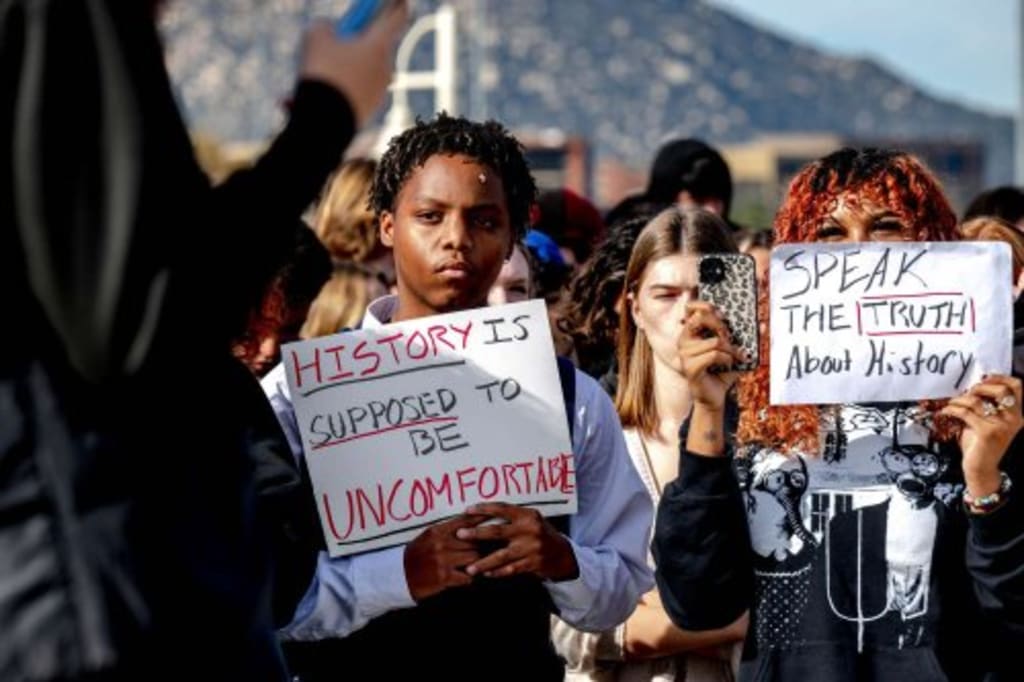
“Words matter” – that’s what several of the dozen or so educators and parents gathered in a downtown Atlanta boardroom had to say Thursday in a bid to persuade the Georgia Professional Standards Commission not to change the state’s rules for training K-12 teachers.
The commission had on its agenda a slew of proposed revisions, removing words like “diversity” in favor of less politically fraught verbiage like “differences.”
For example, one change for elementary school educators would call on them to get to know the “unique contexts of children and families,” rather than their “diverse cultural contexts” under the previous rules.
But the speakers’ words did not sway the commissioners, who voted unanimously to approve the changes without discussion.
“History remembers white supremacists,” shouted one speaker as the commissioners voted.
Commission Chair Brian Sirmans said the changes came at the request of the University System of Georgia and are intended to clarify language that had picked up unintended negative meanings over the years.
“These proposed rule amendments are not intended to redefine or remove the care preparation providers place on meeting students’ needs or prescribe the way (education preparation providers) choose to meet the program standards,” he said. “We still expect EPPs to prepare educators who are well-equipped to address the learning needs of all students that they may encounter and who are well-prepared to meet the students where they are within a positive and welcoming learning environment.”
But speakers including Sarah Hunt-Blackwell, First Amendment policy advocate with the American Civil Liberties Union of Georgia, said they view the changes as more than a mere swapping of words.
“I’d like to remind the commission, most of you educators, that words matter,” she said. “As such, we cannot be simplistic in believing that these amendments merely replace one word with another. Changing language does change intent. Replacing the word ‘diverse’ with words like ‘different’ and ‘unique’ implies that there is a norm, a sameness, which excludes those who do not fit in.”
Ruth M. Youn, second-generation Chinese-Taiwanese-American writer and parent who lives in metro Atlanta, said she felt like she did not fit in at school as a child. Although her teachers were well-educated and her schools were well-resourced, she said her heritage, language and physical appearance were not welcome and her peoples’ history in the U.S. was never discussed.
“I was not only minoritized, but I de facto learned to adopt negative mentalities towards communities different from mine,” she said. “There’s a pervasive misconception that teaching about diversity perpetuates racism and divisiveness in the classroom. I argue that by pretending that diversity does not exist, by not equipping educators to teach in a culturally sustaining way, we inevitably create entire cohorts of educators and therefore student populations who are uninformed, ill-informed, and potentially racist, even if they do not realize it.”
Christopher Andrews, a DeKalb County educator who has worked in social studies and science classrooms in middle and high schools, said his latest assignment was in Georgia’s most diverse middle school, and his diversity, equity and inclusion training came in handy to help him make connections with children from different religious and social backgrounds.
“A lack of intentional DEI training would have left me vastly unprepared to serve students from diverse backgrounds and ability levels, ultimately ignoring the essence of who they are and failing to equip them for the real world around them,” he said.
The changes, which are set to go into effect July 1, would apply to positions including elementary education and reading and literacy specialists, who teach up to grade 12, as well as educational leaders like principals and superintendents.
They follow another controversial change last month, which stripped the definition of diversity from teacher training rules.
Read more - Firenewsfeed
About the Creator
Keep reading
More stories from Firenews Feed and writers in Journal and other communities.
Italian court throws out case alleging early pandemic mismanagement by ex-premier, ex-minister
A special Italian court has shut down a probe into whether the country’s former premier and former health minister caused unnecessary deaths by failing to extend a lockdown zone in the early days of the coronavirus pandemic.
By Firenews Feed3 years ago in Journal
Why Prayer is Central to Catholic Life and How to Deepen It
Prayer is at the heart of Catholic life. It is the way believers communicate with God, express their faith, seek guidance, and grow in holiness. Prayer is not merely a ritual or obligation, but a living relationship with God. Understanding why prayer is central to Catholic life and how to deepen it can help believers experience spiritual growth, peace, and a stronger connection to Christ.
By Sound and Spirit5 days ago in Journal
How to Succeed at the Benson Directory®
Congratulations and welcome to the Benson Directory® employee #22391! As our newest call handler, you will have the privilege of speaking with dozens of unique and interesting people on a daily basis as well as the opportunity to earn bonuses for high performance. Contained within this handbook you will find a set of ease to follow instructions designed to help you settle in to your new role and begin paving the way to success.
By S. A. Crawforda day ago in Fiction



Comments
There are no comments for this story
Be the first to respond and start the conversation.