
Generic Pharmaceuticals Contract Manufacturing | A $90.95 Bn Market by 2030 | How Global Outsourcing Is Powering Affordable Drug Production
From Thermo Fisher to Dr. Reddy’s: Meet the Key Players Driving Growth in Generic Pharmaceutical Contract Manufacturing Industry

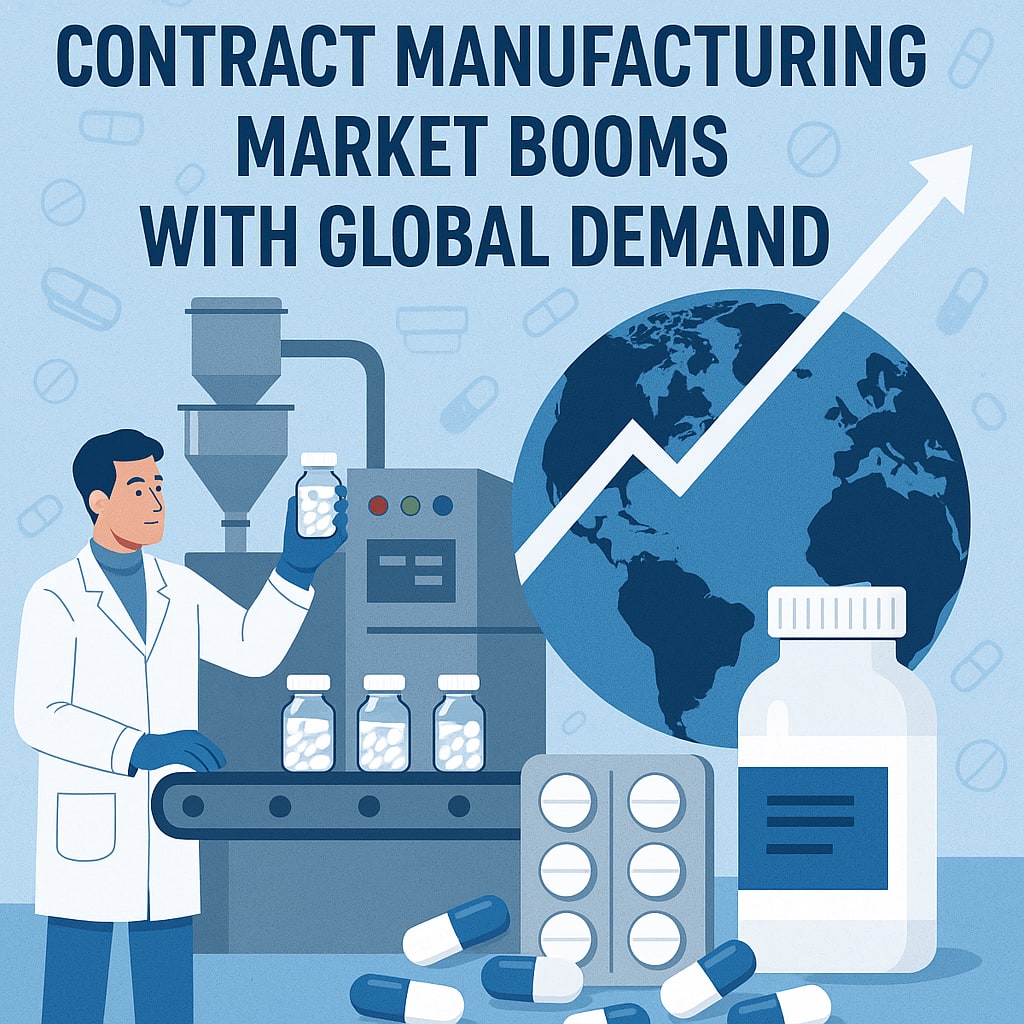
Generic pharmaceutical contract manufacturing is one of the most sought-after services for manufacturers to stay ahead of growing demands and stay profitable. A key driver of the growth in this market is the low prices and robust demand for generic drugs, coupled with the advent of cost-effective ways of production and procurement, supply chain optimization, and outsourcing.
Generic drugs are the chemical equivalents of branded drugs, which are affordable compared to their brand versions. As the patents of blockbuster drugs expire and governments continue to restrict spending, the growth in the demand for generic drugs has been fueling the growth in the generic pharmaceutical contract manufacturing market.
While generic drugs help save money and fulfill patient needs, CMOs help companies handle manufacturing, formulation, packaging, and regulatory work to focus on their own R&D, marketing, and distribution.
Cost-Effective Components of Pharmaceutical Supply Chain
1. CMOs enable their clients to increase productivity, improve patient adherence, and make efficient use of resources
2. The advantages of cost savings, consistency, and convenience attract the Big Pharma
3. There is a growing trend of using various options for pharmaceutical drugs such as oral solids, sterile injectables, and topical solutions, and several other niche segments.
4. Governments in emerging markets are increasingly promoting generics to enhance accessibility.
Top Trends and Developments
Baxter International Inc. has announced five injectable drug product launches in the US in April 2024. Some of the new products include Vasopressin in 0.9% Sodium Chloride Injection, Norepinephrine Bitartrate in 5% Dextrose Injection, Vancomycin Injection, Regadenoson Injection in a pre-filled syringe, and Ropivacaine Hydrochloride Injection.
Egis Pharmaceuticals will offer contract development and manufacturing service under the name Egis Pharma Services to new and existing pharma partners from October 2023.
Get Sample Pages at https://www.theresearchinsights.com/request_sample?id=20
Key Factors Driving the Market Growth
1. Patent Cliff and Cost Pressure
A wave of patent cliff expiration continues to create an opportunity for the launch of generic drugs. With huge capital investments involved in production, pharma companies are increasingly resorting to CMOs to accelerate the time-to-market of products and reduce their capital investment.
2. Greater Global Access to Generic Medicines
Governments in emerging markets have been encouraging the launch of generic medicines for the benefit of a wider range of patients. Countries such as India, Brazil, South Africa, and Southeast Asia have seen a huge increase in the consumption of generic drugs, giving rise to the demand for scalable contract manufacturing solutions.
3. Compliance and Regulatory Expertise
CMOs with proven records of regulatory compliance and approvals for FDA, EMA, and WHO are sought-after partners. The complexities involved in global regulatory compliance have led pharma companies to partner with CMOs to ensure consistent quality and speedy approvals.
4. Technology Innovations and Specialization
CMOs have started adopting continuous manufacturing, modular facilities, and other technologies to manage complex formulations and ramp up their high-throughput manufacturing capabilities. Some CMOs have specialized in niche drug delivery systems such as sustained release tablets, sterile injectables, and others.
Regional Insights
The Asia-Pacific market, led by India and China, leads the market because of low-cost manufacturing, skilled labor, and a matured generics ecosystem.
The North American and European markets focus on high-value generics, high-regulatory hurdles, and a higher proportion of outsourcing by Big Pharma.
Emerging markets such as Latin America and Africa offer immense potential with lesser market penetration, and governments are encouraging local access to affordable medicines.
Market Forecast
The global generic pharmaceutical contract manufacturing market is projected to remain strong through 2030, witnessing further consolidations, mergers, and capacity expansions. Mergers and acquisitions, combined with scale and regulatory acumen, will enable a few companies to dominate the market.
Challenges and Opportunities
Challenges in the market include price erosion, aggressive competition, supply chain risks, and geopolitical trade dynamics, among others.
However, these challenges have been creating opportunities for CMOs to invest in technology and innovation to adapt to the evolving market.
Conclusion
The growth in generic pharmaceutical contract manufacturing is the result of the broader industry’s shift towards greater efficiency and cost savings. With health systems striving to be sustainable and inclusive, CMOs will play a crucial role in the future of global medicine.
About the Creator
Silvie Karson
Passionate storyteller exploring the world of trends. With a background in digital marketing, I craft compelling narratives that inform and inspire. Whether diving into deep-dive features, growth analysis, or trend analysis.
Keep reading
More stories from Silvie Karson and writers in Journal and other communities.
Colposcope Market | A $537 Million Opportunity by 2030 | How Advancements in Digital Imaging Are Enhancing Cervical Cancer Screening
Cervical cancer is one of the most preventable yet deadliest forms of cancer among women. It has a higher incidence rate in developing and low-income countries, where up to 90% of cervical cancer-related deaths occur due to limited access to screening and treatment. The World Health Organization estimates that in the year 2020, the incidence rate for cervical cancer will reach 673,000. More than half of these deaths will be caused by advanced stages of the disease. This has given birth to a global push to eradicate cervical cancer as a public health concern. Governments and non-governmental organizations have been implementing national screening programs, HPV vaccinations, and enhancing investment in colposcopes and other medical devices.
By Silvie Karson7 months ago in Journal
Wild Card Weekend Recap: What Happens Now?
I think I figured out why I love Wild Card Weekend so much. It's because it's the first playoff anything of the calendar year. The NFL season starts in the fall, and once upon a time, the champion was crowned either on or slightly before New Year's. The evolution of the NFL schedule has resulted in the playoffs starting just into the New Year, and currently, the final week of the season falls on the first weekend of the New Year, with Wild Card Weekend coming a week after that. So yes, chronologically, the NFL's Wild Card Weekend serves as the first playoff anything of the calendar year.
By Clyde E. Dawkins7 days ago in Unbalanced



Comments
There are no comments for this story
Be the first to respond and start the conversation.