
Generation Z's Impact on Europe Footwear Market: What Brands Need to Know
Gen Z consumers appear significantly more price-sensitive and less brand-loyal than their Millennial predecessors.

The European fashion landscape is currently experiencing a seismic shift. This change isn't driven by high-end runways in Milan or Paris. Instead, the scrolling habits and ethical demands of a younger demographic drive this transformation. Generation Z’s impact on Europe footwear market reshapes everything from global supply chain logistics to specific marketing hashtags.
As of 2024, the market has reached a massive valuation of US$ 90.8 billion. However, for brands looking to capture a slice of this revenue, the old playbooks of celebrity endorsements and seasonal drops no longer suffice. Gen Z represents more than just a new customer base; they act as the architects of a new retail reality. They demand radical transparency, prioritize comfort over tradition, and cancel brands instantly.
With the market projected to grow at a CAGR of 3% between 2025 and 2033, reaching US$ 119.0 billion, understanding the nuances of this generation is critical. This article explores the data-backed trends defining the future of footwear in Europe.
What Does the Current Market Landscape Look Like?
The European footwear sector stands as a steady giant featuring consistent, albeit moderate, growth.
According to the latest data from the IMARC Group, the market follows a trajectory to add nearly $30 billion in value over the next decade. While a 3% CAGR might seem modest compared to the volatile tech sector, in the mature retail industry, this percentage represents significant stability and opportunity.
However, the composition of this growth changes daily. Currently, the "Men" end-user segment holds the largest market share. Yet, the "Women" and "Kids" segments evolve rapidly due to shifting lifestyle trends. Brands must recognize a crucial fact: while overall numbers rise, the specific categories driving this revenue shift away from formal leather shoes toward versatile, athletic-inspired footwear. Therefore, relying solely on historical sales data leads to strategic errors.
Why Is Sustainability No Longer Optional for European Footwear?
Sustainability has moved from a "nice-to-have" marketing feature to a non-negotiable baseline requirement for entry into the Gen Z wallet.
For decades, material segmentation remained simple: Leather, Rubber, Plastic, or Fabric. Today, the conversation becomes far more complex. Gen Z consumers possess hyper-awareness regarding "greenwashing." They scrutinize supply chains for ethical labor practices and demand eco-friendly materials.
Furthermore, this generation fuels the rise of circular economy platforms. Apps like Vinted and Depop effectively force legacy brands to compete directly with the second-hand market. If a brand cannot prove the origin of its materials - whether it uses vegan leather derived from mushrooms or recycled ocean plastics - they risk alienating this cohort entirely. Our analysis suggests that brands failing to adopt transparent sustainability reports will see a sharp decline in market relevance by 2030.
How Are Digital Platforms Reshaping the Path to Purchase?
The physical store no longer serves as the primary point of discovery; the smartphone screen acts as the new shop window.
The IMARC Group segmentation highlights "Online Sales" as the fastest-growing distribution channel. This channel rapidly outpaces "Footwear Specialists" and "Supermarkets." This shift involves more than just convenience; it involves community. For Gen Z, a purchase often begins on TikTok or Instagram.
Trends like "Get Ready With Me" (GRWM) videos or "Hauls" act as immediate social proof. Consequently, brands must pivot to a "phygital" strategy. This approach blends physical retail experiences with seamless digital integration. For example, successful brands now utilize Augmented Reality (AR) filters allowing users to "try on" sneakers virtually before buying. If your checkout process lacks mobile optimization, or if your social media presence lacks authenticity, you effectively remain invisible to the modern European consumer.
Which Footwear Segments Are Winning Gen Z’s Heart?
Athletic and "comfort-first" footwear are dismantling the dominance of traditional formal wear.
The distinction between "gym shoes" and "work shoes" has evaporated. The Athletic product segment currently witnesses faster growth than the Non-Athletic segment. This trend, often dubbed "gorpcore" or "athleisure," prioritizes utility and comfort above all else. Gen Z has normalized wearing sneakers to the office and chunky, orthopedic-style sandals to dinner.
This shift forces heritage brands known for stiff leather loafers to reinvent their soles and insoles to compete on comfort. If a shoe looks good but hurts to walk in, it stays on the shelf. Moreover, the definition of "luxury" now includes functional performance, not just brand heritage.
Gen Z vs. Millennials: How Do Their Buying Habits Differ?
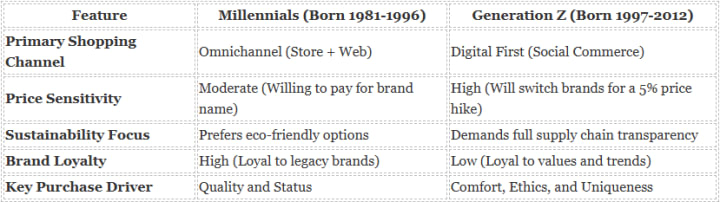
Gen Z consumers appear significantly more price-sensitive and less brand-loyal than their Millennial predecessors.
To visualize these distinct differences, we have compiled a comparison of key behavioral metrics helping brands tailor their approach:
What Regional Nuances Exist Across Europe?
While we analyze Europe as a single market, distinct regional behaviors exist.
- United Kingdom: The UK market shows a high affinity for "fast fashion" footwear but also leads in the adoption of resale apps.
- Germany: German consumers prioritize durability and technical specifications. They prefer brands that offer detailed information on material longevity.
- France & Italy: While still the hubs of luxury leather, Gen Z in these regions increasingly mixes high-end heritage pieces with streetwear sneakers.
Therefore, a "one-size-fits-all" marketing strategy across the continent often fails. Brands must localize their messaging to fit these specific cultural priorities.
What Are the Key Challenges Brands Face in 2025?
The primary challenge involves balancing the high cost of ethical production with Gen Z’s extreme price sensitivity.
Data indicates that while Gen Z demands sustainable products, they also remain the generation most likely to stop purchasing if prices rise. A price increase of just 5% can trigger a brand switch. This creates a paradox for manufacturers. How do you invest in premium, eco-friendly materials (like those tracked in the IMARC material segmentation) without inflating the retail price beyond what a budget-conscious student can afford?
The solution likely lies in supply chain optimization. Brands must reduce marketing bloat and direct funds instead toward product innovation and value engineering. Additionally, navigating the logistical nightmare of "free returns" - a standard expectation for online shoppers - eats into margins.
Frequently Asked Questions:
What is the size of the European footwear market?
According to IMARC Group, the market size reached US$ 90.8 billion in 2024.
What is the growth rate of the footwear market in Europe?
The market is projected to grow at a CAGR of 3% from 2025 to 2033.
Which footwear segment is growing the fastest?
The Athletic footwear segment is the fastest-growing category, driven by the athleisure trend and Gen Z's preference for comfort.
How does Gen Z influence fashion trends?
Gen Z influences trends primarily through social media platforms like TikTok, favoring sustainability, comfort, and transparency over brand heritage.
Conclusion: How Can Brands Future-Proof Their Strategy?
To survive the next decade, brands must align their operations with the 3% CAGR growth trajectory by embracing agility.
The Europe footwear market is projected to hit US$ 119.0 billion by 2033. However, the winners will be those who listen to the whispers of the market before they become shouts. Brands need to invest in athletic-hybrid designs, double down on online sales channels, and ensure their sustainability claims rely on hard data.
Gen Z is not waiting for brands to catch up; they already set the pace. The question remains: can your brand keep up?
About the Creator
Joey Moore
I'm Joey Moore, a seasoned Research Analyst with 5+ years of experience in market research. Expert in data analysis, strategic planning, and industry insights. Proven track record in delivering actionable reports.
Keep reading
More stories from Joey Moore and writers in Journal and other communities.
Gen Z as Pet Parents: How the New Generation is Redefining Europe Pet Food Market
The era of the "pet owner" is quietly fading. In its place, the rise of the "pet parent" is taking over. This isn't just a change in terminology; it is a fundamental shift in consumer behavior that is sending shockwaves through the Europe pet food market. As Generation Z comes of age, their spending power and distinct values - centering on sustainability, digital convenience, and animal welfare - are forcing legacy brands to pivot or perish.
By Joey Moorea day ago in Journal
~ Fired ~
— Ai Intrusion ~ Are you Next ~ Is Ai Evolution after your job? — Few workplaces haven't been affected. Ai is in supermarkets, at doctors' offices, and even monitoring farms. I just can't think of anything this machine is not getting into, can you? For instance: Education ~ Law and Tech jobs will one day have a major influence or be taken over by these inanimate machines, with accuracy and vigor. From mechanics' diagnoses to a wide variety of everyday jobs, including fast food workers, with this input having the ability to cut their unnecessary work hours. I'm certain all of us have been touched by this with our short stories and colorful headings, have you? Even comments are very questionable 'Non-Robot' insertions.
By Jay Kantor3 days ago in Journal
The Ultimate Guide to Choosing the Best Grout Cleaner
Introduction Cleaning the bathroom and kitchen and all the tiled surfaces can be really tough. This is especially true when the grout starts to get dirty or moldy. Beautiful tiles can look really dull if the grout lines are not clean. So it is very important to find a good grout cleaner. This will help keep your home clean and healthy. In this guide we will talk about how to find the best grout cleaner for your tiles. We will also look at the difference between grout and caulk.. We will learn when you need to fix your grout.
By Alice Carrya day ago in Journal



Comments
There are no comments for this story
Be the first to respond and start the conversation.